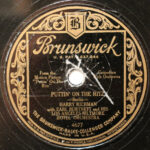
 Harry Richman’s rendition of Puttin’ on the Ritz, backed by Earl Burtnett & His Los Angeles Biltmore Hotel Orchestra, is a sparkling snapshot of the Roaring Twenties’ glamour, urban sophistication, and jazz-infused showmanship. Originally written by Irving Berlin in 1927, the song quickly became emblematic of a certain high-society elegance, but Richman’s performance elevates it beyond mere novelty, infusing the track with charm, verve, and an irresistible sense of fun. The synergy between Richman’s distinctive vocal style and Burtnett’s impeccable orchestration creates a recording that is both playful and polished, demonstrating the ability of popular music to capture the zeitgeist while remaining endlessly entertaining decades after its release.
From the opening notes, Puttin’ on the Ritz establishes a lively, urbane atmosphere that immediately transports the listener to the grand hotels and bustling streets of 1920s Los Angeles. The orchestra introduces the melody with a swinging, syncopated rhythm, punctuated by crisp horn stabs, playful piano flourishes, and buoyant percussion. The arrangement is elegant yet effervescent, balancing precision with a sense of joyous abandon. Burtnett’s orchestra provides a perfect backdrop for Richman’s voice, giving the performance a cinematic quality that feels both sophisticated and accessible. The instrumentation is a testament to the meticulous craftsmanship of the period, highlighting the skill and musicality of big band arrangements while supporting the narrative energy of the song.
Harry Richman’s vocal delivery is at the heart of the track’s appeal. His voice carries a warm, charismatic tone, capable of playful exaggeration without ever feeling forced. Richman approaches the lyrics with a sense of theatricality, emphasizing key phrases and injecting personality into every line. The performance feels conversational, as though he is both narrating a scene and inviting the listener to participate in the spectacle. His phrasing allows the rhythm of the lyrics to interact naturally with the swing of the orchestra, creating a seamless interplay between voice and instruments. Richman’s charm is evident throughout, transforming the song from a simple melody into a vivid performance piece filled with energy, humor, and style.
Lyrically, Puttin’ on the Ritz captures the allure of sophistication and the playful artifice of high society. The song describes individuals who “dress up in style” and present themselves with flair, navigating the glamorous nightlife with poise and confidence. Richman’s interpretation amplifies this playful elegance, his vocal inflections highlighting both the humor and aspiration inherent in the lyrics. While the text celebrates outward appearances and fashion, the performance never comes across as superficial; instead, it exudes joy, self-awareness, and a subtle critique of the performative aspects of social life. Each line paints a clear picture of the scene, from the carefully coordinated attire to the confident mannerisms, inviting listeners to imagine themselves amidst the spectacle.
The arrangement of the orchestra is particularly noteworthy. Burtnett’s ensemble provides a lush and dynamic musical foundation, blending brass, reeds, piano, and percussion into a cohesive sound that dances around Richman’s vocal lines. The brass section punctuates the playful lyrics with accents and flourishes, while the reeds offer melodic counterpoints that enhance the overall texture. The piano delivers rhythmic drive and harmonic support, helping to propel the song forward with a sense of buoyant momentum. Percussion maintains the swing and adds subtle touches of drama, keeping the energy high and the performance engaging throughout. The orchestration demonstrates both technical mastery and a keen understanding of how to complement the singer’s delivery, creating a recording that is as musically compelling as it is entertaining.
A defining feature of Richman’s performance is his use of timing and phrasing to create a sense of interaction with the audience. Much like the vaudeville and cabaret traditions that influenced him, Richman treats the song as a performance in which the listener is an active participant. The pauses, emphasis, and playful inflections in his delivery invite engagement, making the song feel immediate and alive. The interplay between Richman and the orchestra enhances this effect, with musical cues and dynamic shifts responding to the vocal narrative, further drawing the listener into the scene. This performative quality is part of what has allowed Puttin’ on the Ritz to remain memorable, capturing the essence of live performance even within a recorded format.
The song also reflects a broader cultural moment in American music. Emerging during a period of economic optimism and social change, it embodies the sophistication, flamboyance, and exuberance of the late 1920s and early 1930s. Big bands were gaining popularity, and jazz was moving from dance halls to mainstream culture. Puttin’ on the Ritz exemplifies this transition, blending accessible melodies with sophisticated arrangements and a sense of theatricality that appealed to audiences seeking both entertainment and refinement. The collaboration between Richman and Burtnett illustrates how popular music of the era could simultaneously be stylish, technically impressive, and widely appealing, bridging the gap between high art and mass consumption.
Richman’s ability to balance humor and sophistication is another key factor in the song’s enduring appeal. While the lyrics describe the exaggerated elegance of the fashionable elite, his performance injects warmth and accessibility, ensuring that the song is as much about joy and performance as it is about social commentary. The vocal inflections, timing, and playful engagement with the orchestra all contribute to a sense of fun and spontaneity, making listeners feel part of the glamorous world being depicted. This balance between sophistication and playfulness is central to the track’s charm and helps explain why it has remained a touchstone of American popular music.
The song’s structure is carefully crafted to maintain interest and highlight both the narrative and musical elements. The verses provide space for Richman to articulate the story, while instrumental interludes and orchestral flourishes punctuate the performance, creating moments of anticipation and release. These dynamic shifts keep the listener engaged and allow the orchestra to showcase its versatility, moving seamlessly between accompaniment, melodic embellishment, and rhythmic drive. The resulting flow makes the song feel expansive and lively, capturing the sensation of a live performance and creating a sense of theatrical progression that mirrors the story being told in the lyrics.
Another element that contributes to the song’s timeless appeal is its melodic and harmonic simplicity, which allows both the vocalist and the orchestra to shine. The chord progressions provide a solid foundation while remaining flexible enough to accommodate expressive phrasing, improvisational flourishes, and dynamic shifts. The melody is memorable, easy to follow, and perfectly suited to Richman’s vocal style, providing a framework that supports both narrative clarity and musical exploration. This combination of simplicity and sophistication ensures that the song remains engaging on repeated listens, with new subtleties revealing themselves each time.
Puttin’ on the Ritz also demonstrates the power of music as a form of escapism. The song’s imagery, lively rhythms, and theatrical delivery transport listeners to a world of elegance, celebration, and stylistic flair. It is a song that invites the audience to step outside their everyday lives, to imagine the spectacle of high society, and to revel in the joys of music, dance, and performance. This capacity to create a vivid, immersive world is a hallmark of both Richman’s vocal artistry and Burtnett’s orchestral arrangements, showing how popular music can function as both entertainment and cultural storytelling.
The influence of Puttin’ on the Ritz can be felt across multiple decades of music and performance. The song has been interpreted and reinterpreted by countless artists, with each version highlighting different aspects of the original’s charm, elegance, and playful sophistication. Richman’s rendition, with its seamless blend of narrative, musicality, and charisma, serves as a benchmark for subsequent performances, illustrating how vocal interpretation and orchestral collaboration can elevate a piece of popular music into a cultural milestone. The song’s longevity speaks to its universal appeal, its infectious energy, and the skill of the performers who brought it to life.
Ultimately, Puttin’ on the Ritz succeeds because it operates on multiple levels simultaneously. It is a story of elegance and social display, a showcase of vocal and orchestral skill, and a performance that invites listener participation. Richman’s voice provides warmth, wit, and charm, while Burtnett’s orchestra delivers sophistication, swing, and rhythmic excitement. Together, they create a track that is entertaining, musically impressive, and culturally resonant, demonstrating why the song has remained a beloved standard for nearly a century. It is a piece that embodies the glamour of the era while offering a timeless listening experience, a reminder of the joy, creativity, and theatricality inherent in jazz and popular music of the period.
Harry Richman with Earl Burtnett & His Los Angeles Biltmore Hotel Orchestra’s Puttin’ on the Ritz remains a dazzling example of how performance, musicality, and storytelling can converge into something unforgettable. Its blend of elegance, humor, and swing continues to capture listeners’ imaginations, ensuring that the song’s legacy endures as a touchstone of American music history. Every note, every phrase, and every flourish reinforces the charm and sophistication that have made this recording a defining piece of its era, offering a vivid glimpse into the excitement, glamour, and artistry of early 20th-century jazz performance.