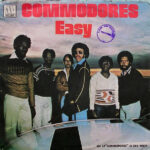
 Few songs capture the feeling of calm, confidence, and romantic surrender quite like “Easy” by the Commodores. Released in 1977 on the album Commodores, the song marked a turning point for the band, showcasing Lionel Richie’s emerging talent as a songwriter and vocalist capable of blending heartfelt emotion with smooth, soulful sophistication. It’s a track that continues to resonate across generations, a slow-burning ballad that is both intimate and universally relatable. In just over three minutes, “Easy” defines an entire mood, proving that simplicity, when executed with mastery, can be profoundly powerful.
From the opening notes, the song establishes its relaxed, almost hypnotic vibe. Richie’s soft, expressive piano chords introduce the track, immediately setting a reflective and tender tone. The arrangement is understated yet precise: the rhythm section is steady without dominating, the bass moves fluidly underneath the groove, and subtle touches of guitar and percussion add texture without cluttering the sound. This careful balance creates a sense of spaciousness, a musical environment that feels as open as the emotional sentiment it conveys.
Lionel Richie’s vocal performance is central to the song’s magic. His voice is smooth and velvety, perfectly suited to the themes of reassurance and emotional honesty that define the lyrics. Richie doesn’t belt or exaggerate; he sings with intimacy, as though confiding in a close friend or lover. Each word is deliberate, each phrase measured, yet effortlessly emotive. The warmth and sincerity of his delivery invite listeners into the song, making them feel as though the narrative is happening to—and for—them.
Lyrically, “Easy” is deceptively simple, but its strength lies precisely in that simplicity. The song speaks of release, of stepping away from emotional turbulence and embracing peace. Lines like “I wanna be high, so high / I wanna be free to know the things I do are right” capture a universal longing for clarity and liberation in relationships. Unlike many love songs that dwell on longing or heartbreak, “Easy” frames love as something natural and unforced, suggesting that true connection comes when one is emotionally unburdened.
The chorus embodies this sense of lightness and release. The repetition of “I’m easy like Sunday morning” creates a mantra-like effect, reinforcing the song’s central metaphor. There’s an almost meditative quality to the phrasing; it’s a reminder that simplicity and ease in love, and in life, are not only desirable but attainable. That sentiment, paired with the gentle instrumentation, gives the song its timeless appeal.
The production of “Easy” reflects the careful craftsmanship of 1970s soul and R&B. Every element is deliberate. The keyboard lines provide both harmonic support and melodic embellishment, while the bass and drums create a gentle forward motion, enough to carry the song without disrupting its laid-back energy. Strings are employed sparingly, adding warmth and depth without veering into melodrama. The overall effect is luxurious yet restrained—a hallmark of the Commodores’ best work and a testament to Richie’s emerging skill as both a songwriter and a producer.
One of the remarkable things about “Easy” is how it balances vulnerability and strength. The song acknowledges emotional pain and the desire to step away from it, yet it does so with confidence and composure. Richie’s lyrics do not beg or plead; they state a personal truth. That balance of openness and self-assurance is what makes the song emotionally resonant. It validates feelings of detachment or reflection without judgment, offering a space for listeners to feel seen and understood.
“Easy” also showcases the Commodores’ versatility as a band. Before this release, they were known primarily for funk and upbeat soul tracks, but this ballad demonstrated their ability to pivot into more tender, melodic territory. It paved the way for Lionel Richie’s later solo success, foreshadowing hits like “Three Times a Lady” and “Hello” while still retaining the collaborative spirit of the group. The song proves that the Commodores were more than just a party band; they were skilled interpreters of emotion, capable of translating subtle human experience into music that felt both personal and universal.
Contextually, the song arrived at a period when R&B was embracing smoother, more sophisticated sounds. Disco was on the rise, yet “Easy” deliberately sidestepped the genre’s frenetic energy. Instead of urgency, Richie opted for calm and clarity, and that choice made the song stand out. Its restraint made it suitable for radio play, yet its depth ensured it would endure beyond the charts. It’s a song that rewards repeated listening, each pass revealing new layers in the vocal inflections, instrumental interplay, or lyrical nuance.
The song’s legacy has only grown over time. “Easy” has been covered by countless artists, most notably by Faith No More in the early 1990s, whose version introduced it to a new generation and showcased the track’s adaptability across genres. The original, however, remains definitive. Its smooth grooves, evocative lyrics, and intimate vocal delivery have made it a staple of romantic playlists, slow jams, and reflective moments alike. It’s a song that transcends its era, a masterclass in emotional subtlety and musical restraint.
There’s also a universality to “Easy” that contributes to its longevity. While deeply romantic on the surface, its themes of ease, freedom, and emotional release apply beyond the confines of a love relationship. Listeners often turn to the song in moments of personal reflection or during times of transition, finding comfort in its gentle reassurance. Richie’s words and melodies provide a musical mirror for anyone seeking to reconcile restlessness with calm, or heartbreak with serenity.
Production-wise, the song’s elegance lies in its restraint. There’s a careful orchestration of space: Richie’s voice floats above the instrumentation, leaving room for emotional resonance. Every instrument serves the song’s central purpose, enhancing rather than competing with the vocal narrative. This meticulous arrangement allows the song to maintain its emotional honesty, creating an atmosphere that is intimate yet expansive, simple yet profound.
Ultimately, “Easy” endures because it is a song that feels effortlessly honest. It doesn’t need to impress with technical fireworks or complex arrangements; its power comes from its clarity and emotional truth. It reminds listeners that simplicity can be profound, and that love and self-reflection do not always require dramatics. The song embodies a philosophy: peace, patience, and ease are as powerful as passion and intensity.
Decades after its release, “Easy” still resonates with new audiences. Lionel Richie’s voice, the Commodores’ understated instrumentation, and the song’s tender lyricism combine to create a track that feels both timeless and immediate. It is a musical embrace, a reminder that surrendering to ease—emotionally, mentally, or romantically—is not weakness, but wisdom. In that sense, “Easy” is more than just a song; it is a lesson in life, wrapped in velvet melody and soulful grace.
Few tracks manage to balance intimacy, sophistication, and universal appeal as successfully as “Easy.” It invites listeners in with a gentle pulse, speaks to them with sincerity, and leaves a lasting impression through its unassuming brilliance. Lionel Richie and the Commodores created not just a song, but an enduring mood—a celebration of emotional clarity, calm confidence, and the simple joy of being “easy like Sunday morning.”
This post has already been read 1114 times!