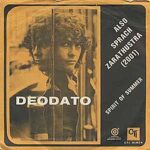
 Few tracks from the 1970s fuse jazz, funk, and cinematic grandeur as seamlessly as Eumir Deodato’s Also Sprach Zarathustra (2001). Released in 1973 on his album Prelude, this electrifying adaptation of Richard Strauss’s iconic classical composition took the world by storm, blending sophisticated orchestration with the irresistible grooves of funk and jazz-rock. The song is a testament to Deodato’s genius as an arranger and musician, transforming a piece known for its solemn, cosmic grandeur into a vibrant, modern masterpiece that still resonates today. In many ways, it captures the era’s fascination with genre-bending experimentation and the spirit of musical innovation that defined the early 1970s.
At its core, Deodato’s Also Sprach Zarathustra (2001) is an audacious reimagining of Strauss’s Also Sprach Zarathustra, famously used in Stanley Kubrick’s film 2001: A Space Odyssey. Whereas Strauss’s original is a sweeping orchestral tone poem, heavy with majesty and dramatic tension, Deodato injects it with syncopated funk rhythms, electric piano, and jazz-infused improvisation. The opening fanfare—the instantly recognizable three-note motif—remains intact, providing a familiar anchor for listeners. But as the track progresses, Deodato’s ensemble pushes the composition into entirely new territory, with syncopated drums, slinky bass lines, and dynamic brass sections transforming the piece into a lively, danceable exploration of sound.
Musically, the track is a masterclass in arrangement. Deodato’s electric piano plays a central role, its timbre bridging the classical and jazz elements. The rhythm section, featuring Stanley Clarke on bass and Billy Cobham on drums, lays down a groove that is both precise and elastic, allowing the music to breathe while driving it forward with unstoppable momentum. The horn section punctuates key moments with crisp stabs and flourishes, while the strings provide an ethereal counterpoint that nods to the original orchestral textures. This interplay between classical motifs and jazz-funk instrumentation creates a sonic experience that is simultaneously sophisticated and accessible, cerebral and visceral.
One of the most remarkable aspects of Deodato’s version is how it balances reverence and innovation. Strauss’s composition is treated with deep respect—the iconic fanfare is preserved, and the harmonic structure remains recognizable—but Deodato does not shy away from making it his own. Improvisational solos, funky bass grooves, and syncopated drum patterns inject a modern sensibility into the piece, highlighting the elasticity of the original work and proving that classical music could be a canvas for jazz-funk experimentation. This creative audacity is what makes the track so enduring, appealing not only to jazz and funk aficionados but also to casual listeners intrigued by its cinematic grandeur.
The track also has an undeniable cinematic quality that complements its musical complexity. Even without a visual component, Also Sprach Zarathustra (2001) evokes images of vast spaces, cosmic journeys, and dramatic revelation—echoing the awe-inspiring visuals of Kubrick’s 2001: A Space Odyssey. The opening fanfare immediately conjures the sense of something monumental unfolding, while the syncopated rhythms and improvisational solos introduce tension, excitement, and a sense of motion. It is music that seems to tell a story, carrying the listener from the awe of the opening notes through a journey of rhythmic exploration and harmonic sophistication.
Deodato’s Also Sprach Zarathustra (2001) was not only a critical success but also a commercial phenomenon. It became a crossover hit, reaching number two on the U.S. Billboard Hot 100—a rare feat for an instrumental jazz-funk track. The song’s success helped to broaden the audience for jazz-fusion and demonstrated that experimental, genre-bending music could achieve mainstream appeal. Its Grammy-winning arrangement further cemented Deodato’s reputation as one of the most innovative musicians of his time, capable of bridging worlds that many considered incompatible: classical, jazz, funk, and popular music.
The track also exemplifies the spirit of the early 1970s jazz-fusion movement. Artists were pushing the boundaries of what jazz could be, integrating elements of rock, funk, and classical music into highly original compositions. Deodato’s work stands alongside contemporaries like Herbie Hancock, Weather Report, and Return to Forever, who were similarly exploring hybrid musical landscapes. What sets Deodato apart, however, is his ability to make complex music accessible without sacrificing sophistication. Also Sprach Zarathustra (2001) is simultaneously cerebral and immediate—it can be studied for its intricate arrangement or simply enjoyed as a thrilling listening experience.
Another noteworthy aspect of the track is its enduring influence. It has been sampled, referenced, and covered across multiple genres over the decades, from hip-hop to electronic music, illustrating its lasting impact on popular culture. The track’s grooves have inspired countless musicians to experiment with blending classical motifs and contemporary rhythms, proving that Deodato’s vision was both timeless and ahead of its era. Its cinematic sweep, technical virtuosity, and infectious groove continue to resonate with listeners, making it one of the most celebrated examples of jazz-funk crossover ever recorded.
Listening to Also Sprach Zarathustra (2001) today, the track remains remarkably fresh. The musicianship is impeccable—every note, drum hit, and horn flourish feels intentional and alive. The recording captures the energy of a live performance, despite being a studio track, which adds to its immediacy and excitement. Whether one approaches it as a fan of classical music, jazz, funk, or simply great instrumental music, the track offers layers of enjoyment. Its brilliance lies in its ability to engage on multiple levels, providing both the intellectual satisfaction of sophisticated arrangement and the physical thrill of a compelling groove.
The track’s success also helped redefine perceptions of what popular music could achieve. It demonstrated that instrumental music—often considered niche or secondary in mainstream markets—could captivate broad audiences if it combined technical mastery with emotional resonance. Deodato’s arrangement proved that classical themes could be revitalized in a modern context, encouraging a generation of musicians to explore the intersections of genres and expand the possibilities of contemporary music.
Ultimately, Also Sprach Zarathustra (2001) is a triumph of creativity and collaboration. Eumir Deodato’s vision, combined with the extraordinary talents of his ensemble, produced a track that remains one of the most iconic instrumental pieces of the 20th century. It captures the thrill of discovery, the joy of experimentation, and the power of music to transcend boundaries. For listeners, it offers an exhilarating journey, from the awe-inspiring fanfare of the opening notes to the irresistible grooves of the jazz-funk core, leaving a lasting impression that is equal parts cerebral and soulful.
In many ways, Deodato’s Also Sprach Zarathustra (2001) exemplifies the transformative power of music. It takes something familiar—a classical composition that had already achieved iconic status—and reimagines it in a way that is fresh, exciting, and culturally significant. Its blend of technical sophistication, genre-blurring innovation, and accessible groove ensures that it remains relevant and admired, more than forty years after its release. For anyone exploring the intersection of classical grandeur and jazz-funk dynamism, this track is not just a recommendation—it is essential listening.
Also Sprach Zarathustra (2001) is more than an adaptation; it is a reinvention, a celebration of musical possibility, and a benchmark for genre-crossing excellence. Whether as a historical artifact, a piece of danceable genius, or an enduring work of art, it stands as one of Eumir Deodato’s crowning achievements and a shining example of how music can transcend expectation while captivating the imagination. The track invites listeners into a sonic journey that is at once majestic, playful, and transformative—a rare combination that has ensured its enduring legacy in the pantheon of great instrumental music.