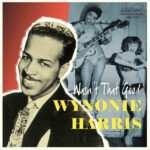
 “Good Rockin’ Tonight” doesn’t ease you in or ask for permission. It kicks down the door with a laugh, a shout, and a beat that already knows where your hips are headed. When Wynonie Harris recorded the song in 1948, popular music was standing at a crossroads, and this record didn’t bother looking both ways. It charged forward, fueled by rhythm, innuendo, and a sense of release that felt almost dangerous for its time. Listening now, it’s easy to hear why the song still crackles with energy. It sounds like rules being broken in real time.
Harris wasn’t the first to record “Good Rockin’ Tonight,” but he was the one who turned it into a cultural event. Where earlier versions leaned toward jump blues polish, Harris injected raw personality. His voice isn’t smooth in the traditional sense; it’s elastic, full of growls, shouts, and sly asides. He sings like a man who knows exactly what kind of party he’s throwing and dares you to keep up. That confidence is infectious. From the opening moments, he’s not just performing the song, he’s inhabiting it.
The band locks into a groove that feels loose and ferocious at the same time. The rhythm section swings hard, pushing the song forward with an urgency that leaves no room for subtlety. The horns punch and wail, not so much decorating the track as egging it on. Everything about the arrangement is built to serve momentum. There’s no pause for reflection, no space for restraint. The music wants movement, and it wants it now.
Lyrically, “Good Rockin’ Tonight” is a celebration of pleasure stripped of pretense. The language is simple, repetitive, and loaded with implication. Harris delivers each line with a wink that’s impossible to miss. This is music that understands the power of suggestion, using rhythm and tone to say what words alone can’t. The repetition isn’t lazy; it’s hypnotic. Each return to the central phrase feels like a chant, reinforcing the communal nature of the experience being described.
What makes Harris’ performance so compelling is his sense of timing. He knows exactly when to stretch a phrase, when to bark a line, and when to let the band carry the energy forward. That interplay between voice and instruments gives the song its kinetic feel. You can hear the room in the recording, the sense that this is happening live, with bodies reacting in real time. It’s not polished to perfection, and that’s the point. The rough edges are part of the thrill.
Context matters enormously here. In the late 1940s, rhythm and blues was becoming louder, bolder, and more physical. “Good Rockin’ Tonight” captured that shift perfectly. It wasn’t just about dancing; it was about release, about shaking off the constraints of a week, a job, or a society that didn’t always make room for joy. Harris’ performance taps into that collective hunger, giving it a voice that’s equal parts defiance and celebration.
There’s also a sense of humor running through the song that keeps it from feeling aggressive. Harris is playful, teasing his audience as much as he’s urging them on. His laughter and ad-libs feel spontaneous, like he’s reacting to the crowd rather than following a script. That humor makes the record feel human. It’s not trying to intimidate; it’s inviting you into the fun, as long as you’re willing to let go.
Musically, the song sits at a crucial point in the evolution of rock and roll. You can hear the blues roots clearly, but there’s something new happening in the emphasis on rhythm and attitude. The backbeat hits harder, the vocals push further forward, and the overall feel is less about elegance and more about impact. Harris’ delivery anticipates the swagger of later rock singers, from Elvis Presley to Little Richard, who would take this kind of energy and amplify it for a new generation.
In fact, it’s impossible to talk about “Good Rockin’ Tonight” without acknowledging its influence. When Elvis covered the song in the mid-1950s, he was tapping directly into the spirit Harris had unleashed. But Harris’ version remains unmatched in its rawness. Where later interpretations sometimes smoothed out the edges, this original recording keeps its grit intact. It sounds like the moment when something new clicked into place, before it had a name or a rulebook.
The recording’s sonic qualities only enhance its power. The slightly overdriven sound, the way the instruments blur together at peak moments, creates a sense of physical closeness. You’re not listening from a safe distance; you’re in the room. That immediacy is one of the reasons the song still feels alive. It doesn’t belong to the past so much as it keeps reintroducing itself every time you press play.
Emotionally, “Good Rockin’ Tonight” thrives on confidence. Harris isn’t asking if the night will be good; he’s declaring it. That certainty is part of the song’s appeal. It offers an escape from doubt, from hesitation, from overthinking. For the length of the track, there’s only the beat, the voice, and the promise of a good time. That focus is liberating.
At the same time, the song doesn’t pretend that joy is delicate or refined. It’s loud, sweaty, and unapologetic. Harris embraces that physicality, turning it into art through sheer force of personality. He understands that sometimes music’s job is to make you move first and think later. “Good Rockin’ Tonight” does exactly that, and it does it without shame.
Decades later, the song still carries that spark. It hasn’t been dulled by nostalgia or overexposure. Instead, it stands as a reminder of a moment when music leaned fully into its ability to disrupt, to excite, and to bring people together through shared energy. Wynonie Harris didn’t just sing about a good night; he created the sound of one.
In the end, “Good Rockin’ Tonight” feels less like a song and more like an event captured on record. It’s the sound of a room catching fire, of a crowd realizing something special is happening, of a performer seizing the moment and riding it as far as it will go. Wynonie Harris’ voice leads the charge, laughing, shouting, and daring you to stand still. Even now, that dare is impossible to refuse.