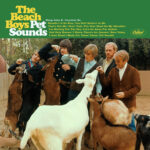
 Few albums have altered the course of popular music as profoundly as Pet Sounds. Released by the Beach Boys in May 1966, it arrived at a moment when rock and pop were rapidly evolving from simple entertainment into serious artistic expression. While the Beach Boys had already established themselves as America’s premier surf-pop group with infectious harmonies and songs celebrating California life, Pet Sounds revealed an entirely different side of the band—one that was deeply introspective, emotionally vulnerable, and musically adventurous.
More than half a century later, Pet Sounds continues to occupy the highest tier of popular music. It consistently appears near the top of “greatest albums of all time” lists, has influenced countless musicians across every genre, and remains one of the most beautifully crafted records ever produced. Yet its greatness isn’t simply the result of technical innovation or historical importance. The album endures because it captures universal emotions—hope, insecurity, loneliness, love, and the search for meaning—with remarkable honesty.
At the center of Pet Sounds was Brian Wilson, whose creative vision transformed what many believed a pop album could be.
By 1965, the Beach Boys had become one of America’s biggest bands. Songs like “Surfin’ U.S.A.,” “California Girls,” “Fun, Fun, Fun,” and “I Get Around” had made them international stars. Their image revolved around beaches, surfing, fast cars, and youthful optimism. While those songs remain classics, Brian Wilson had begun looking beyond the formula that had brought the group commercial success.
Inspired by the artistic ambition of The Beatles and particularly their album Rubber Soul, Wilson wanted to create a record that functioned as a complete artistic statement rather than simply a collection of singles. He temporarily stepped away from touring with the Beach Boys to concentrate entirely on writing, arranging, and producing music in the studio.
The result was revolutionary.
Rather than relying on straightforward rock instrumentation, Wilson assembled an extraordinary group of Los Angeles session musicians known as the Wrecking Crew. Together they constructed rich, intricate arrangements featuring orchestral instruments, bicycle bells, theremins, accordions, harpsichords, bass harmonicas, sleigh bells, Coke cans, dog whistles, and countless other unusual sounds.
Yet despite its complexity, Pet Sounds never feels cluttered.
Every note serves the emotional core of the songs.
The album opens with “Wouldn’t It Be Nice,” one of the greatest opening tracks in music history. Bright harmonies, shimmering instrumentation, and infectious optimism immediately draw listeners in, but beneath its joyful melody lies youthful impatience. The song isn’t merely about romance; it’s about longing for adulthood, independence, and a future where life’s complications disappear. Wilson’s arrangement constantly shifts, introducing unexpected chord changes that somehow sound perfectly natural. Even listeners unfamiliar with music theory instinctively recognize that something extraordinary is happening.
“You Still Believe in Me” follows with a dramatic emotional shift. Gone is the youthful excitement of the opener. Instead, Wilson explores guilt, gratitude, and vulnerability within a relationship. The delicate vocal harmonies float effortlessly over gentle instrumentation, creating one of the album’s most intimate moments. Few pop songs before 1966 had explored emotional insecurity with such sincerity.
“That’s Not Me” continues the theme of self-discovery. Rather than celebrating confidence, the song acknowledges uncertainty and personal growth. The narrator ventures into the world believing independence will provide fulfillment, only to discover that genuine happiness often comes through meaningful relationships. Wilson’s increasingly sophisticated songwriting avoids simple answers, making the song feel surprisingly contemporary decades later.
“Don’t Talk (Put Your Head on My Shoulder)” remains one of the most beautiful ballads ever recorded. Built upon lush orchestration rather than conventional rock instrumentation, it demonstrates Wilson’s remarkable understanding of mood and atmosphere. Silence becomes almost as important as sound. Instead of dramatic declarations, the song celebrates quiet intimacy—the comfort of simply sharing a moment with someone you love.
“I’m Waiting for the Day” introduces a slightly more upbeat rhythm while maintaining the album’s emotional depth. Wilson combines complex percussion with soaring harmonies, creating a song that balances hope with patience. Again, relationships are portrayed realistically rather than idealistically.
The instrumental title track, “Pet Sounds,” often surprises first-time listeners. Rather than functioning as filler, it serves as an emotional interlude, allowing listeners to absorb everything they’ve experienced thus far. Wilson’s arrangement blends surf influences with jazz, orchestral pop, and easy listening in ways that sound entirely unique.
“Sloop John B” initially appears somewhat disconnected from the album’s central themes because it originated as a traditional folk song. Yet Wilson’s arrangement transforms it into something deeply emotional. The tale of frustration, homesickness, and longing unexpectedly complements the introspective mood surrounding it. Carl Wilson delivers one of the finest lead vocals of his career, while the harmonies remain absolutely breathtaking.
Then comes “God Only Knows.”
There are few songs in popular music that inspire as much admiration.
Paul McCartney has frequently described it as one of his favorite songs ever written, and countless musicians have echoed that sentiment. Its opening lyric remains startling because it begins not with certainty but with humility. Rather than proclaiming eternal devotion through grand gestures, the song quietly acknowledges emotional dependence with extraordinary grace.
Musically, it borders on miraculous.
The chord progressions constantly surprise without ever feeling unnatural. Wilson layers vocal harmonies like orchestral instruments, while the arrangement subtly shifts beneath the melody. Every listen reveals another detail previously unnoticed.
Carl Wilson’s vocal performance deserves special recognition. His gentle delivery perfectly matches the song’s emotional honesty. He never oversings, allowing the composition itself to carry its enormous emotional weight.
“I Know There’s an Answer” explores personal growth and understanding, while “Here Today” examines the fragile nature of romantic relationships with an almost philosophical perspective. Neither song settles for conventional pop themes, reflecting Wilson’s growing interest in emotional complexity.
“I Just Wasn’t Made for These Times” stands among Brian Wilson’s most autobiographical compositions. Few songs have captured the feeling of not fitting into the world quite so effectively. The lyrics express isolation, self-doubt, and the search for belonging without becoming self-pitying. The inclusion of the Electro-Theremin contributes an otherworldly quality that perfectly matches the song’s themes.
The album concludes with “Caroline, No,” arguably Wilson’s most heartbreaking composition. Nostalgia, innocence, lost love, and the passage of time merge into a quiet meditation on growing older. Rather than ending with triumph, Pet Sounds concludes with acceptance. The closing sounds of barking dogs and passing trains leave listeners suspended between memory and reality, creating one of the most haunting finales in popular music.
What makes Pet Sounds so extraordinary isn’t simply its songwriting but its production.
Brian Wilson approached the recording studio as an instrument long before such thinking became common. Every sound was carefully placed. Every harmony was meticulously arranged. Instead of recording musicians simultaneously, Wilson constructed each song layer by layer, allowing incredible precision without sacrificing warmth.
The Wrecking Crew deserves enormous credit for bringing Wilson’s vision to life. Their technical brilliance enabled arrangements that many other musicians simply could not have performed. Yet despite the sophistication involved, nothing about the album feels cold or overly calculated. Emotion remains the priority throughout.
The Beach Boys’ harmonies had always been exceptional, but Pet Sounds elevated them to another level. Wilson stacked voices into rich, almost orchestral textures. Rather than functioning merely as backing vocals, the harmonies became essential components of the arrangements themselves.
Commercially, the album initially produced mixed results.
In the United Kingdom, critics immediately recognized its brilliance. In the United States, however, audiences expecting another collection of surf songs were less enthusiastic. While Pet Sounds sold respectably, it failed to match the massive commercial success of the Beach Boys’ earlier releases.
History, however, has completely vindicated Brian Wilson’s artistic gamble.
Its influence cannot be overstated.
Most famously, Pet Sounds directly inspired The Beatles while creating Sgt. Pepper’s Lonely Hearts Club Band. Paul McCartney has repeatedly acknowledged the profound impact Wilson’s masterpiece had on the Beatles’ creative ambitions. In many ways, the artistic conversation between Wilson and the Beatles helped launch one of popular music’s greatest creative periods.
Its influence extends far beyond the 1960s.
Artists including Elton John, Billy Joel, Fleet Foxes, Radiohead, Animal Collective, and countless others have cited Pet Sounds as an inspiration. Its fingerprints can be found throughout chamber pop, indie rock, progressive pop, alternative music, and modern production techniques.
What remains most remarkable is how emotionally contemporary the album still feels.
Many landmark records become admired primarily for historical significance. Pet Sounds avoids that fate because its emotional core remains timeless. The uncertainty of young adulthood, the complexities of love, the fear of growing older, and the search for personal identity remain just as relevant today as they were in 1966.
Repeated listening only deepens appreciation.
The first experience often highlights the gorgeous melodies and harmonies. Later listens reveal increasingly sophisticated orchestration, subtle production choices, unexpected chord movements, and lyrical nuances. Few albums reward careful attention as generously.
Brian Wilson once sought to create “the greatest rock album ever made.”
Whether or not one accepts that description, he unquestionably achieved one of music’s greatest artistic accomplishments. Pet Sounds transformed the possibilities of studio recording, elevated pop songwriting to unprecedented emotional heights, and demonstrated that commercial music could possess genuine artistic depth without sacrificing accessibility.
It remains a record that feels simultaneously intimate and expansive, technically brilliant yet emotionally direct, ambitious without becoming pretentious. More than fifty years after its release, it continues to inspire musicians, producers, critics, and listeners who discover it for the first time.
There are many classic albums.
There are fewer albums that permanently redefine an entire medium.
Pet Sounds belongs in that rarified company. It is not simply the Beach Boys’ masterpiece—it is one of the crowning achievements in the entire history of recorded music.
Rating: 10/10
This post has already been read 17505 times!