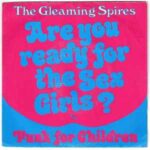
 In the vibrant, often chaotic Los Angeles new wave scene of the early 1980s, where synths pulsed, irony reigned, and underground clubs like the Whisky a Go Go and KROQ-FM shaped tastes, few tracks embodied the era’s mix of horny fantasy, sharp satire, and infectious danceability better than Gleaming Spires’ “Are You Ready for the Sex Girls?” What began as a tongue-in-cheek B-side tossed off during downtime from a bigger gig became the band’s signature song, a regional smash, and a soundtrack staple in two quintessential 1980s teen comedies. With its bouncy bass line, sparkling keyboards, and absurdly escalating lyrics, the track clocked in at just over four minutes of pure electro-pop weirdness. It remains a beloved artifact for new wave enthusiasts, Gen X nostalgia seekers, and anyone who appreciates smart dumb fun. Far from a one-hit wonder footnote, Gleaming Spires’ story reveals a band of talented side-project artists navigating the Sparks orbit, crafting literate, quirky pop across three albums before fading into cult status—only to be rediscovered and properly archived decades later.
Origins: From Bates Motel to Sparks Backing Band to Gleaming Spires
The roots of Gleaming Spires trace back to Bates Motel, a short-lived Los Angeles power-pop/new wave outfit in the late 1970s. Core members Leslie (Les) Bohem (vocals, bass, guitar, keyboards) and David Kendrick (drums, percussion) had been grinding in the LA scene. Kendrick had previously played with Continental Miniatures and done some session work, while Bohem brought a literary bent influenced by poets like Kenneth Rexroth and Lawrence Ferlinghetti. Bates Motel caught the attention of the Mael brothers—Ron and Russell of Sparks—during a period when Sparks sought a fuller live band sound after their electronic disco phase. In 1981, Bohem and Kendrick were recruited as the rhythm section for Sparks’ 1981–1985 incarnation, joining guitarist Bob Haag and keyboardist Jim “Jimbo” Goodwin. This lineup powered Sparks albums like Whomp That Sucker (1981), Angst in My Pants (1982), and Pulling Rabbits Out of a Hat (1984), delivering U.S. hits such as “Cool Places” and “I Predict.”
With the Maels’ blessing, Bohem and Kendrick carved out time for their own project. They recruited Haag and Goodwin, completing the quartet. Demos were produced by a then-up-and-coming Stephen Hague (who later helmed hits for Pet Shop Boys, New Order, and Orchestral Manoeuvres in the Dark). The sleek, electronic production gave their music a polished yet off-kilter edge. They signed to the indie Posh Boy Records, largely on the strength of one track: “Are You Ready for the Sex Girls?,” originally envisioned as a non-album B-side. Graphic artist Kevin J. Walker, known for punk and new wave covers (including work with T.S.O.L. and Channel 3), created eye-catching promo materials that helped seal the deal. The band’s name evoked gleaming, futuristic skyscrapers—a perfect metaphor for their shiny, angular new wave sound.
Their debut, Songs of the Spires, dropped in 1981. The cover art nodded to intellectual roots with imagery inspired by beat poetry readings, contrasting the album’s playful, horny energy. While the band balanced Sparks commitments—touring and recording—they poured creativity into their side project, resulting in music that felt both connected to Sparks’ witty art-rock and distinctly its own.
The Song Itself: Musical Craft and Lyrical Satire
Musically, “Are You Ready for the Sex Girls?” is a textbook example of early-’80s new wave craftsmanship. It opens with a propulsive, funky bass line that locks into a danceable groove, layered with punchy electronic drums, bright synth stabs, and sparkling guitar accents. Producer Hague’s touch adds clarity and sheen without sanding off the edges. There are two primary versions: the original sparse, Rodney-on-the-ROQ-era single take (more minimalist and raw) and the fuller band arrangement that appeared on soundtracks, featuring expanded instrumentation and shouted backing vocals. Both deliver relentless forward momentum, making it a floor-filler on KROQ-FM, where influential DJ Rodney Bingenheimer spun it heavily.
The lyrics, primarily penned by Les Bohem, are the song’s secret weapon. On the surface, it reads like a leering celebration straight from a Miller Lite commercial or Porky’s-style teen fantasy:
Are you ready for the sex girls? The hot, hot, lean hot, big hot girls? Are you ready for the sex girls? The right, right, ultra-vital nice-nice girls?
But Bohem quickly subverts expectations with escalating absurdity. The “sex girls” invade your house, play pool, strip on command, and party chaotically. Then come the “pony girls” (“the ride, ride, fast, ride, pony girls”), the “lonely girls” (“the sad, sad, oh so sad lonely girls… They’ve got time on their hands, they’ve got skin like seals”), and more. The bridge depicts a house party descending into frenzy: “One comes over / Then they all come over / Then they party all around your house / One gets too romantic / One is kinda frantic / One stays quiet as a mouse.” Bikinis “gleam in the morning light,” bedrooms threaten to explode from the action, and the song ends with the deadpan realization: “No one is ready for the sex girls!”
It’s satire dressed as novelty—mocking macho over-sexualization, beer-ad tropes, and the ridiculousness of male fantasy while delivering an undeniably catchy hook. Animal noises and chaotic shouts in later mixes heighten the unhinged feel. As retrospectives note, it swims “in a sea snarking on over-sexualised beer commercial type lyrics,” blending humor with faint unease. Bohem’s versatile, supple vocals sell the absurdity without over-winking, making it both fun and slyly clever. In the context of MTV’s glossy videos and T&A films, it felt like an insider’s wink at the culture it inhabited.
Breakthrough via Soundtracks and Cultural Impact
The song’s commercial breakthrough came not from radio alone but from film. It appeared in the 1982 teen comedy The Last American Virgin (during party and opening scenes) and, most memorably, on the 1984 soundtrack to Revenge of the Nerds alongside the band’s “All Night Party.” These placements—especially Revenge of the Nerds, a cult favorite about college misfits fighting back—embedded it in the minds of a generation watching on cable and VHS. The fuller band version often heard in these contexts amplified its party anthem status. It later landed on Rhino’s landmark Just Can’t Get Enough: New Wave Hits of the ’80s, Vol. 3, securing its place in canon.
Beyond the charts (it was a regional KROQ hit but never a national Top 40 smash), the song captured the era’s blend of liberation and absurdity in post-disco, pre-AIDS sexual attitudes. It’s been memed, covered in karaoke, and streamed millions of times. For many, it evokes dorm-room laughs, awkward parties, and the innocent raunch of 1980s comedies.
The Full Discography: Quirky Evolution Across Three Albums
Gleaming Spires didn’t stop at one hit. Songs of the Spires (1981) showcased their range: power-pop leanings in tracks like “The Way Marlena Moves” and “Dedication” (Bates Motel holdovers produced by Andrew Gold), quirky anthems like “How to Get Girls Thru Hypnotism,” and atmospheric pieces like “When Love Goes Under Glass.” Bonus material on the 2021 reissue includes unreleased Bates Motel demos, revealing power-pop roots.
Walk on Well Lighted Streets (1983, PVC Records) continued the evolution, with Mark Kostabi (later of Guns N’ Roses and Ramones cover fame) designing the sleeve. Tracks drew from eclectic sources—Sammy Davis Jr. influences, 1940s self-help books—blending catchy hooks with oddball lyrics. The Party EP followed, featuring “Funk for Children” with a music video.
By Welcoming a New Ice Age (1985, Tabb Records), the band experimented boldly: prepared pianos, bagpipes, brass, cello, and more adventurous arrangements. Songs like the title track and “At Together” mixed catchiness with emotional weight and jarring effects. Lyrics grew more bizarre and introspective, reflecting maturity amid growing pressures.
Internal strains mounted. Bob Haag left abruptly before a national tour, Sparks shifted back to a duo, and the dual commitments proved unsustainable. The band dissolved quietly around 1985. Kendrick joined Devo (1987–1991, and later Xiu Xiu), while Bohem transitioned successfully to screenwriting (Nightmare on Elm Street 5: The Dream Child, The Horror Show, TV’s Taken, and more).
The 2021 Omnivore Reissues: Rediscovery and Legacy
For years, the albums existed mainly as vinyl collector’s items. In 2021, Omnivore Recordings delivered deluxe CD/digital reissues of all three, with 27 bonus tracks (15 previously unreleased), remastering by Michael Graves, essays, interviews, lyrics, and photos. Songs of the Spires included full-band “Sex Girls” and Bates Motel demos. The Maels endorsed it enthusiastically: Russell called the debut “way beyond,” Ron quipped it was “the best Gleaming Spires album…ever.” These releases introduced the catalog to new generations and affirmed the band’s enduring appeal.
Why It Still Matters
“Are You Ready for the Sex Girls?” and Gleaming Spires represent a microcosm of early-’80s LA new wave: smart, silly, danceable, literate, and unapologetically weird. In an era of serious synth-pop (Depeche Mode, Tears for Fears) or pure escapism, they leaned into absurdity without losing heart. The song isn’t merely about sex girls—it’s about the chaos of desire, the ridiculousness of fantasy, and the realization that no one is ever truly prepared.
Today, it pops up in playlists, documentaries on new wave, and nostalgic discussions. Its legacy lives in the band’s full catalog—quirky, inventive, and ripe for deeper exploration. Crank up that bass line, hear the insistent question, and you’re transported back to a house party where the sex girls (and pony girls, and lonely girls) are always knocking. The spires still gleam; the party never truly ends.
This post has already been read 61607 times!