There are bands that struggle to make great music, and there are bands whose struggles become part of the music itself. Few groups illustrate that better than Pink Floyd. Throughout a career spanning nearly six decades, the band produced some of the most celebrated albums in rock history, sold hundreds of millions of records, and transformed what audiences expected from popular music. Yet behind the iconic album covers, elaborate stage shows, and timeless songs was a story filled with heartbreak, personal conflict, artistic obsession, and relationships that often seemed destined to fail.
Unlike many famous rock bands whose problems centered primarily on drugs, money, or the excesses of fame, Pink Floyd’s troubles ran much deeper. Mental illness, creative differences, shifting power dynamics, and incompatible personalities repeatedly threatened to tear the group apart. Members who once shared tiny apartments and dreams of musical success eventually found themselves communicating through lawyers, exchanging public insults, and fighting lengthy legal battles over the very name of the band they had built together.
Ironically, many of the themes explored in Pink Floyd’s music mirrored the events unfolding behind the scenes. Isolation, madness, greed, loss, war, and alienation weren’t simply subjects for songs—they became recurring elements of the band’s own history. Albums such as The Dark Side of the Moon, Wish You Were Here, Animals, and The Wall reflected very real emotions experienced by the musicians themselves. As their commercial success grew larger, so did the personal divisions within the group.
At the center of much of the band’s story stand two remarkable but very different figures. The first was Syd Barrett, the brilliant and unpredictable founder whose extraordinary imagination launched Pink Floyd before mental illness and heavy psychedelic drug use tragically derailed his career. The second was Roger Waters, whose vision and ambition guided the band to unprecedented artistic heights while simultaneously creating divisions that would eventually fracture the group almost beyond repair.
Between those two figures stood David Gilmour, Richard Wright, and Nick Mason—musicians who each played vital roles in shaping Pink Floyd’s unmistakable sound while navigating increasingly difficult personal and professional relationships.
What makes Pink Floyd’s story so compelling is that success rarely solved their problems. In many ways, it amplified them. Every hit album raised expectations. Every ambitious tour increased the pressure. Every creative triumph seemed to create new disagreements about the band’s future. Rather than bringing stability, fame often exposed fractures that had existed all along.
The remarkable achievement is not that Pink Floyd experienced conflict—many successful bands do. The remarkable achievement is that despite repeated crises, devastating personal losses, and years of bitterness, they continued producing music that challenged listeners intellectually as much as emotionally. Their greatest works emerged during periods when the band’s internal relationships were often at their most fragile.
To understand how that happened, it’s necessary to return to London during the mid-1960s, before the stadium tours, platinum records, and courtroom battles. Back then, Pink Floyd was simply a group of ambitious art students led by one of the most gifted—and ultimately tragic—songwriters of his generation.
The Rise of Syd Barrett: A Brilliant Beginning
Before Pink Floyd became synonymous with progressive rock, elaborate concept albums, and massive live productions, the band’s identity revolved almost entirely around one person: Syd Barrett.
Born Roger Keith Barrett in Cambridge, England, Syd possessed an artistic imagination unlike almost anyone in British rock music. A talented painter as well as a musician, Barrett approached songwriting with the mindset of an artist rather than a traditional pop composer. His lyrics drew inspiration from children’s literature, surrealism, science fiction, English folklore, and whimsical fantasy, producing songs that sounded both playful and strangely unsettling.
When Barrett reunited with childhood friend Roger Waters in London during the mid-1960s, they joined fellow architecture students Nick Mason and Richard Wright in a succession of early bands before eventually settling on the name Pink Floyd, inspired by blues musicians Pink Anderson and Floyd Council.
At first, the group played rhythm and blues covers like countless other London bands. Barrett, however, had little interest in remaining a conventional blues guitarist. He quickly began introducing original material that embraced psychedelic experimentation just as London’s underground music scene was beginning to flourish.
The timing proved perfect.
Venues like the UFO Club became gathering places for musicians, artists, poets, and audiences eager to experience something radically different from mainstream pop music. Pink Floyd’s performances featured extended improvisations, unusual lighting effects, tape loops, feedback, and sound experiments that often bordered on performance art.
Barrett stood at the center of it all.
Unlike many guitarists who sought technical perfection, Barrett favored atmosphere and emotion. He discovered unusual sounds by sliding metal lighters across guitar strings, manipulating amplifiers, and embracing happy accidents during performances. His style would influence generations of alternative and psychedelic musicians long after his own recording career ended.
Songs such as “Arnold Layne,” “See Emily Play,” “Astronomy Domine,” “Lucifer Sam,” and “Interstellar Overdrive” established Pink Floyd as one of Britain’s most exciting new bands. Barrett’s songwriting balanced catchy melodies with surreal imagery, creating music that sounded unlike anything audiences had previously encountered.
The band’s debut album, The Piper at the Gates of Dawn, released in 1967, remains one of psychedelic rock’s defining recordings. Nearly every track reflected Barrett’s unique creative vision.
Critics praised his originality.
Fans embraced his unpredictability.
Fellow musicians recognized that they were witnessing something genuinely new.
Yet even as Pink Floyd’s reputation grew, warning signs had already begun appearing.
Friends noticed increasing changes in Barrett’s personality. He sometimes became distant during conversations, stared blankly for extended periods, or seemed unable to focus during rehearsals. Performances became increasingly unpredictable. On some nights, Barrett dazzled audiences with remarkable creativity. On others, he barely played at all.
Initially, bandmates assumed the changes reflected experimentation with LSD, which had become common within London’s psychedelic scene.
Unfortunately, the reality appeared far more complicated.
When Genius Began to Slip Away
Exactly what happened to Syd Barrett has remained one of rock music’s most enduring mysteries.
Some friends believed excessive LSD use permanently altered his mental state.
Others argued that Barrett may have suffered from an underlying mental illness—possibly schizophrenia or another psychiatric condition—that happened to emerge during the same period. Because Barrett largely withdrew from public life after leaving Pink Floyd and never received a publicly confirmed diagnosis, the precise explanation remains uncertain.
Whatever the cause, those closest to him witnessed a heartbreaking transformation.
Barrett increasingly struggled to function during recording sessions.
He sometimes arrived carrying songs that changed completely from one performance to the next.
At concerts, he occasionally stood motionless on stage, strumming the same chord repeatedly or staring into space while the rest of the band attempted to continue without him.
Other nights, he wouldn’t play at all.
One famous incident reportedly involved Barrett spending hours crushing hair gel and tranquilizers together before appearing on stage. As the hot concert lights melted the mixture down his face, audience members watched in confusion while the once-charismatic frontman appeared almost unrecognizable.
His conversations also became increasingly difficult to follow.
Friends described long silences punctuated by unexpected remarks that seemed disconnected from reality.
Bandmates found themselves uncertain whether Barrett would even be capable of completing performances.
For Roger Waters, Nick Mason, and Richard Wright, the emotional toll proved enormous.
This wasn’t simply losing a bandmate.
They were watching one of their closest friends slowly disappear before their eyes.
At first, they attempted to adapt.
Other musicians occasionally covered Barrett’s guitar parts.
Set lists became more flexible.
Recording sessions stretched longer as producers tried to work around Barrett’s unpredictable behavior.
But it quickly became apparent that these were temporary solutions to a growing crisis.
Pink Floyd had become one of Britain’s fastest-rising bands.
Record labels expected new singles.
Promoters scheduled increasingly important concerts.
Television appearances required professionalism and consistency.
Meanwhile, the group’s creative leader could no longer reliably perform.
The situation forced the remaining members to confront an impossible question:
How do you continue when the very person who created your band is no longer capable of leading it?
The answer would forever change Pink Floyd—and permanently alter the lives of everyone involved.
The Hardest Decision: Leaving Syd Behind
By the beginning of 1968, Pink Floyd faced a situation that no young band could have imagined. Their success was growing rapidly, record companies wanted more material, concert promoters expected dependable performances, and audiences came to see the charismatic Syd Barrett who had become the face of London’s psychedelic underground. The problem was that the Syd Barrett those audiences expected was no longer the Syd Barrett arriving at rehearsals and concerts.
Every performance had become a gamble.
Some evenings Barrett would contribute enough to get through the show. On others, he would stare silently into the audience, refuse to play, or drift so far away mentally that the rest of the band had no choice but to continue without him. The unpredictability wasn’t simply frustrating—it threatened the future of the entire group.
Roger Waters, Richard Wright, and Nick Mason found themselves in an agonizing position. Barrett wasn’t just their songwriter. He was a close friend dating back to their Cambridge days. They had shared apartments, rehearsals, dreams of success, and countless late-night conversations about music and art. Watching his decline was emotionally devastating.
At first, the band searched for a compromise rather than a replacement.
Their solution was to invite another Cambridge musician to help.
David Gilmour had known Barrett since childhood. Like Barrett, he was an accomplished guitarist with a melodic style and an easygoing personality. The original idea wasn’t to replace Syd at all. Instead, Gilmour would support the band on stage by covering guitar parts and singing when Barrett became unable to perform. Barrett would remain the group’s songwriter and creative leader while someone else handled the practical demands of live performance.
It sounded reasonable.
In reality, it proved impossible.
The more rehearsals the band held, the clearer it became that Barrett was drifting further away. Communication became increasingly difficult. Recording sessions slowed dramatically as everyone waited for Barrett to contribute, only to discover he seemed unable—or unwilling—to finish songs that once came so effortlessly.
The breaking point arrived almost casually.
One evening, while driving to a scheduled concert, someone asked whether they should stop and pick up Syd.
According to Nick Mason’s recollection, someone simply replied, “Let’s not bother.”
No dramatic confrontation.
No official firing.
No emotional farewell.
They simply drove to the concert without him.
One sentence ended Syd Barrett’s career with Pink Floyd.
For many fans, that moment has become one of the saddest stories in rock history. It wasn’t an act of cruelty but one of painful necessity. The remaining members understood that if they continued waiting for Barrett to recover, Pink Floyd itself might cease to exist.
Yet the decision haunted them for decades.
Roger Waters later admitted that removing Barrett was heartbreaking, while David Gilmour often spoke with deep affection about his old friend. Nick Mason has repeatedly emphasized that the band had exhausted every option they could think of before finally accepting reality.
They had saved Pink Floyd.
But they had lost Syd.
Searching for an Identity
Replacing a frontman is difficult.
Replacing the visionary who created your band’s entire identity borders on impossible.
During the late 1960s, Pink Floyd suddenly found themselves asking questions few successful bands ever face.
Who were they without Syd Barrett?
The answer wasn’t immediately obvious.
Their first post-Barrett album, A Saucerful of Secrets, represented a band caught between two eras. Some songs still reflected Barrett’s influence, while others hinted at a more expansive musical direction.
David Gilmour immediately demonstrated extraordinary guitar ability, but he wasn’t attempting to imitate Barrett. His strengths were different. Where Barrett embraced unpredictability and surrealism, Gilmour favored expressive melodies, beautifully sustained notes, and remarkable technical control.
Roger Waters also began writing more frequently.
Although he had contributed songs previously, Waters increasingly emerged as the band’s principal lyricist. Unlike Barrett’s whimsical fantasy worlds, Waters’ writing focused on isolation, insecurity, fear, politics, war, and the psychological pressures of modern life.
This gradual shift transformed Pink Floyd’s music.
The playful psychedelic experimentation of the Barrett years slowly evolved into something darker, more introspective, and emotionally complex.
Albums such as More, Ummagumma, Atom Heart Mother, Meddle, and Obscured by Clouds became laboratories where the band experimented with orchestras, tape manipulation, unusual song structures, ambient soundscapes, and extended instrumental passages.
Commercially, these records produced mixed results.
Critics often admired the ambition but questioned the lack of consistency.
Even the band later admitted that some experiments succeeded far better than others.
Roger Waters would eventually describe parts of this period as years spent searching for direction.
They had escaped one crisis only to enter another.
Without Barrett’s singular creative vision, every member attempted to guide the band in different directions.
Some favored instrumental exploration.
Others preferred more traditional songwriting.
The democratic approach worked, but only up to a point.
Eventually, someone would have to become the band’s primary creative voice.
That person was Roger Waters.
Success Doesn’t Heal Old Wounds
By the early 1970s, Pink Floyd had gradually evolved into one of the world’s premier live acts.
Concerts featured elaborate lighting systems, quadraphonic sound, projected films, inflatable props, and compositions that stretched far beyond conventional rock songs.
Audiences were fascinated.
Musicians admired the band’s willingness to experiment.
Critics increasingly recognized that Pink Floyd had become something far more ambitious than a psychedelic rock group.
Yet emotionally, Syd Barrett never truly disappeared.
His absence lingered over almost every stage of the band’s development.
Waters has often acknowledged that Barrett’s decline profoundly shaped his own worldview. Watching a brilliant friend lose touch with reality left emotional scars that found their way into countless songs.
David Gilmour experienced those memories differently.
Having known Barrett before either man became famous, Gilmour often remembered not the tragic figure audiences later romanticized but the funny, charming, immensely talented young man from Cambridge.
Nick Mason also retained deep affection for Barrett while recognizing that continuing together had become impossible.
Even Richard Wright, typically the quietest member of the group, later admitted that Barrett’s departure affected everyone deeply.
The band’s growing success couldn’t erase those feelings.
If anything, it intensified them.
Every new achievement reminded them that Syd wasn’t there to experience it.
Every sold-out concert underscored the painful reality that the musician who founded Pink Floyd had become one of rock’s great missing figures.
His absence became almost another member of the band.
That emotional weight would eventually inspire one of the greatest albums ever recorded.
Fame Creates a Different Kind of Isolation
By 1972, Pink Floyd had finally found a creative identity.
Roger Waters began developing a concept centered on the pressures facing modern life: greed, conflict, time, mental illness, mortality, and the quiet anxieties experienced by ordinary people.
Unlike earlier albums built around loosely connected songs, this new project would explore one unified theme from beginning to end.
Every member contributed ideas.
Richard Wright composed beautiful keyboard passages.
David Gilmour refined musical arrangements.
Nick Mason provided subtle rhythmic foundations.
Waters supplied the conceptual framework and lyrics.
The collaborative process produced something extraordinary.
Yet ironically, just as the band’s internal chemistry reached perhaps its finest artistic moment, another problem emerged.
Success.
When The Dark Side of the Moon arrived in 1973, nobody—not even Pink Floyd themselves—anticipated what would happen next.
The album became a worldwide phenomenon.
It remained on the Billboard album chart for an astonishing number of years.
Millions of listeners connected with its exploration of anxiety, ambition, mental illness, and the passage of time.
Songs such as “Money,” “Time,” “Us and Them,” “Brain Damage,” and “Eclipse” became cultural landmarks.
Pink Floyd had achieved the kind of success most musicians spend entire careers chasing.
Instead of bringing peace, however, overwhelming fame introduced a new set of pressures.
The band suddenly found themselves expected to follow one of the greatest albums in rock history.
Every future project would inevitably be compared against The Dark Side of the Moon.
Record companies expected another masterpiece.
Fans expected another masterpiece.
Critics expected another masterpiece.
Most importantly, the band expected another masterpiece from themselves.
That pressure would slowly begin changing the relationships between its members.
Roger Waters became increasingly convinced that Pink Floyd needed stronger artistic leadership if they hoped to avoid repeating themselves.
David Gilmour believed collaboration remained essential.
Richard Wright preferred a calmer working environment.
Nick Mason increasingly found himself trying to keep the peace.
The democratic band that had survived Syd Barrett’s departure was beginning to fracture in ways that were initially subtle—but would eventually become impossible to ignore.
Wish You Were Here: Success Meets Survivor’s Guilt
Following the unprecedented success of The Dark Side of the Moon, Pink Floyd faced a problem that has crippled countless artists: how do you follow an album that many people already consider a masterpiece?
The members were exhausted.
Years of touring had left them physically drained, while the expectations surrounding their next record weighed heavily on everyone involved. Roger Waters, David Gilmour, Richard Wright, and Nick Mason entered the studio knowing that whatever they produced would immediately be compared to one of the best-selling albums in history.
For the first time, inspiration proved difficult to find.
Recording sessions stretched on for months with little progress. Band members later admitted they often arrived at the studio without clear ideas, spending entire days experimenting with sounds that ultimately led nowhere. The confidence that had carried them through The Dark Side of the Moon had been replaced by uncertainty.
Roger Waters eventually found himself returning to the person whose absence had haunted the band for years.
Syd Barrett.
Rather than simply writing about their former bandmate, Waters used Barrett as a symbol for something much larger: the loss of innocence, the corrupting influence of the music business, and the emotional distance that fame can create between people who were once close friends.
The result became Wish You Were Here.
Songs like “Welcome to the Machine” and “Have a Cigar” criticized the corporate music industry with biting sarcasm, portraying record executives as people more interested in profits than artists. Meanwhile, the title track expressed quiet regret and longing, becoming one of the most emotionally powerful songs Pink Floyd ever recorded.
But the album’s centerpiece was “Shine On You Crazy Diamond.”
Spanning nearly half the record, the composition served as a direct tribute to Syd Barrett. Rather than portraying him as a tragic victim, the song remembered the extraordinary brilliance that had once made him the band’s guiding light.
Its opening guitar notes, played by David Gilmour, remain among the most recognizable introductions in rock history. Slow, mournful, and filled with emotion, they established the reflective mood before Roger Waters’ lyrics gently acknowledged Barrett’s genius while mourning what had been lost.
For everyone involved, recording the song proved deeply personal.
None of them realized that its subject was about to unexpectedly walk through the studio door.
The Day Nobody Recognized Syd Barrett
Few moments in rock history are as heartbreaking as what happened during the recording of Wish You Were Here.
One afternoon in June 1975, an unfamiliar man quietly entered the studio at Abbey Road.
He was overweight.
His head had been completely shaved.
Even his eyebrows were gone.
At first, no one recognized him.
It was Syd Barrett.
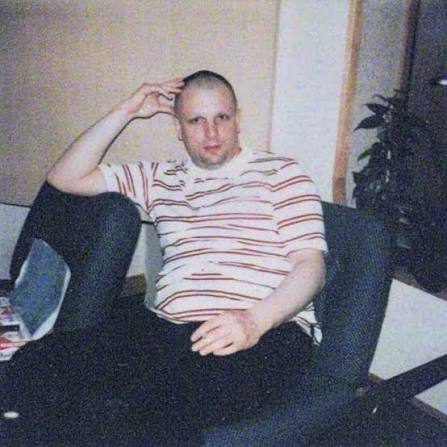
The transformation shocked everyone present.
Only a few years earlier, Barrett had been one of London’s most charismatic young musicians. Now many of his closest friends struggled to identify him.
Accounts differ slightly regarding exactly who recognized him first, but once the realization spread through the studio, the atmosphere changed instantly.
Roger Waters reportedly became so emotional that he cried.
David Gilmour was stunned.
Richard Wright later admitted the experience deeply affected him.
Nick Mason remembered how surreal the entire encounter felt.
The timing made the moment even more painful.
The band had been recording “Shine On You Crazy Diamond”—a song written about Syd—when Barrett himself suddenly appeared.
Some observers have described the event as almost impossible to believe.
It felt as though the ghost haunting Pink Floyd had suddenly become real.
Barrett stayed for a while, speaking politely but often appearing disconnected from the significance of what was happening. According to various recollections, he seemed unaware that the music being recorded had been inspired by him.
Eventually, he quietly left.
The band never saw him in that setting again.
For Roger Waters especially, the visit became one of the defining emotional experiences of his life.
The image of Barrett standing silently in the studio remained with him for decades.
It reinforced many of the themes that increasingly dominated his writing: loss, isolation, memory, and the fragile nature of the human mind.
Roger Waters Becomes the Dominant Voice
During the making of Wish You Were Here, another important change was quietly taking place.
Roger Waters was becoming Pink Floyd’s unquestioned creative leader.
The shift happened gradually rather than suddenly.
Following Syd Barrett’s departure, songwriting responsibilities had initially been shared fairly evenly. David Gilmour, Richard Wright, and even Nick Mason occasionally contributed ideas alongside Waters.
By the mid-1970s, however, Waters’ confidence had grown dramatically.
He wasn’t simply writing lyrics anymore.
He was developing complete concepts.
He increasingly arrived with detailed visions for albums before recording even began.
His ambition pushed the band toward larger artistic statements that few rock groups would have attempted.
At the same time, it also began changing the internal balance of power.
David Gilmour remained an essential musical collaborator, contributing memorable guitar parts and helping shape arrangements, but Waters increasingly viewed himself as the band’s principal architect.
Richard Wright, naturally quiet and conflict-averse, became less involved in creative decision-making.
Nick Mason generally preferred avoiding confrontation altogether.
As a result, fewer voices participated in major artistic decisions.
Initially, the arrangement worked.
The albums remained exceptional.
But the seeds of future conflict had already been planted.
Animals: Anger Replaces Reflection
If Wish You Were Here expressed sadness, Animals expressed frustration.
Released in 1977, the album reflected Roger Waters’ increasingly cynical view of society. Drawing inspiration from George Orwell’s Animal Farm, Waters divided humanity into symbolic categories: dogs, pigs, and sheep.
The lyrics were sharper.
The music became darker.
Optimism largely disappeared.
Unlike earlier Pink Floyd albums, which balanced melancholy with moments of beauty, Animals often felt confrontational from beginning to end.
David Gilmour’s guitar playing remained extraordinary.
His solos on “Dogs” rank among the finest performances of his career.
Richard Wright contributed atmospheric keyboards that perfectly matched the album’s bleak tone.
Nick Mason anchored the lengthy compositions with understated precision.
Yet internally, the band’s relationships were becoming increasingly strained.
Roger Waters’ perfectionism intensified.
He expected complete commitment from everyone involved.
Band meetings grew more contentious.
Creative disagreements became harder to resolve.
While no single argument defined the recording sessions, many small frustrations accumulated.
The democratic spirit that had characterized Pink Floyd’s earlier years was slowly disappearing.
Instead, Roger Waters’ vision increasingly dictated the band’s direction.
The “In the Flesh” Tour: When Roger Waters Finally Snapped
The supporting tour for Animals proved to be one of the most important turning points in Pink Floyd’s history.
Unlike earlier tours, which had largely attracted devoted fans, Pink Floyd now performed before enormous stadium crowds.
Financially, the concerts were enormously successful.
Emotionally, they became exhausting.
Roger Waters found himself increasingly frustrated by audience behavior.
Rather than quietly listening to the music, some fans shouted constantly, lit fireworks during performances, and treated concerts as giant parties.
Waters viewed much of the audience as disconnected from the emotional themes of the music.
He believed many spectators attended simply because Pink Floyd had become one of the world’s biggest bands.
The distance between performers and audiences also continued growing.
Instead of intimate theaters, the band now played massive outdoor venues where genuine communication felt almost impossible.
The breaking point occurred during the final concert of the tour in Montreal on July 6, 1977.
Throughout the evening, one particularly enthusiastic fan repeatedly shouted toward the stage.
Roger Waters became increasingly irritated.
Eventually, unable to contain his anger, he leaned forward and spat directly at the fan.
Almost immediately, Waters regretted what had happened.
He later described feeling horrified by his own behavior.
More importantly, the incident forced him to confront something deeper.
Why had he become so disconnected from his audience?
The answer arrived almost instantly.
He imagined building a giant wall between the band and the crowd.
At first, it was simply a passing thought.
Soon, it became the foundation for one of the most ambitious albums ever attempted.
The Wall.
Ironically, the emotional collapse that occurred during the Animals tour would produce Pink Floyd’s greatest commercial success.
It would also nearly destroy the band forever.
The Wall: A Masterpiece Born from Isolation
By the time Pink Floyd entered the studio to begin work on The Wall, the band was more successful than ever—and more fractured than at any point in its history.
Roger Waters arrived with an enormous concept already largely mapped out. Inspired by the alienation he felt during the Animals tour, he imagined a fictional rock star named Pink whose life became a series of emotional traumas. Every painful experience—an overprotective mother, the death of a father in war, abusive schoolteachers, failed relationships, and the crushing weight of fame—became another brick in the metaphorical wall separating him from the rest of humanity.
It was one of the most ambitious ideas ever proposed for a rock album.
It was also almost entirely Roger Waters’ vision.
Unlike previous records, where songs often evolved through collaboration, Waters arrived with detailed lyrics, storyboards, and a clear sense of how the album should unfold. David Gilmour still made crucial musical contributions, particularly to songs such as “Comfortably Numb,” “Run Like Hell,” and “Young Lust,” but the balance of power had shifted dramatically.
Pink Floyd was no longer functioning as four equal partners.
Increasingly, it felt like Roger Waters directing three supporting musicians.
That change affected everyone.
David Gilmour respected Waters’ ambition but increasingly pushed back when he believed ideas weren’t strong enough. Gilmour later recalled arguing over musical arrangements and refusing to accept material simply because Waters had written it.
Nick Mason found himself in a familiar role as peacemaker. Never naturally confrontational, he often tried to ease tensions before disagreements became full-blown arguments.
Richard Wright found himself in the most difficult position of all.
Richard Wright Becomes the Odd Man Out
Richard Wright had always been Pink Floyd’s quiet member.
He wasn’t interested in dominating interviews.
He rarely sought the spotlight.
Yet his atmospheric keyboard playing had become one of the defining elements of Pink Floyd’s sound. Songs such as “Us and Them,” “The Great Gig in the Sky,” “Echoes,” “Shine On You Crazy Diamond,” and “Wish You Were Here” simply would not sound the same without Wright’s contributions.
Unfortunately, by the late 1970s, his relationship with Roger Waters had deteriorated significantly.
Waters believed Wright was no longer contributing enough creatively.
Wright, meanwhile, felt increasingly excluded from decisions that affected the band’s future.
The recording sessions for The Wall became especially tense because Wright was also dealing with personal issues, including the collapse of his marriage. Friends later recalled that he appeared distracted and emotionally exhausted.
Roger Waters interpreted the situation differently.
He believed Wright lacked commitment.
As deadlines approached and pressure mounted from the record company, Waters demanded greater participation from everyone involved.
When he didn’t receive the response he wanted, matters reached a breaking point.
Waters reportedly gave the band an ultimatum.
Either Richard Wright would leave Pink Floyd…
…or Waters himself would walk away from the project.
The timing couldn’t have been worse.
The album was behind schedule.
Millions of dollars had already been invested.
A worldwide tour was being planned.
The rest of the band faced an impossible decision.
Ultimately, Wright agreed to leave.
Officially, he was no longer a member of Pink Floyd.
Ironically, because he had become a salaried touring musician rather than a full partner, Wright was reportedly the only member of Pink Floyd who actually made money during The Wall tour. The production was so expensive that the remaining members absorbed enormous financial losses while Wright simply collected his paycheck.
The irony wasn’t lost on anyone.
Although Richard Wright had technically been fired, he ended up in the strongest financial position among them.
Emotionally, however, the damage ran much deeper.
For many fans, Wright’s dismissal marked the moment Pink Floyd ceased functioning as a true band.
Recording in Separate Worlds
As work on The Wall continued, collaboration became increasingly rare.
Rather than four musicians creating music together in one room, members often recorded parts separately.
Communication grew increasingly formal.
Arguments became routine.
Producer Bob Ezrin frequently found himself acting as mediator between strong personalities whose relationships had become increasingly strained.
David Gilmour later acknowledged that Roger Waters’ relentless drive was essential to completing an album of such enormous scope.
At the same time, he also admitted that working conditions had become extraordinarily difficult.
Waters demanded perfection.
Every lyric mattered.
Every transition mattered.
Every sound effect mattered.
The pressure created one of rock’s greatest albums—but it came at a tremendous personal cost.
Despite the tension, flashes of collaboration still produced unforgettable moments.
One famous disagreement actually led to one of Pink Floyd’s greatest songs.
Roger Waters initially considered “Comfortably Numb” too polished.
David Gilmour believed it needed a richer musical arrangement.
After lengthy debate, the final version combined Waters’ verses with Gilmour’s soaring chorus and unforgettable guitar solo.
The result became one of the defining recordings of Pink Floyd’s career.
Ironically, one of the band’s greatest artistic triumphs emerged directly from creative conflict.
Building an Actual Wall
If the album itself was ambitious, the supporting concerts bordered on unbelievable.
Roger Waters insisted that audiences shouldn’t simply hear The Wall.
They should experience it.
During performances, construction workers slowly built an enormous physical wall between the band and the audience, brick by brick, throughout the first half of the concert.
By the end of the performance, the musicians were literally hidden behind it.
The symbolism was unmistakable.
The audience that had once inspired Roger Waters now became physically separated from him.
Massive inflatable puppets towered over the stage.
Animated sequences created by Gerald Scarfe filled giant projection screens.
Explosions, collapsing walls, and theatrical staging transformed concerts into multimedia productions unlike anything rock audiences had previously witnessed.
The shows received widespread critical acclaim.
Financially, however, they were disastrous.
The elaborate production proved so expensive that only a handful of performances could be staged.
Even sold-out arenas struggled to cover the enormous costs.
The irony reflected Pink Floyd’s history perfectly.
Their greatest artistic ambitions often came with enormous personal and financial consequences.
The Final Cut: Pink Floyd in Name Only
If The Wall exposed cracks within Pink Floyd, The Final Cut nearly erased the band altogether.
Released in 1983, the album originated from material Roger Waters had written during The Wall sessions before evolving into a deeply personal meditation on war, politics, and the death of his father during the World War II.
From the beginning, the project reflected Waters’ vision almost exclusively.
David Gilmour contributed relatively little songwriting.
Richard Wright was gone.
Nick Mason participated but had limited creative influence.
Many critics and fans have described The Final Cut as essentially a Roger Waters solo album released under the Pink Floyd name.
Even the album cover avoided prominently featuring the band’s name.
The recording sessions became openly hostile.
Waters reportedly dismissed many of Gilmour’s musical ideas.
Gilmour criticized the strength of Waters’ material.
Neither man seemed particularly interested in compromise.
Interviews from the period reveal how dramatically the relationship had deteriorated.
The warmth and mutual respect that once existed had largely disappeared.
Instead, both musicians increasingly viewed one another as obstacles rather than collaborators.
By the time The Final Cut was completed, Pink Floyd barely functioned as a band.
The four friends who had once shared dreams in London had become individuals moving in completely different directions.
Only one final confrontation remained.
It would unfold not in a recording studio…
…but in court.
Roger Waters Walks Away
By 1985, the tension that had been building inside Pink Floyd for nearly a decade had reached its breaking point.
Roger Waters no longer believed the band functioned as a creative partnership. Richard Wright had already been forced out during The Wall, The Final Cut had become almost entirely Waters’ project, and communication between Waters and David Gilmour had deteriorated to the point where meaningful collaboration seemed impossible.
Waters came to a conclusion that, in his mind, was perfectly logical.
Pink Floyd was finished.
After informing the band’s management that he was leaving, Waters reportedly assumed the group would simply dissolve. From his perspective, Pink Floyd had evolved into a vehicle for his concepts and songwriting. Without him, he believed, there could be no Pink Floyd.
It was a dramatic assumption.
David Gilmour and Nick Mason completely disagreed.
Rather than ending the band, they believed Pink Floyd could continue, just as it had after Syd Barrett’s departure nearly two decades earlier. To them, Pink Floyd had always been larger than any one member. Every musician had contributed to its unmistakable sound, and the name belonged to the band—not to a single songwriter.
That disagreement quickly escalated into one of rock music’s most bitter legal battles.
The Lawsuit That Nearly Ended Pink Floyd
When David Gilmour and Nick Mason announced their intention to continue recording as Pink Floyd, Roger Waters reacted furiously.
He argued that the band was “a spent force creatively” and that continuing without him would amount to exploiting the name rather than carrying on its legacy. In interviews, Waters expressed disbelief that the others would even consider moving forward.
The dispute soon moved beyond interviews and into the legal system.
Waters attempted to prevent Gilmour and Mason from using the Pink Floyd name, arguing that the partnership had effectively ended when he resigned. Gilmour and Mason countered that Pink Floyd had always been a collaborative enterprise and that no single member had the authority to dissolve it unilaterally.
Although the exact legal negotiations remained largely private, the dispute was lengthy, expensive, and emotionally exhausting. Eventually, a settlement allowed Gilmour and Mason to continue as Pink Floyd while Waters retained rights to certain concepts and creations associated with The Wall, including elements of its stage production.
Legally, the matter was resolved.
Personally, it was anything but.
The friendships that had once defined the band were now in ruins.
David Gilmour Takes the Controls
With Roger Waters gone, many critics predicted that Pink Floyd’s career was over.
After all, Waters had written the vast majority of the lyrics for the band’s biggest albums and had become its dominant conceptual force. Skeptics questioned whether David Gilmour, Nick Mason, and eventually the returning Richard Wright could possibly succeed without him.
Instead of retreating, Gilmour decided to prove they could.
The result was A Momentary Lapse of Reason, released in 1987.
The album immediately became one of the most scrutinized records in rock history. Every review seemed to ask the same question: Was this really Pink Floyd?
Some critics argued that the album relied too heavily on session musicians and contemporary production. Others praised Gilmour’s melodic guitar work and welcomed the return of a more collaborative atmosphere.
Commercially, the answer was unmistakable.
The album was a major success.
The supporting world tour became one of the highest-grossing concert tours of its era, drawing enormous crowds across the globe. Fans clearly remained eager to hear Pink Floyd, regardless of Roger Waters’ absence.
For Waters, the success was deeply frustrating.
He had publicly predicted that the band would fail without him.
Instead, they were selling millions of albums and filling stadiums.
The rivalry only intensified.
A War of Words
Throughout the late 1980s and much of the 1990s, Roger Waters and David Gilmour rarely missed opportunities to criticize one another.
Waters frequently argued that Pink Floyd without him lacked artistic purpose. He suggested the group had become more interested in spectacle than meaningful ideas, implying that the band was trading on past glories rather than breaking new creative ground.
Gilmour generally responded less frequently, but when he did, he often emphasized that Pink Floyd had always been a collaborative effort. He acknowledged Waters’ enormous contributions while rejecting the notion that one individual deserved sole credit for the band’s achievements.
Nick Mason often found himself caught between the two.
Naturally diplomatic, Mason maintained relationships with both musicians whenever possible. While he rarely took sides publicly, he admitted that the bitterness had become deeply entrenched.
Richard Wright, after rejoining the band, largely avoided participating in public arguments. His quiet personality remained unchanged despite years of conflict.
Fans found themselves divided as well.
Some believed Roger Waters had been the true creative genius behind Pink Floyd’s greatest work.
Others argued that David Gilmour’s guitar playing, Richard Wright’s atmospheric keyboards, and the chemistry between all four members had been equally essential.
The debate continues today.
The Division Bell and a Different Kind of Pink Floyd
In 1994, Pink Floyd released The Division Bell.
Unlike A Momentary Lapse of Reason, this album benefited from Richard Wright’s full participation once again. His keyboards and songwriting contributions restored an important part of the band’s classic sound.
Ironically, many listeners noticed that The Division Bell explored themes of failed communication, broken relationships, and people unable to understand one another.
Although never presented as a direct commentary on Roger Waters, it was difficult not to hear echoes of the band’s own history throughout songs like “Poles Apart,” “Lost for Words,” and “High Hopes.”
“High Hopes,” in particular, became one of David Gilmour’s finest compositions.
Its nostalgic lyrics reflected on childhood, changing friendships, and the passage of time, ending Pink Floyd’s final studio album on a note of melancholy rather than anger.
The accompanying tour became another enormous success.
Afterward, however, Pink Floyd gradually entered an extended period of inactivity.
The conflict that had dominated the previous decade slowly gave way to distance.
The band members rarely worked together.
Roger Waters pursued solo projects.
David Gilmour released solo albums.
Nick Mason remained active in various musical ventures.
Richard Wright quietly continued recording and performing.
Few people believed the classic lineup would ever appear together again.
One Last Reunion
Against all expectations, the impossible happened in 2005.
Organizer Bob Geldof persuaded Roger Waters, David Gilmour, Nick Mason, and Richard Wright to reunite for Live 8 in London.
It was the first time the four musicians had performed together in more than two decades.
Rehearsals reportedly remained somewhat awkward at first.
Years of resentment do not disappear overnight.
Yet once they walked onto the stage, something remarkable happened.
For roughly twenty-four minutes, the arguments, lawsuits, and decades of public criticism seemed to disappear.
They performed “Speak to Me/Breathe,” “Money,” “Wish You Were Here,” and “Comfortably Numb.”
The audience responded with overwhelming emotion.
When the performance ended, Roger Waters embraced David Gilmour onstage.
For fans around the world, it was one of rock’s most unforgettable moments.
Many hoped it marked the beginning of a lasting reconciliation.
Unfortunately, it did not.
While relations became somewhat more civil afterward, another full-scale reunion never materialized.
Loss Changes Everything
In 2006, Syd Barrett died at the age of sixty.
Although he had lived quietly for decades, his influence on Pink Floyd remained immeasurable. Every surviving member paid tribute to the friend whose imagination had started the journey.
Two years later came another heartbreaking loss.
Richard Wright died in 2008 after a battle with cancer.
His death effectively ended any realistic possibility of the classic four-man lineup performing together again.
David Gilmour later described Wright as impossible to replace.
Roger Waters also acknowledged the immense importance of Wright’s musical contributions, despite the difficult history between them.
Time, more than lawsuits or arguments, had finally settled questions that neither side could ever fully resolve.
A Legacy Built Through Conflict
Looking back, it is remarkable that Pink Floyd survived as long as it did.
The band lost its founding genius before recording its second album.
Its members endured years of uncertainty while rebuilding their identity.
Commercial success created new pressures rather than solving old problems.
Creative ambition evolved into control.
Friendships became rivalries.
Disagreements became lawsuits.
Yet somehow, amid all that turmoil, Pink Floyd created music that continues to resonate with listeners around the world.
Perhaps the greatest irony of their story is that the conflicts threatening to destroy the band often inspired its finest work. Syd Barrett’s decline became Wish You Were Here. Roger Waters’ alienation became The Wall. The band’s fractured relationships echoed throughout The Division Bell. Even The Dark Side of the Moon explored anxieties and fears that reflected very real emotions experienced by its creators.
None of this should romanticize conflict. The pain experienced by Syd Barrett, the bitterness between Roger Waters and David Gilmour, the firing of Richard Wright, and decades of personal estrangement were genuine human tragedies. Those involved have repeatedly spoken about the emotional cost of those experiences.
At the same time, Pink Floyd’s history demonstrates how complicated creativity can be. Great art does not require suffering, but artists often draw from the most difficult chapters of their lives. In Pink Floyd’s case, those struggles became inseparable from the music itself.
Today, the albums remain timeless.
The arguments have largely become history.
The songs endure.
And perhaps that is the most fitting ending for a band whose music so often explored memory, loss, and the passage of time. Pink Floyd’s relationships may have fractured beyond repair, but the body of work they created together continues to stand as one of the greatest achievements in the history of rock music—a lasting reminder that even amid conflict, extraordinary art can emerge.
This post has already been read 11745 times!