Few genres are as unmistakable as Southern rock. The moment a pair of harmonized guitars begins weaving together, a Hammond organ fills the background, and lyrics start painting pictures of dusty highways, small towns, front porches, and Saturday night gatherings, listeners know exactly what they’re hearing. Southern rock is more than just a style of music—it is a celebration of regional identity, musical tradition, and storytelling that has influenced generations of artists around the world.
Despite its name, Southern rock has never been defined solely by geography. It is the product of countless musical traditions coming together over decades. Blues from the Mississippi Delta, gospel sung in country churches, Appalachian folk music, country fiddles, Memphis soul, rockabilly, rhythm and blues, jazz, and early rock and roll all contributed pieces of what would eventually become Southern rock. By the late 1960s, musicians throughout the American South began combining these influences into something entirely new. The result was a style that could be simultaneously gritty and polished, heavy and melodic, deeply rooted in tradition while still pushing rock music forward.
At its heart, Southern rock is built upon exceptional musicianship. Long guitar solos, twin-lead harmonies, improvisation, and tight rhythm sections became defining characteristics of the genre. Unlike many forms of commercial rock that emphasized short radio-friendly singles, Southern rock bands often stretched songs into ten or even twenty-minute live performances, giving musicians room to showcase their talents while creating a unique concert experience.
Lyrically, Southern rock often celebrated everyday life. Rather than focusing solely on romance or rebellion, songs explored hometown pride, blue-collar work, family, faith, freedom, friendship, and life on America’s backroads. While critics occasionally misunderstood the genre as simply patriotic or nostalgic, its best artists wrote songs filled with emotional depth, personal reflection, and complex storytelling.
During the 1970s, Southern rock became one of the most successful forms of American music. Bands packed arenas, sold millions of records, and produced songs that remain staples of classic rock radio more than fifty years later. Even after the genre’s commercial peak faded, its influence continued to shape country music, hard rock, blues, jam bands, and modern Americana.
To understand Southern rock, however, you have to begin long before the first double-guitar solo echoed across a stadium.
The Musical Roots: Long Before Southern Rock Had a Name
Southern rock did not appear overnight. It grew naturally from musical traditions that had existed throughout the American South for generations.
Perhaps the strongest influence was the blues. Artists like Robert Johnson, Muddy Waters, Howlin’ Wolf, and B.B. King established the expressive guitar techniques and emotional vocal styles that Southern rock musicians would later adopt. The bending guitar notes, call-and-response phrasing, and emphasis on feeling over technical perfection became foundational elements of the genre.
Country music provided another essential ingredient. Artists such as Hank Williams and Jimmie Rodgers introduced storytelling traditions that Southern rock bands embraced decades later. Songs weren’t simply collections of catchy lyrics—they were narratives about ordinary people dealing with life’s struggles and triumphs.
Church music also left a profound mark. Gospel harmonies, emotional vocal delivery, and spiritual themes influenced nearly every Southern musician regardless of denomination or personal beliefs. Even purely secular Southern rock songs often carried the emotional intensity of a Sunday morning church service.
Rockabilly represented another critical step. Artists like Elvis Presley, Carl Perkins, Jerry Lee Lewis, and Johnny Cash blended country with rhythm and blues, proving that Southern musicians could successfully combine multiple genres into something entirely new.
Perhaps no city better represented this melting pot than Memphis. Studios like Sun Records launched the careers of numerous legendary performers, while later soul recordings from Stax Records demonstrated how seamlessly blues, gospel, country, and rock could coexist.
Meanwhile, another recording destination was quietly becoming just as important.
Muscle Shoals: The Sound That Changed Everything
If Southern rock has a spiritual birthplace, it might very well be Muscle Shoals.
During the 1960s, Muscle Shoals became one of America’s most respected recording destinations. The musicians collectively known as the Muscle Shoals Rhythm Section—often nicknamed “The Swampers”—developed a sound that blended soul, blues, country, and rock into something uniquely Southern.
Remarkably, artists from across the musical spectrum traveled to this small Alabama town to record. Aretha Franklin recorded career-defining material there, while Wilson Pickett, Etta James, Paul Simon, The Rolling Stones, and countless others sought the studio’s distinctive atmosphere.
Unlike many major recording centers, Muscle Shoals encouraged musicians to experiment. Country players worked alongside soul musicians. Blues guitarists collaborated with rock drummers. Session musicians borrowed ideas from one another regardless of genre. That collaborative spirit became one of Southern rock’s defining characteristics.
Many future Southern rock musicians spent time observing or recording in these studios, learning firsthand how powerful different musical traditions could become when blended together.
The influence of Muscle Shoals can be heard throughout Southern rock history. The warm organ tones, soulful grooves, tasteful guitar playing, and emphasis on live performance all trace their roots back to these legendary recording sessions.
While Muscle Shoals was helping define the sound of Southern music, another city was preparing to launch the movement that would eventually receive the name “Southern rock.”
Macon, Georgia and the Birth of a Movement
By the late 1960s, Macon had quietly become one of the most important cities in American rock music.
Unlike Los Angeles or New York, Macon wasn’t viewed as a major entertainment center. That actually worked to its advantage. Musicians weren’t pressured to follow industry trends or imitate whatever happened to be popular. Instead, they focused on developing their own sound.
Much of that growth centered around Capricorn Records, a label founded specifically to promote musicians from the South. Capricorn recognized that audiences were hungry for authentic American rock music rooted in blues and improvisation rather than polished commercial formulas.
The label’s willingness to support lengthy albums, extended guitar solos, and live recordings proved revolutionary. Rather than demanding short pop singles, Capricorn encouraged artists to stretch creatively. Albums became experiences rather than collections of radio songs.
This philosophy helped launch what many consider the first true Southern rock band.
When The Allman Brothers Band formed in 1969, they weren’t trying to invent a new genre. They simply wanted to combine everything they loved about blues, jazz, country, gospel, and rock into one cohesive sound.
Featuring brothers Duane Allman and Gregg Allman alongside guitarists, drummers, bass, and keyboards, the band immediately distinguished itself through remarkable musicianship.
Rather than relying on simple verse-chorus arrangements, the group embraced improvisation. Songs routinely expanded during concerts, often reaching twenty minutes or more without ever becoming repetitive.
Early recordings such as “Dreams,” “Black Hearted Woman,” and “It’s Not My Cross to Bear” showcased a sophisticated blend of blues, jazz, and rock that few other bands could match.
Then came one of the defining live albums in rock history.
Released in 1971, At Fillmore East captured The Allman Brothers Band at the peak of their powers. Extended performances of “Whipping Post,” “In Memory of Elizabeth Reed,” and “Statesboro Blues” demonstrated what made the band extraordinary. Every member contributed equally, solos flowed naturally between musicians, and no two performances sounded exactly alike.
Unlike many live albums that simply recreated studio recordings, At Fillmore East revealed how much freedom Southern rock musicians gave themselves on stage. Songs evolved organically, often becoming completely different experiences than their studio counterparts.
Its influence cannot be overstated. Countless guitarists studied Duane Allman’s slide playing. Jam bands adopted the group’s improvisational approach. Southern rock itself suddenly had a blueprint that future bands would eagerly follow.
Before the decade was over, another Jacksonville, Florida band would transform Southern rock from a respected regional movement into one of the biggest commercial forces in American music.
Lynyrd Skynyrd: The Band That Took Southern Rock to the Masses
If The Allman Brothers Band laid the foundation for Southern rock, then Lynyrd Skynyrd built the house. Few bands have become as closely associated with a musical genre as Lynyrd Skynyrd became with Southern rock. Their songs continue to define classic rock radio, and their influence can be heard in countless rock and country artists more than fifty years after the band’s formation.
The group’s story began in Jacksonville, Florida, in the mid-1960s, when a group of neighborhood friends started playing together under various names before eventually becoming Lynyrd Skynyrd. The unusual name was a humorous reference to Leonard Skinner, a high school gym teacher who enforced strict rules against long hair. The playful name reflected the band’s rebellious spirit long before they achieved national fame.
Unlike many rock bands of the era, Lynyrd Skynyrd emphasized songwriting just as much as musicianship. Frontman Ronnie Van Zant possessed an extraordinary ability to tell stories about ordinary people. His lyrics painted vivid pictures of Southern life without romanticizing it. They spoke of hard work, family, loyalty, mistakes, redemption, and pride while avoiding many of the clichés that outsiders often associated with the South.
The band’s debut album, Pronounced ‘Lĕh-‘nérd ‘Skin-‘nérd, arrived in 1973 and immediately announced that Southern rock had entered a new era. The record featured songs that would become permanent fixtures on classic rock radio, including “Simple Man,” “Tuesday’s Gone,” “Gimme Three Steps,” and perhaps the greatest Southern rock epic ever recorded, “Free Bird.”
“Free Bird” was unlike almost anything heard on mainstream radio. Beginning as a heartfelt ballad featuring Ronnie Van Zant’s emotional vocals and pianist Billy Powell’s beautiful piano introduction, the song gradually transformed into an extended guitar showcase. The famous ending featured the three-guitar attack of Allen Collins, Gary Rossington, and Ed King weaving together one unforgettable solo after another. Decades later, audiences still shout “Free Bird!” at concerts regardless of who is performing, a testament to the song’s legendary status.
Lynyrd Skynyrd followed their remarkable debut with a string of classic albums. Second Helping introduced “Sweet Home Alabama,” perhaps the most recognizable Southern rock song ever written. Built around Ed King’s instantly recognizable guitar riff, the song celebrated Southern identity while responding to criticism of the South found in songs by Neil Young such as “Southern Man” and “Alabama.” While often misunderstood as a political anthem, Ronnie Van Zant himself noted that the song contained humor and nuance that many listeners overlooked.
Other standout tracks during the band’s peak included “Saturday Night Special,” “Call Me the Breeze,” “Workin’ for MCA,” “What’s Your Name,” “That Smell,” and “You Got That Right.” Each showcased different aspects of the band’s songwriting while maintaining the unmistakable Southern rock sound built around multiple guitars, powerful rhythms, and memorable melodies.
Tragedy struck on October 20, 1977, when the band’s chartered airplane crashed in Mississippi. Ronnie Van Zant, guitarist Steve Gaines, backup singer Cassie Gaines, assistant road manager Dean Kilpatrick, and both pilots lost their lives. Several other band members survived with serious injuries.
The crash shocked the music world and effectively ended the band’s classic lineup just as it had reached its creative peak. Yet rather than fading into history, Lynyrd Skynyrd’s music only grew in popularity. New generations continued discovering their albums, and songs like “Simple Man,” “Free Bird,” and “Sweet Home Alabama” became permanent fixtures of American culture.
Today, Lynyrd Skynyrd stands as one of the greatest rock bands of all time, regardless of genre. Their ability to combine exceptional musicianship with heartfelt songwriting helped transform Southern rock from a regional movement into an international phenomenon.
The Allman Brothers Band: Masters of Improvisation
While Lynyrd Skynyrd conquered radio, The Allman Brothers Band continued pushing Southern rock into increasingly sophisticated musical territory.
Where Skynyrd emphasized concise songwriting, The Allman Brothers embraced improvisation. Concerts frequently featured songs lasting fifteen or twenty minutes as each musician contributed extended solos while remaining remarkably connected to the rest of the band.
Much of the group’s magic centered around guitarist Duane Allman. Widely regarded as one of rock’s greatest slide guitar players, Duane possessed a lyrical playing style that blended blues, jazz, country, and soul into something entirely original. His conversations with fellow guitarist Dickey Betts created some of the finest dual-guitar performances ever recorded.
Following Duane’s tragic death in a motorcycle accident in 1971, many believed the band would collapse. Instead, they responded with one of Southern rock’s greatest achievements.
Released in 1973, Brothers and Sisters introduced “Ramblin’ Man,” the band’s biggest commercial hit. Written by Dickey Betts, the song combined country influences with polished rock production, proving that Southern rock could achieve mainstream success without sacrificing musical integrity.
Other classics from the band’s catalog include “Midnight Rider,” “Melissa,” “Blue Sky,” “Jessica,” “Southbound,” “Revival,” and “One Way Out.” Each highlighted different aspects of the band’s versatility while maintaining their unmistakable sound.
“Jessica,” an instrumental composed by Dickey Betts, remains one of the most celebrated instrumental rock recordings ever produced. Built around joyful guitar melodies and intricate musicianship, it demonstrated that Southern rock could be uplifting, technically brilliant, and commercially successful without relying on lyrics.
Gregg Allman’s soulful voice also became one of the genre’s defining sounds. Whether singing the reflective “Melissa” or the haunting “Midnight Rider,” his weathered delivery carried an authenticity that perfectly matched the band’s music.
Even today, countless jam bands cite The Allman Brothers Band as a primary influence. Their willingness to improvise, experiment, and allow songs to evolve on stage permanently changed expectations for live rock performances.
The Marshall Tucker Band: Blending Country, Jazz, and Southern Soul
No discussion of Southern rock would be complete without The Marshall Tucker Band.
Formed in Spartanburg, South Carolina, the band developed a style noticeably different from both Lynyrd Skynyrd and The Allman Brothers. Rather than emphasizing blues alone, they freely incorporated country, jazz, folk, bluegrass, and even flute into their arrangements.
Frontman Doug Gray possessed one of Southern rock’s most distinctive voices, while guitarist Toy Caldwell became known for his melodic playing and remarkable songwriting.
Their signature song, “Can’t You See,” remains one of the greatest Southern rock recordings ever made. Opening with a haunting flute introduction before exploding into soaring guitars, the song perfectly captures the emotional storytelling that made Southern rock so compelling.
The band followed with numerous classics including “Heard It in a Love Song,” “Fire on the Mountain,” “Take the Highway,” “This Ol’ Cowboy,” and “Searching for a Rainbow.”
“Heard It in a Love Song” demonstrated the band’s softer side, blending country melodies with polished rock production to create one of the most enduring songs of the decade.
Meanwhile, “Fire on the Mountain” showcased their adventurous musicianship, incorporating extended instrumental passages while maintaining strong melodic hooks.
Unlike some Southern rock groups that leaned heavily into hard rock, The Marshall Tucker Band often embraced acoustic instruments and jazz-inspired improvisation. This broader musical palette helped attract fans from multiple genres and demonstrated that Southern rock was far more diverse than many critics realized.
The band’s willingness to experiment influenced later artists who blended Southern rock with country, Americana, and folk traditions, helping expand the genre’s boundaries without abandoning its roots.
Capricorn Records: The Label Behind the Movement
No company played a larger role in the growth of Southern rock than Capricorn Records.
Based in Macon, Georgia, Capricorn believed that Southern musicians deserved creative freedom rather than commercial formulas. Rather than forcing artists to produce three-minute radio singles, the label encouraged album-oriented rock built around musicianship and live performance.
Its roster eventually included The Allman Brothers Band, The Marshall Tucker Band, Wet Willie, Grinderswitch, and numerous other Southern artists.
Capricorn’s philosophy helped establish Southern rock as more than simply another commercial trend. It became an artistic movement built around authenticity, exceptional musicianship, and respect for America’s diverse musical traditions.
By the middle of the 1970s, Southern rock had evolved from a regional sound into one of the biggest genres in America. Arena tours were selling out across the country, albums routinely went platinum, and a new generation of bands was preparing to carry the torch even further.
Southern Rock Reaches Its Peak
By the mid-1970s, Southern rock had become one of the most popular genres in America. What had started as a regional movement centered around clubs and small theaters was now filling basketball arenas, football stadiums, and amphitheaters from coast to coast. Radio stations embraced the genre, record labels rushed to sign Southern bands, and fans who had never set foot in Alabama, Georgia, or Florida found themselves singing songs about back roads, mountain highways, whiskey, trains, and hometown pride.
One of the reasons Southern rock flourished was its incredible diversity. While outsiders often assumed every Southern rock band sounded like Lynyrd Skynyrd, the reality was very different. Some groups leaned heavily into country music. Others favored blues or jazz. Some embraced hard rock, while others incorporated folk, bluegrass, gospel, or boogie-woogie. The only real constant was authenticity. Southern rock musicians rarely chased trends. Instead, they played the music they genuinely loved.
The live concert also became central to the genre’s identity. Southern rock bands built their reputations not through flashy costumes or elaborate stage productions but through marathon performances that emphasized musicianship. Extended guitar solos, keyboard improvisations, and audience interaction became expected parts of every show. Fans weren’t simply attending concerts—they were witnessing musicians challenge themselves every night.
During this period, guitar heroes seemed to emerge from every Southern state. Dual-guitar harmonies became one of the genre’s trademarks, inspiring countless young musicians to pick up instruments. Rather than competing with one another, guitarists often treated solos like conversations, trading melodic ideas back and forth in a style borrowed from jazz.
The late 1970s also saw Southern rock expand beyond its original pioneers. A second wave of bands introduced heavier sounds, more polished production, and new songwriting approaches while remaining faithful to the genre’s foundations. Some would produce major radio hits. Others became cult favorites whose influence continues to grow decades later.
Among those bands, few became more respected than The Outlaws.
The Outlaws: Guitar Fireworks and Endless Highways
Long before “guitar army” became a common phrase, Outlaws had already perfected the concept.
Formed in Tampa, Florida, The Outlaws quickly earned a reputation as one of the finest guitar bands in rock music. Featuring multiple lead guitarists who effortlessly traded solos throughout their performances, the group combined country influences, hard rock energy, and melodic songwriting into an instantly recognizable sound.
Their signature song, “Green Grass & High Tides,” remains one of Southern rock’s greatest achievements.
Clocking in at nearly ten minutes on the original album—and often exceeding twenty minutes during concerts—the song demonstrated everything that made Southern rock unique. It began as a melodic ballad before gradually building into one of rock’s greatest extended guitar showcases. The soaring harmonized solos became legendary among guitar players, requiring technical precision while never sacrificing emotion.
Unlike many lengthy rock songs that lose momentum, “Green Grass & High Tides” continually builds toward an exhilarating conclusion. The performance remains a rite of passage for aspiring guitarists and continues to appear on lists of the greatest guitar songs ever recorded.
The Outlaws also enjoyed success with songs such as “There Goes Another Love Song,” “Hurry Sundown,” “Ghost Riders in the Sky,” and “Stick Around for Rock and Roll.”
Although never achieving the commercial heights of Lynyrd Skynyrd, The Outlaws earned enormous respect within the rock community. Their dedication to musicianship and powerful live performances made them festival favorites throughout the 1970s.
Perhaps more importantly, they helped prove that Southern rock could embrace progressive arrangements and extended compositions without losing mainstream appeal.
Molly Hatchet: Southern Rock Gets Heavier
As the decade progressed, some Southern bands began incorporating heavier guitar tones and harder-edged songwriting.
No group represented that evolution better than Molly Hatchet.
Formed in Jacksonville, Florida—the same city that produced Lynyrd Skynyrd—Molly Hatchet brought a much more aggressive sound to Southern rock. Their music retained blues influences and Southern storytelling but combined them with powerful riffs that bordered on heavy metal.
The band’s album covers became almost as famous as their music. Featuring fantasy artwork by legendary illustrator Frank Frazetta, albums like Flirtin’ with Disaster immediately stood out on record store shelves.
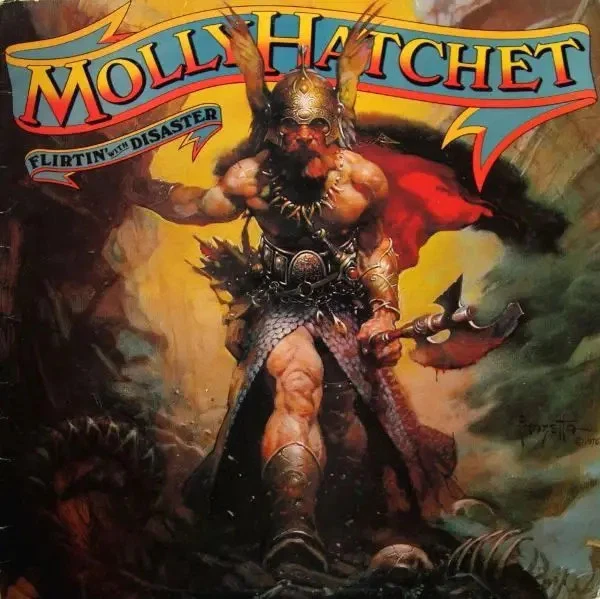
Their biggest hit, “Flirtin’ with Disaster,” remains one of Southern rock’s defining songs.
Driven by Dave Hlubek’s muscular guitar work and Danny Joe Brown’s gritty vocals, the song captured the reckless spirit of life on the road. Its pounding rhythm section and relentless energy helped introduce Southern rock to fans who also enjoyed harder bands like Aerosmith and AC/DC.
Other standout tracks included “Dreams I’ll Never See,” “Whiskey Man,” “Bounty Hunter,” “Gator Country,” and “Satisfied Man.”
“Gator Country” served as a heartfelt tribute to Southern rock’s pioneers, referencing bands and songs that had paved the way while demonstrating Molly Hatchet’s deep appreciation for the genre’s history.
Though often overlooked by casual listeners, Molly Hatchet helped broaden Southern rock’s audience and influenced later hard rock bands that incorporated Southern musical traditions.
Blackfoot: Raw Power and Blues Fire
If Molly Hatchet represented Southern rock’s heavier side, Blackfoot brought an even rawer edge.
Led by guitarist and vocalist Rickey Medlocke (Also a member of Skynyrd), Blackfoot blended blistering blues guitar, Native American influences, boogie rhythms, and hard rock into one explosive package.
Their breakthrough came with “Train, Train,” a song inspired by Rickey’s grandfather, who worked on the railroads and frequently sang old blues melodies about passing trains. The band transformed those traditional ideas into one of Southern rock’s greatest radio hits.
The harmonica introduction immediately set the mood before giving way to thunderous guitars and Medlocke’s unmistakable vocals.
Other highlights included “Highway Song,” “Fly Away,” “Left Turn on a Red Light,” and “Diary of a Working Man.”
“Highway Song” remains especially beloved among Southern rock fans thanks to its emotional guitar solo and lyrics celebrating freedom, travel, and life on the open road.
Blackfoot’s willingness to combine traditional blues with modern hard rock helped inspire numerous bands during the 1980s and beyond.
38 Special: Southern Rock Meets Arena Rock
By the late 1970s, Southern rock began evolving to meet changing musical tastes.
Few bands managed that transition better than 38 Special.
Founded by Donnie Van Zant, younger brother of Ronnie Van Zant, the band initially embraced traditional Southern rock before gradually incorporating more polished production and arena-rock hooks.
The formula proved enormously successful.
Songs like “Hold On Loosely,” “Caught Up in You,” “Fantasy Girl,” “Rockin’ Into the Night,” “Back Where You Belong,” “If I’d Been the One,” and “Teacher, Teacher” became major radio staples throughout the late 1970s and 1980s.
Unlike many Southern rock bands that emphasized extended jams, 38 Special focused on concise songwriting and memorable choruses without abandoning the guitar-driven sound that defined the genre.
“Hold On Loosely” became their signature song, combining a catchy vocal melody with Jeff Carlisi’s tasteful guitar work and lyrics about maintaining healthy relationships by avoiding jealousy and control.
The band’s polished sound introduced Southern rock to pop audiences who may never have embraced longer improvisational performances.
While some longtime fans viewed this evolution skeptically, it helped Southern rock remain commercially relevant as musical tastes shifted during the MTV era.
The Charlie Daniels Band: Country Meets Southern Rock
Although often associated primarily with country music, Charlie Daniels Band played a crucial role in Southern rock’s development.
Charlie Daniels had already built an impressive résumé as a session musician, contributing to albums by artists such as Bob Dylan before forming his own band.
His music freely blended country, blues, bluegrass, gospel, fiddle traditions, and rock into a uniquely Southern style.
Songs like “Long Haired Country Boy,” “The South’s Gonna Do It Again,” “Trudy,” “In America,” and, of course, “The Devil Went Down to Georgia” showcased Daniels’ remarkable versatility.
“The South’s Gonna Do It Again” became something of an unofficial Southern rock anthem by mentioning many of the genre’s leading artists, including The Allman Brothers Band, Lynyrd Skynyrd, Elvin Bishop, ZZ Top, Wet Willie, and The Marshall Tucker Band. It celebrated the sense of community that existed among Southern musicians during the genre’s golden age.
Daniels’ electrifying fiddle playing also expanded listeners’ understanding of what instruments could thrive within rock music, influencing generations of musicians who followed.
By the close of the 1970s, Southern rock had firmly established itself as one of America’s defining musical genres. Yet changing musical trends, economic challenges, and heartbreaking tragedies would soon test whether the movement could survive into a new decade.
ZZ Top: Texas Blues Meets Southern Rock
Although they are often categorized simply as a blues rock band, ZZ Top played an important role in the evolution of Southern rock. Formed in Houston, Texas, in 1969, the trio of Billy Gibbons, Dusty Hill, and Frank Beard created a sound that blended Texas blues, boogie, hard rock, and Southern musical traditions into one of the most recognizable styles in rock history. While they never fit neatly into the Southern rock label, their influence on the genre is undeniable.
Unlike many Southern rock bands that relied on multiple lead guitarists and extended harmonized solos, ZZ Top embraced the power of simplicity. Billy Gibbons developed one of the most distinctive guitar tones ever recorded, combining blistering blues licks with thick, overdriven riffs that immediately became his trademark. Dusty Hill and Frank Beard provided an exceptionally tight rhythm section, allowing the band to create a huge sound despite having only three members.
The group’s breakthrough came during the early 1970s with albums like Tres Hombres and Fandango!, which established them as one of America’s premier live bands. Songs such as “La Grange,” “Jesus Just Left Chicago,” “Waitin’ for the Bus,” “Beer Drinkers & Hell Raisers,” “Tush,” and “Heard It on the X” became staples of both classic rock and Southern rock radio. “La Grange,” inspired by the famous Texas dance hall featured in the musical history of the state, remains one of the greatest blues-rock guitar riffs ever recorded. Meanwhile, “Tush” showcased the band’s ability to write concise, hard-hitting rock songs without sacrificing their blues roots.
Throughout the 1970s, ZZ Top shared stages with many of Southern rock’s biggest names and developed a loyal following among the same audiences that embraced Lynyrd Skynyrd, The Allman Brothers Band, and The Marshall Tucker Band. Their gritty performances, love of improvisation, and unapologetic celebration of Southern culture made them natural companions to the movement, even if their Texas blues foundation gave them a slightly different musical identity.
The band demonstrated remarkable longevity by successfully reinventing themselves during the 1980s. Rather than resisting changing musical trends, they incorporated synthesizers and modern production while preserving the blues-based guitar work that defined their sound. Albums such as Eliminator and Afterburner introduced ZZ Top to an entirely new generation through hits like “Gimme All Your Lovin’,” “Sharp Dressed Man,” “Legs,” “Sleeping Bag,” and “Rough Boy.” Their humorous music videos became fixtures on MTV, proving that veteran rock bands could thrive in the video age without abandoning their identity.
Despite this commercial reinvention, ZZ Top never lost sight of their roots. Even their biggest MTV-era hits retained the blues grooves, boogie rhythms, and Southern swagger that had defined the band from the beginning. Billy Gibbons’ unmistakable guitar tone remained front and center, while the band’s sense of humor and down-to-earth image continued to resonate with audiences around the world.
Today, ZZ Top occupies a unique place in American music history. They are simultaneously blues legends, classic rock icons, and honorary members of the Southern rock family. Their ability to bridge multiple genres while maintaining a sound that was unmistakably their own has inspired countless guitarists and bands. Whether performing the gritty blues of “Jesus Just Left Chicago” or the arena-rock energy of “Sharp Dressed Man,” ZZ Top proved that Southern music could evolve with the times while remaining firmly connected to the traditions that inspired it. Their influence continues to be heard throughout modern Southern rock, making them an essential part of the genre’s rich and enduring history.
The 1980s: Tragedy, Changing Tastes, and a Genre in Transition
As the 1970s came to a close, Southern rock appeared unstoppable. Albums were routinely selling platinum, concerts filled arenas across North America, and many of the genre’s biggest stars had become household names. Yet almost overnight, the musical landscape began to change. New genres emerged, radio formats shifted, and many of Southern rock’s pioneering bands found themselves facing challenges that had little to do with their talent.
The greatest blow had already occurred in 1977 with the tragic plane crash that claimed the lives of several members of Lynyrd Skynyrd. The deaths of Ronnie Van Zant, Steve Gaines, and Cassie Gaines were devastating not only for the band but for the entire Southern rock community. Skynyrd had become the genre’s most recognizable ambassadors, and their sudden loss left a void that could never truly be filled.
The Allman Brothers Band also experienced difficult years. The death of Duane Allman in 1971 had been followed by the motorcycle accident that claimed bassist Berry Oakley only a year later. Although the band continued producing quality music throughout the decade, internal disagreements, substance abuse, and changing musical tastes eventually led to their breakup in 1976 before later reunions.
Meanwhile, the music industry itself was changing rapidly.
Punk rock rejected long instrumental solos in favor of short, aggressive songs. New wave embraced synthesizers and electronic production. MTV launched in 1981, placing a new emphasis on music videos and visual image. Southern rock bands, whose reputations had largely been built through marathon live performances rather than flashy videos, suddenly found themselves competing in an entirely different environment.
Many groups adapted remarkably well. 38 Special successfully embraced a more polished arena-rock sound, scoring hits like “Caught Up in You,” “If I’d Been the One,” and “Second Chance.” ZZ Top, while never strictly a Southern rock band, incorporated elements of the genre while reinventing themselves for the MTV era with massive hits like “Gimme All Your Lovin’,” “Sharp Dressed Man,” and “Legs.”
Other bands struggled to find the same commercial footing. Radio increasingly favored shorter songs with slick production, leaving less room for the extended improvisation that had become Southern rock’s trademark. Guitar-driven albums were also competing against the growing popularity of pop superstars such as Michael Jackson, Madonna, and Prince.
Yet Southern rock never truly disappeared. It simply evolved.
Southern Rock’s Influence on Country Music
One of Southern rock’s greatest achievements was how deeply it influenced modern country music.
During the 1980s and 1990s, many country artists began incorporating electric guitars, driving rhythms, and rock-inspired production into their recordings. While traditional country remained popular, audiences increasingly embraced artists who blurred the lines between country and rock.
Bands like Alabama helped bridge the gap. Their music retained country storytelling while embracing fuller rock arrangements that appealed to wider audiences.
Later artists including Travis Tritt proudly acknowledged the influence of Lynyrd Skynyrd and The Allman Brothers Band. Tritt frequently covered Southern rock songs during concerts and collaborated with surviving members of Skynyrd.
The Kentucky Headhunters brought loud guitars and blues influences back into country music, while artists like Brooks & Dunn incorporated Southern rock’s energy into many of their biggest hits.
Even outside country music, Southern rock continued shaping American guitar playing. Hard rock bands borrowed its twin-guitar harmonies, blues artists embraced its improvisational spirit, and jam bands studied the extended performances of The Allman Brothers Band.
By the early 1990s, audiences who had grown up listening to Southern rock were becoming musicians themselves.
A revival was beginning.
The Revival: Southern Rock Finds a New Generation
During the 1990s, Southern rock experienced an unexpected resurgence.
One major reason was the reunion of The Allman Brothers Band. Their concerts once again became destinations for fans eager to experience the improvisational magic that had defined the group’s classic performances.
Led by Gregg Allman alongside guitarists Warren Haynes and Derek Trucks in later years, the band entered a remarkable second act that introduced younger audiences to Southern rock’s musical depth.
Lynyrd Skynyrd also reunited, eventually featuring Ronnie Van Zant’s younger brother, Johnny Van Zant, as lead vocalist. While no lineup could replace the original members, the band successfully brought classics like “Simple Man,” “Tuesday’s Gone,” and “Free Bird” to new generations of concertgoers.
Meanwhile, another Southern band quietly became one of the most respected live acts in America.
Gov’t Mule, founded by Warren Haynes and bassist Allen Woody, blended Southern rock, blues, jam music, and hard rock into a powerful modern sound.
Songs such as “Soulshine,” “Thorazine Shuffle,” and “Beautifully Broken” demonstrated that Southern rock remained a living, evolving genre rather than simply a nostalgic tribute to the 1970s.
Another important development came from jam-band culture.
Groups like Widespread Panic built devoted followings through extended live performances that clearly reflected the influence of The Allman Brothers Band. Improvisation once again became central to rock concerts, proving that audiences still appreciated musicians stretching songs beyond their studio versions.
Carrying the Torch: The Modern Standard Bearers of Southern Rock
While the commercial peak of Southern rock may have occurred during the 1970s, the genre itself never disappeared. Instead, it evolved. A new generation of musicians embraced the lessons of The Allman Brothers Band, Lynyrd Skynyrd, The Marshall Tucker Band, and other pioneers while refusing to become simple tribute acts. Rather than copying the past, these artists expanded Southern rock’s musical vocabulary, blending it with blues, Americana, jam music, country, and alternative rock. Today, bands like Gov’t Mule, Widespread Panic, Tedeschi Trucks Band, and Drive-By Truckers have become the standard bearers of the genre, ensuring that Southern rock remains as vibrant and relevant as ever.
Perhaps no band has done more to preserve the improvisational spirit of Southern rock than Gov’t Mule. Formed in 1994 by guitarist and vocalist Warren Haynes and bassist Allen Woody following their work with The Allman Brothers Band, Gov’t Mule built its reputation on marathon concerts and fearless musicianship. Every performance is different, with songs expanding into lengthy explorations that recall the legendary Fillmore East shows of the early 1970s. Tracks such as “Thorazine Shuffle,” “Mule,” “Beautifully Broken,” “Banks of the Deep End,” and “Soulshine” demonstrate the band’s ability to combine crushing blues riffs with emotional songwriting and extended improvisation. Haynes has become one of modern rock’s most respected guitarists, carrying forward the traditions established by Duane Allman and Dickey Betts while developing a distinctive style entirely his own.
If Gov’t Mule inherited the improvisational side of Southern rock, Widespread Panic became its ultimate live band. Formed in Athens, Georgia, the group built a massive following without relying on mainstream radio or hit singles. Instead, they earned their reputation one concert at a time, developing a fiercely loyal fan base through relentless touring and unforgettable performances. Songs like “Ain’t Life Grand,” “Porch Song,” “Chilly Water,” “Climb to Safety,” and “Pilgrims” have become favorites among fans, while the band’s willingness to blend Southern rock, blues, funk, jazz, and folk reflects the same musical openness that defined the genre’s earliest pioneers. Like The Allman Brothers Band before them, Widespread Panic treats every concert as a unique experience rather than simply recreating studio recordings.
Another group that has become essential to modern Southern music is Tedeschi Trucks Band. Founded by husband-and-wife duo Susan Tedeschi and Derek Trucks, the band combines Southern rock with blues, soul, gospel, jazz, and rhythm and blues. Derek Trucks, a nephew of original Allman Brothers drummer Butch Trucks, is widely considered one of the finest slide guitar players of his generation, drawing obvious inspiration from Duane Allman while forging his own unmistakable voice. Susan Tedeschi’s soulful vocals add another dimension, creating a sound that feels both timeless and modern. Songs such as “Midnight in Harlem,” “Bound for Glory,” “Anyhow,” “Don’t Drift Away,” and “Made Up Mind” showcase a band that values musicianship as much as emotion. Their large ensemble, complete with horns and backing vocalists, recalls the collaborative spirit that has always been at the heart of Southern music.
While Gov’t Mule, Widespread Panic, and Tedeschi Trucks Band emphasize musicianship and improvisation, Drive-By Truckers have carried forward Southern rock’s storytelling tradition. Formed in Alabama in the mid-1990s, the band quickly established itself as one of America’s finest songwriting groups. Founding members Patterson Hood and Mike Cooley write songs that examine the South with honesty, compassion, and complexity. Rather than relying on nostalgia, they explore its contradictions, triumphs, struggles, and evolving identity. Albums such as Southern Rock Opera, Decoration Day, and The Dirty South have become modern classics, while songs like “Outfit,” “Where the Devil Don’t Stay,” “Zip City,” “Gravity’s Gone,” and “Hell No, I Ain’t Happy” demonstrate that Southern rock can still tell compelling stories about ordinary people facing extraordinary circumstances.
Together, these bands have ensured that Southern rock remains a living tradition instead of a museum piece. They honor the genre’s founders without becoming trapped by the past, proving that Southern rock is defined not by a particular decade but by a commitment to exceptional musicianship, authentic storytelling, and a willingness to let the music breathe. Their concerts continue to attract devoted audiences, their albums receive widespread critical acclaim, and younger musicians regularly cite them as major influences. Thanks to artists like Gov’t Mule, Widespread Panic, Tedeschi Trucks Band, and Drive-By Truckers, the legacy begun by The Allman Brothers Band and Lynyrd Skynyrd continues to grow, reminding listeners that Southern rock is not simply history—it is a thriving and constantly evolving part of American music.
Modern Southern Rock
Today’s Southern rock scene is healthier than many people realize.
Rather than dominating mainstream radio, the genre has found success through touring, streaming services, festivals, and dedicated fan communities.
Among today’s leading bands, few have earned more respect than Blackberry Smoke.
Formed in Atlanta, the group combines classic Southern rock with country, blues, and Americana influences while remaining remarkably faithful to the genre’s traditions.
Songs like “One Horse Town,” “Good One Comin’ On,” “Pretty Little Lie,” “Waiting for the Thunder,” and “Ain’t Much Left of Me” demonstrate outstanding songwriting while featuring the guitar-driven sound longtime fans love.
Similarly, Whiskey Myers has become one of modern Southern rock’s biggest success stories.
Blending country, hard rock, blues, and Southern storytelling, the Texas-based group has attracted enormous audiences without relying heavily on mainstream radio.
Songs including “Stone,” “Ballad of a Southern Man,” “Broken Window Serenade,” and “Virginia” showcase emotional songwriting alongside powerful musicianship.
Other outstanding modern artists include The Cadillac Three, The Steel Woods, Black Stone Cherry, The Georgia Thunderbolts, and Them Dirty Roses.
Each carries the spirit of Southern rock while adding modern production and contemporary songwriting.
The Enduring Legacy of Southern Rock
More than half a century after its birth, Southern rock remains one of America’s greatest musical contributions.
Its influence extends far beyond the bands traditionally associated with the genre. Modern country artists borrow its guitar work. Blues musicians embrace its improvisational spirit. Hard rock bands continue using dual-guitar harmonies pioneered by Southern groups. Jam bands still measure themselves against the live performances of The Allman Brothers Band.
The genre also helped preserve important American musical traditions.
By blending blues, gospel, country, jazz, soul, and rock into one cohesive sound, Southern rock reminded audiences that great music rarely fits neatly into one category. It celebrated diversity without sacrificing identity.
Its greatest songs have become timeless.
“Free Bird” remains one of rock’s definitive guitar epics. “Sweet Home Alabama” continues to unite audiences of every generation. “Ramblin’ Man” and “Melissa” still showcase some of the finest songwriting in American music. “Can’t You See” remains a masterclass in emotional storytelling. “Green Grass & High Tides” continues to inspire aspiring guitarists, while “Flirtin’ with Disaster,” “Train, Train,” “Hold On Loosely,” and “Long Haired Country Boy” still receive regular airplay decades after their release.
Perhaps Southern rock’s greatest strength has always been its honesty.
The music never tried to be fashionable. It wasn’t created to satisfy critics or chase trends. Instead, it reflected the experiences of the musicians who wrote it—the places they grew up, the roads they traveled, the people they loved, and the traditions they inherited.
That authenticity explains why the genre has endured.
New artists continue discovering the music every year. Young guitarists still study Duane Allman’s slide playing, Gary Rossington’s riffs, Toy Caldwell’s melodic phrasing, and the harmonized leads of The Outlaws. Concert audiences continue singing every word of songs written more than fifty years ago, proving that truly great music never becomes outdated.
Southern rock is more than a chapter in American music history. It is a living tradition that continues evolving while remaining firmly connected to its roots. From the blues clubs of the Mississippi Delta and the recording studios of Muscle Shoals to the arenas filled by Lynyrd Skynyrd and the festival stages occupied by Blackberry Smoke and Whiskey Myers, Southern rock has remained a powerful celebration of musicianship, storytelling, and the enduring spirit of the American South.
Its golden era may have begun in the late 1960s, but its story is still being written today.
This post has already been read 19129 times!