The Grateful Dead: The Complete History of America’s Greatest Live Band
 There has never been another band quite like the Grateful Dead. They sold millions of records, toured almost constantly for three decades, inspired one of the most devoted fan communities in music history, and created a culture that became every bit as significant as the music itself. While many bands measure success through hit singles or platinum albums, the Grateful Dead became legendary through something much less tangible: the experience. Every concert was different, every song was open to reinvention, and every performance represented another chapter in a musical conversation that lasted more than thirty years.
To understand the Grateful Dead, however, requires looking beyond the famous dancing bears, skull logos, tie-dye shirts, and endless parking lot scene. At its heart, the story is about a group of musicians who refused to follow conventional rules. They were never interested in chasing radio success, limiting themselves to one genre, or playing songs exactly as audiences expected. Instead, they built a career around exploration, improvisation, and trust—trust in one another, trust in their audience, and trust that every night could produce something magical.
Their history begins not in psychedelic rock but in the folk music revival that swept America during the early 1960s.
**Note: We’ve also got 0ver 450 Live Dead Shows available for Download Over at Concert-Downloads.com **
Before There Was the Grateful Dead
Jerome John Garcia was born on August 1, 1942, in San Francisco. His childhood contained both joy and tragedy. His father died in a fishing accident when Jerry was only five years old, and earlier he had lost part of the middle finger on his right hand in a childhood accident involving his older brother. Neither event slowed his fascination with music.
Garcia was drawn first to bluegrass, folk, and traditional American music. Guitarists like Doc Watson and Clarence White would influence him just as much as the emerging rock-and-roll stars of the era. Unlike many future rock musicians, Garcia wasn’t obsessed with becoming famous. He simply loved playing.
By the early 1960s, the San Francisco Bay Area had developed a thriving folk music community. Coffeehouses hosted musicians nearly every night, and Garcia quickly became one of the most respected players around. He performed with various bluegrass groups, including Mother McCree’s Uptown Jug Champions, a loose collective that mixed traditional American music with humor and experimentation.
It was during this period that Garcia met another young guitarist named Bob Weir.
Weir was nearly five years younger than Garcia but shared his fascination with music. Unlike Garcia’s relaxed personality, Weir possessed boundless energy and an eagerness to learn. Garcia essentially became his teacher, helping him develop into a rhythm guitarist unlike any other. Rather than simply strumming chords, Weir learned to weave intricate, jazz-like rhythms around Garcia’s lead playing, a style that would eventually become one of the defining characteristics of the Grateful Dead’s sound.
Another key figure entered the picture around the same time: Ron “Pigpen” McKernan.
Pigpen couldn’t have been more different from Garcia. Raised on blues rather than folk music, he idolized musicians like Lightnin’ Hopkins and Jimmy Reed. He played harmonica, organ, and piano while possessing a gravelly singing voice that sounded decades older than his age. Pigpen brought a gritty rhythm-and-blues influence that balanced Garcia’s more delicate musical instincts.
Soon the trio was joined by bassist Phil Lesh.
Unlike the others, Lesh came from an entirely different musical background. He had studied classical music and modern composition rather than blues or folk. Originally trained as a trumpet player before moving to bass, Lesh approached the instrument in a revolutionary way. Instead of simply playing root notes beneath the chords, he treated the bass almost like another lead instrument, creating melodic counterpoints that danced around Garcia’s guitar.
That approach became one of the most distinctive features of the Grateful Dead. Lesh rarely sounded like a conventional bassist. His playing often resembled a jazz improviser engaged in constant conversation with the rest of the band.
Drummer Bill Kreutzmann completed the early lineup. Still a teenager, Kreutzmann brought a jazz-influenced style that emphasized feel and spontaneity over rigid timekeeping.
By 1965, the ingredients were in place.
The Warlocks
The musicians initially called themselves the Warlocks.
The name fit the mysterious, slightly mystical atmosphere developing around the group. Their earliest performances drew heavily from blues artists like Muddy Waters and Howlin’ Wolf while also covering Chuck Berry, Bo Diddley, and other rock-and-roll pioneers.
At first glance, they looked like another bar band trying to find its identity.
What separated them wasn’t their repertoire but how they played.
Instead of performing songs exactly as recorded, they stretched them. Solos became conversations. Tempos shifted naturally. Improvisation gradually occupied more of each performance until audiences realized no two shows were alike.
This instinct would ultimately define the band’s entire career.
Enter Ken Kesey and the Acid Tests
Perhaps no single individual outside the band influenced the Grateful Dead’s early development more than author Ken Kesey.
Kesey had achieved literary fame through his novel One Flew Over the Cuckoo’s Nest, but by the mid-1960s he had become deeply involved in California’s growing psychedelic movement. Alongside a group known as the Merry Pranksters, Kesey organized events called Acid Tests.
These weren’t concerts in the traditional sense.
They were multimedia happenings combining music, experimental lighting, projected films, poetry, theatrical performances, and widespread use of LSD, which remained legal during much of this period.
The Warlocks became the house band.
Night after night they played while the audience—and often the band themselves—experienced increasingly surreal environments. There were few rules. Songs flowed endlessly into one another. Mistakes became opportunities. Improvisation became essential because everyone involved was exploring unfamiliar territory.
The Acid Tests fundamentally changed the musicians.
Instead of viewing concerts as presentations of rehearsed material, they began seeing performances as living organisms that evolved organically in real time.
This philosophy would remain with them forever.
Becoming the Grateful Dead
Late in 1965 the musicians discovered another band already used the name Warlocks.
A change became necessary.
Legend says Jerry Garcia randomly opened a dictionary and landed on the phrase “Grateful Dead,” referring to a folk tale motif involving a traveler who buries an abandoned corpse and later receives supernatural assistance from the deceased.
Whether entirely accurate or slightly embellished over the years hardly matters.
The name sounded mysterious, timeless, and unlike anything else in rock music.
The Grateful Dead had arrived.
The San Francisco Sound
The mid-1960s transformed San Francisco into the center of America’s counterculture.
Young people flocked to neighborhoods like Haight-Ashbury seeking alternatives to mainstream society. Music became the soundtrack for this cultural revolution.
Ballrooms including the Fillmore Auditorium and Avalon Ballroom hosted concerts featuring local bands almost every weekend.
Groups like Jefferson Airplane, Big Brother and the Holding Company featuring Janis Joplin, Quicksilver Messenger Service, and Country Joe and the Fish helped define what became known as the San Francisco Sound.
The Grateful Dead occupied a unique position within this scene.
While many contemporaries emphasized loud psychedelic effects or extended guitar heroics, the Dead remained rooted in American musical traditions. Blues, bluegrass, country, folk, jazz, and rock all blended together naturally.
Rather than abandoning the past, they expanded upon it.
The First Great Partnership
During these early years, another partnership emerged that would shape the band’s future.
Garcia met lyricist Robert Hunter.
Hunter wasn’t a performing musician in the traditional sense, but his words perfectly complemented Garcia’s melodic instincts. Instead of writing conventional love songs, Hunter drew inspiration from American folklore, mythology, literature, gambling, trains, rivers, ghosts, cowboys, Biblical imagery, and timeless archetypes.
Their partnership became one of rock music’s greatest songwriting collaborations.
Hunter would eventually write the words to classics including “Ripple,” “Friend of the Devil,” “Truckin’,” “Scarlet Begonias,” “Touch of Grey,” “Dark Star,” “Eyes of the World,” and dozens more.
Unlike many songwriting teams that worked in the same room together, Garcia often composed melodies after Hunter had already written lyrics. Somehow the pieces fit together almost perfectly.
Recording the First Album
By late 1966, the Grateful Dead had become one of San Francisco’s most talked-about live attractions.
Warner Bros. Records signed the band, hoping to capture their explosive live energy on record.
Unfortunately, this proved nearly impossible.
Released in 1967, their self-titled debut album introduced listeners to the band’s blues-based repertoire but failed to capture the adventurous improvisation audiences experienced in concert.
Songs like “Cold Rain and Snow,” “Good Morning Little School Girl,” “Beat It On Down the Line,” and “Viola Lee Blues” hinted at the group’s potential, but the album sounded relatively restrained compared to their marathon live performances.
Even the nearly ten-minute version of “Viola Lee Blues,” remarkable by pop standards of the time, represented only a fraction of what the band routinely played on stage.
The Grateful Dead themselves later admitted they were disappointed.
The recording studio felt limiting.
The stage felt limitless.
That realization would influence every album they made afterward.
Building a Different Kind of Fanbase
Unlike many successful bands, the Grateful Dead didn’t become famous through radio.
They became famous because people attended shows.
Someone might see them in San Francisco, tell friends in Los Angeles, who would then travel to see them in New York. Those fans would convince others. Slowly, almost organically, word spread.
Instead of casual listeners buying singles, the Dead developed dedicated followers who returned again and again because every concert promised something entirely new.
No setlist repeated exactly.
No solo stayed the same.
Even familiar songs evolved continuously.
Without realizing it, the Grateful Dead were creating something unprecedented.
They weren’t simply building an audience.
They were building a community.
Long before anyone coined the term “fan culture,” Deadheads were already beginning to form one. Friendships developed on tour. Recordings of concerts circulated among listeners. Fans debated favorite versions of songs, memorable improvisations, and legendary performances. The relationship between band and audience became unusually collaborative. The Grateful Dead weren’t performing for their fans as much as they were creating an experience with them.
That bond would become stronger with every passing year and eventually grow into one of the most loyal followings in the history of popular music. But before that could happen, the band would create one of the most daring psychedelic albums ever recorded, write a song that would define their improvisational philosophy, and find themselves at the center of the Summer of Love—a period that would permanently alter both American culture and the Grateful Dead’s destiny.
By the beginning of 1967, the Grateful Dead had become one of the most talked-about bands in San Francisco. They still weren’t household names, and outside Northern California many people had never heard of them. But among musicians and concertgoers, word was spreading quickly. This wasn’t just another rock band with a few catchy songs. Something different was happening every time they stepped onto a stage.
The Grateful Dead were becoming less interested in simply performing songs and more interested in creating musical journeys. A three-minute blues number could suddenly stretch to fifteen minutes. Tempos shifted without warning, melodies appeared and disappeared, and entire sections of a song could dissolve into free improvisation before finding their way back home. Every concert felt unpredictable—even to the band.
That unpredictability became their greatest strength.
The Summer of Love
In 1967, San Francisco became the center of a cultural movement that attracted hundreds of thousands of young people from across America and around the world. The neighborhood of Haight-Ashbury transformed almost overnight into a gathering place for musicians, artists, poets, political activists, and dreamers searching for a different way of living.
The Grateful Dead found themselves at the heart of it.
Unlike some groups that merely benefited from the movement, the Dead had helped create it. Through the Acid Tests, their friendship with Ken Kesey, and their regular appearances at venues like the Fillmore and Avalon Ballroom, they had become one of the unofficial house bands of the psychedelic generation.
The atmosphere surrounding the concerts was unlike anything rock music had seen before.
Audiences weren’t simply standing in front of a stage waiting to hear the next hit single. Concerts became communal experiences. Light shows danced across the walls. Incense filled the air. Fans often knew one another, and many traveled together from performance to performance. The boundary between performers and audience became increasingly blurred.
Jerry Garcia often seemed amused whenever journalists tried to define the movement.
He resisted labels.
He disliked being called a spokesman for a generation and rejected attempts to make the Grateful Dead symbols of any political ideology. While many musicians embraced celebrity, Garcia appeared almost indifferent to it. He viewed himself first and foremost as a musician.
That attitude earned him tremendous respect.
The Fillmore and Bill Graham
No figure was more important to the San Francisco music scene than promoter Bill Graham.
Born in Germany and raised in New York, Graham possessed an extraordinary talent for recognizing artists before they became stars. At the Fillmore Auditorium, he helped create an environment where experimentation was encouraged.
The Grateful Dead became one of his favorite bands.
Graham understood that audiences weren’t coming simply to hear familiar songs. They wanted experiences that couldn’t be duplicated.
The relationship between Graham and the band wasn’t always smooth. Like many families, they argued frequently over business decisions, schedules, and finances. Yet beneath those disagreements was deep mutual respect.
Over the next three decades, Bill Graham would become one of the Grateful Dead’s closest allies and one of the most influential figures in concert history.
A New Kind of Recording
While touring continued to build the band’s reputation, the Grateful Dead remained frustrated by the limitations of the recording studio.
Their first album had failed to capture what happened during live performances.
Instead of trying again with a more traditional approach, they decided to ignore the traditional rules altogether.
The result was Anthem of the Sun.
Released in 1968, it was unlike almost anything listeners had heard before.
Rather than recording songs from beginning to end, the band and producer David Hassinger experimented with blending together live recordings, studio performances, multiple takes, audience sounds, and extended improvisations.
Entire sections came from different concerts.
Studio overdubs were layered over live jams.
Songs flowed together almost seamlessly.
The album became less of a collection of tracks and more of an abstract musical collage.
It confused many listeners upon release.
Some critics praised its ambition while others found it nearly impossible to follow.
Today, however, Anthem of the Sun is widely recognized as one of the boldest psychedelic recordings ever made.
It represented the Grateful Dead refusing to compromise.
If conventional recording couldn’t capture their concerts, they would reinvent the recording process instead.
“That’s It for the Other One”
Among the album’s highlights was the suite eventually known simply as “The Other One.”
Built around thunderous drumming from Bill Kreutzmann and increasingly adventurous bass playing from Phil Lesh, the piece became one of the band’s favorite launching points for extended improvisation.
Unlike traditional rock songs built around verses and choruses, “The Other One” functioned almost like jazz.
Themes appeared briefly before disappearing into collective improvisation.
Each performance became unique.
Sometimes it lasted fifteen minutes.
Other nights it stretched beyond thirty.
No one—not even the musicians—could predict where it might go.
Pigpen: The Soul of the Early Dead
Although Jerry Garcia increasingly became the band’s public face, Ron “Pigpen” McKernan remained its emotional center during the late 1960s.
While Garcia explored folk melodies and psychedelic textures, Pigpen kept one foot firmly planted in the blues.
Songs like “Turn On Your Lovelight,” “Good Morning Little School Girl,” and “Hard to Handle” became showcases for his commanding stage presence.
Unlike Garcia, Pigpen thrived on interacting directly with audiences.
He joked.
He improvised spoken passages.
He encouraged call-and-response participation.
His performances could transform a concert into something resembling a revival meeting.
Many longtime fans believe no one could command a stage quite like Pigpen during those years.
His influence ensured that no matter how far the band wandered into experimental territory, the blues remained an essential part of their identity.
“Dark Star”
If one song defines the Grateful Dead’s philosophy, it is “Dark Star.”
Released as a single in 1968, it barely registered commercially.
On the radio it seemed mysterious and understated.
Live, however, it became something entirely different.
The studio version lasted under three minutes.
Concert performances regularly exceeded twenty.
Eventually they grew beyond forty minutes.
Some approached an hour.
The structure was deceptively simple.
A brief melody.
A handful of Robert Hunter lyrics.
Then complete freedom.
Garcia, Weir, Lesh, and Kreutzmann listened closely to one another, allowing ideas to emerge naturally rather than forcing them.
The music breathed.
It expanded and contracted.
Moments of near silence could suddenly erupt into explosive crescendos before dissolving again into delicate, almost classical passages.
No two versions sounded remotely alike.
Many musicians have jammed.
Very few have improvised collectively at the level the Grateful Dead reached during performances of “Dark Star.”
The song became less about destination than exploration itself.
Constant Touring
While many successful bands spent months in recording studios, the Grateful Dead preferred life on the road.
Touring wasn’t merely a way to promote albums.
It was their laboratory.
Songs evolved night after night.
Mistakes became new ideas.
A weak arrangement could transform into a masterpiece through repetition before live audiences.
The band often played more than one hundred shows annually.
Few groups matched that workload.
It wasn’t unusual for fans to attend multiple concerts in the same week.
Some began traveling across states to follow tours.
Without intending to, the Grateful Dead were laying the foundation for what would eventually become the Deadhead phenomenon.
The Merry Chaos of the Road
Touring with the Grateful Dead during the late 1960s rarely resembled a polished corporate operation.
Equipment sometimes failed.
Vehicles broke down.
Schedules shifted unexpectedly.
Friends, artists, family members, roadies, and assorted travelers seemed constantly to appear and disappear.
The organization surrounding the band often looked chaotic from the outside.
Yet somehow everything worked.
The relaxed atmosphere reflected the musicians themselves.
They valued creativity over efficiency.
Experimentation over perfection.
Freedom over routine.
While other bands increasingly embraced rigid professionalism, the Grateful Dead remained wonderfully unpredictable.
Aoxomoxoa
By 1969, Warner Bros. had given the band an unusually generous recording budget.
The Grateful Dead eagerly spent it.
The resulting album, Aoxomoxoa, pushed studio experimentation even further.
Advanced multitrack recording allowed increasingly elaborate vocal harmonies, layered instrumentation, and unusual production techniques.
Songs like “China Cat Sunflower,” “St. Stephen,” “Mountains of the Moon,” and “Cosmic Charlie” showcased Robert Hunter’s increasingly poetic lyrics paired with Garcia’s growing confidence as a composer.
Commercially, the album struggled.
Financially, it nearly overwhelmed the band because of its enormous production costs.
Artistically, however, it demonstrated that the Grateful Dead remained unwilling to repeat themselves.
Every album represented another experiment.
Some succeeded immediately.
Others required years before audiences fully appreciated them.
Woodstock
In August 1969, the Grateful Dead joined what would become one of the most famous festivals in music history: the Woodstock Music and Art Fair.
Ironically, one of the world’s greatest live bands delivered one of its least memorable performances.
Heavy rain created electrical hazards.
Equipment malfunctioned.
The schedule ran hopelessly behind.
The band didn’t begin until late at night.
Garcia reportedly worried about electric shocks because the stage remained soaked.
The performance itself felt uneven.
Songs dragged.
Technical issues interrupted momentum.
Unlike many legendary Woodstock appearances, the Grateful Dead rarely celebrated their own set.
Fortunately, history judged them by thousands of other concerts rather than one difficult evening.
The Live Reputation Grows
If Woodstock failed to capture the Grateful Dead at their best, countless other performances during 1968 and 1969 more than compensated.
Concerts at venues like the Fillmore West became legendary almost immediately.
Audience recordings began circulating among dedicated fans.
Unlike most bands, the Dead generally tolerated—eventually even encouraged—the taping of concerts. They recognized that listeners who traded live recordings weren’t hurting attendance. If anything, they were creating new fans.
This openness fostered an extraordinary relationship with their audience. Fans compared different versions of the same songs, debated favorite solos, and analyzed performances the way jazz enthusiasts discussed classic recordings. It created a living archive that continues to grow decades after the band’s final concert.
By the end of the 1960s, the Grateful Dead had become one of the premier live acts in America. Yet commercially they remained something of an oddity. They had no major hit singles, their experimental albums sold modestly, and many casual listeners still didn’t quite know what to make of them.
Ironically, just as the psychedelic era that had launched their career began to fade, the Grateful Dead were about to make the most dramatic artistic shift of their entire history. They would trade swirling improvisation for tight songwriting, embrace American roots music, and release two albums that many critics consider among the finest records ever made.
Those albums—Workingman’s Dead and American Beauty—would redefine the Grateful Dead, expand their audience, and prove that beneath all the extended jams and psychedelic experimentation lay some of the greatest songwriters of their generation.
A New Direction for a New Decade
As the 1960s came to a close, the Grateful Dead found themselves at a crossroads. The psychedelic movement that had defined the band’s early years was beginning to fade. The Haight-Ashbury neighborhood that had once symbolized peace, creativity, and limitless possibilities had become overcrowded and troubled by crime, addiction, and homelessness. Many of the ideals of the Summer of Love had collided with harsh reality.
The Grateful Dead recognized that it was time to evolve.
Rather than trying to outdo themselves with increasingly experimental psychedelic music, they turned toward something much older. Jerry Garcia had always loved bluegrass, folk, country, and traditional American music. Bob Weir had developed an appreciation for cowboy songs and classic country artists. Robert Hunter’s lyrics drew heavily from American folklore and frontier imagery.
Instead of looking forward into psychedelic experimentation, the band began looking backward into America’s musical roots.
The result would change their career forever.
Workingman’s Dead
Released in June 1970, Workingman’s Dead surprised nearly everyone.
Fans expecting another album filled with sprawling jams instead found concise, beautifully crafted songs filled with acoustic guitars, vocal harmonies, and country influences. While traces of the Grateful Dead’s improvisational spirit remained, the emphasis had shifted dramatically toward songwriting.
The opening track, “Uncle John’s Band,” became one of the band’s best-known songs. Built around intricate harmonies and acoustic instrumentation, it demonstrated just how much the group’s songwriting had matured. It was accessible enough for radio while still retaining the mysterious lyrical quality that Robert Hunter brought to nearly every composition.
“Cumberland Blues” paid tribute to coal miners and working-class America, blending bluegrass energy with rock instrumentation.
“Dire Wolf” showcased Garcia’s gift for storytelling, wrapping dark humor inside a gentle folk melody.
Perhaps the album’s greatest achievement was its balance. Every song felt connected without sounding repetitive. The Grateful Dead had proven they could write concise songs every bit as compelling as their lengthy improvisations.
Critics who had previously dismissed the band suddenly took notice.
The Partnership of Garcia and Hunter
By this point, Jerry Garcia and Robert Hunter had become one of rock music’s finest songwriting teams.
Hunter’s lyrics rarely told straightforward stories. Instead, they hinted at larger ideas through vivid imagery. Gamblers, rivers, trains, outlaws, roses, birds, mountains, and mysterious travelers populated his songs.
Listeners often spent years debating the meanings behind Hunter’s words.
Garcia once suggested that understanding every lyric wasn’t the point. Much like traditional folk songs, they were meant to evoke feelings more than provide literal explanations.
That ambiguity became one of the Grateful Dead’s greatest strengths.
Every listener discovered something different within the music.
American Beauty
Only five months after Workingman’s Dead, the Grateful Dead released another masterpiece.
Many fans consider American Beauty the greatest studio album of their career.
It contains some of the most beloved songs the band ever recorded.
“Box of Rain,” written by bassist Phil Lesh for his dying father, remains one of the most emotional songs in the Grateful Dead catalog. Lesh, who rarely sang lead vocals, delivered a heartfelt performance filled with warmth and vulnerability.
“Friend of the Devil” became an instant favorite. Blending bluegrass, folk, and country influences, the song featured one of Garcia’s most memorable melodies. Although often interpreted as a simple outlaw tale, its lyrics reward repeated listening.
“Sugar Magnolia,” sung by Bob Weir, introduced a more playful energy. It would eventually become one of the band’s most reliable concert closers.
Then came “Ripple.”
Few songs better capture the spirit of the Grateful Dead.
Built around acoustic guitar and gentle harmonies, “Ripple” feels timeless, almost as though it has existed for generations. Robert Hunter’s poetic lyrics paired perfectly with Garcia’s melody, creating a song that continues to resonate with listeners more than fifty years later.
Unlike many famous rock songs, “Ripple” never relied on volume or spectacle.
Its power came from simplicity.
Success Without Selling Out
Although neither album produced massive pop hits, Workingman’s Dead and American Beauty dramatically expanded the Grateful Dead’s audience.
Critics praised their songwriting.
Musicians admired their versatility.
Fans appreciated that the band had evolved without abandoning its identity.
Most importantly, the Grateful Dead refused to chase commercial trends.
They simply followed their instincts.
Ironically, that honesty attracted even more listeners.
“Truckin'”
One song from American Beauty became the closest thing the Grateful Dead ever had to an anthem.
“Truckin'” chronicled life on the road with humor, frustration, and optimism.
The famous line, “What a long, strange trip it’s been,” eventually became synonymous with the band’s entire career.
The song reflected reality.
Constant touring brought breakdowns, canceled shows, equipment failures, police encounters, endless travel, and unforgettable adventures.
The Grateful Dead accepted all of it.
Life on the road wasn’t an inconvenience.
It was home.
Becoming America’s Touring Band
Throughout the early 1970s, touring became even more central to the band’s identity.
While many successful artists viewed concerts primarily as opportunities to promote new albums, the Grateful Dead viewed albums as invitations to future concerts.
Songs rarely remained fixed.
A tune introduced in the studio might sound entirely different six months later.
Fans understood this.
Instead of hoping to hear songs exactly as recorded, they anticipated discovering how those songs had evolved.
No performance was ever considered definitive.
The next night might be even better.
New Faces
The band’s lineup also continued to evolve.
Tom Constanten departed, leaving the Grateful Dead without a dedicated keyboard player for a brief period.
In late 1971, pianist Keith Godchaux joined the group.
Unlike Pigpen’s blues-heavy organ style, Keith brought elegant piano playing influenced by jazz and classical music.
His touch immediately changed the band’s sound.
Songs became lighter.
Improvisations became more melodic.
Keith’s arrival coincided with one of the strongest creative periods in Grateful Dead history.
Soon afterward, his wife Donna Jean Godchaux joined as a vocalist, adding another layer to the band’s harmonies.
The Grateful Dead had once again reinvented themselves without losing what made them unique.
The stage was now set for one of the most celebrated tours in rock history—Europe ’72—which would introduce the band’s legendary live performances to an even wider audience and cement their reputation as perhaps the greatest concert act America had ever produced.
Europe ’72: The Tour That Became Legend
By the spring of 1972, the Grateful Dead had matured into one of the most confident live bands in the world. Years of relentless touring had sharpened their chemistry to an extraordinary level. Jerry Garcia’s lyrical guitar playing, Bob Weir’s inventive rhythm work, Phil Lesh’s melodic bass lines, Bill Kreutzmann’s fluid drumming, Keith Godchaux’s elegant piano, Donna Jean Godchaux’s vocals, and Ron “Pigpen” McKernan’s blues influence combined to create a sound unlike anything else in rock music.
It was time to take that sound overseas.
The Grateful Dead had played relatively few concerts outside North America, so the idea of an extended European tour was ambitious. During April and May of 1972, the band embarked on a journey that would include more than twenty concerts across England, Denmark, Germany, France, the Netherlands, and Luxembourg.
The logistics were enormous. Equipment, crew members, instruments, and recording gear all had to cross the Atlantic. The band traveled with a sizable entourage, and true to Grateful Dead tradition, life on the road was rarely simple. Schedules shifted, hotels varied wildly in quality, and every day seemed to present a new adventure.
None of that mattered once the music began.
Night after night, the Grateful Dead delivered performances that many fans still consider the finest of their career.
New Songs Come to Life
One of the remarkable aspects of the Europe ’72 tour was how many future classics debuted or matured during the concerts.
Songs such as “Brown-Eyed Women,” “Tennessee Jed,” “He’s Gone,” “Ramble On Rose,” “Jack Straw,” and “Mr. Charlie” were still relatively new. Instead of introducing polished studio versions first, the Grateful Dead often allowed songs to develop naturally on stage.
Fans heard them grow from concert to concert.
Lyrics changed.
Arrangements evolved.
Improvisational sections expanded.
By the time some of these songs appeared on later studio albums, they had already been refined through months of live performance.
It was an unusual creative process, but it suited the Grateful Dead perfectly.
The stage remained their true workshop.
The Legendary Performances
Every stop on the Europe ’72 tour developed its own personality.
Concerts in London featured energetic audiences eager to experience the American psychedelic pioneers.
Shows in Germany often stretched late into the night as the band ventured into increasingly adventurous improvisation.
The performances in Paris carried a relaxed elegance, while Denmark produced some of the most celebrated versions of “Dark Star” ever recorded.
Rather than repeating the same show each evening, the Grateful Dead treated every concert as an entirely new conversation.
A first set might emphasize country songs and blues.
The second set could dissolve into forty minutes of improvisation before returning seamlessly to familiar melodies.
No two evenings unfolded the same way.
The Live Album
The recordings from the tour eventually became the triple album Europe ’72.
Unlike many live albums of the era, it captured the Grateful Dead remarkably well.
The performances showcased the band’s versatility.
There were concise songs suitable for newcomers.
There were extended jams for longtime fans.
There were moments of humor, tenderness, explosive energy, and quiet reflection.
Many listeners discovered the Grateful Dead through Europe ’72, and decades later it remains one of the finest live albums ever released.
For countless Deadheads, it served as the perfect introduction to what made the band unique.
Pigpen’s Final Chapter
Despite the success of the European tour, one shadow hung over the band.
Ron “Pigpen” McKernan’s health was deteriorating rapidly.
Years of heavy alcohol consumption had severely damaged his liver.
Although he remained a beloved member of the Grateful Dead, his physical condition increasingly prevented him from touring.
During Europe ’72, Pigpen missed several performances or played only limited roles.
Everyone in the band understood that something had changed.
The energetic frontman who once dominated concerts with extended versions of “Turn On Your Lovelight” now struggled simply to remain healthy.
On March 8, 1973, Pigpen died at only twenty-seven years old.
His death devastated the Grateful Dead.
Unlike many rock stars whose personalities revolved around excess, Pigpen was remembered by friends as kind, generous, funny, and deeply authentic.
He had provided the band’s original connection to traditional blues music.
Although the Grateful Dead would continue successfully without him, his absence permanently altered their character.
Continuing Forward
Rather than collapse under grief, the Grateful Dead honored Pigpen by continuing to evolve.
Keith Godchaux assumed a larger musical role.
Bob Weir continued developing as both guitarist and songwriter.
Jerry Garcia reached new heights as an improviser.
Phil Lesh’s bass playing became even more adventurous.
The band entered another period of remarkable creativity.
Wake of the Flood
Released in 1973, Wake of the Flood marked another important milestone.
It was the Grateful Dead’s first studio album after leaving Warner Bros. Records and launching their own independent label, Grateful Dead Records.
The move reflected the band’s growing desire for creative independence.
No longer interested in traditional record company expectations, they wanted complete control over their music.
The album featured memorable songs including “Eyes of the World,” “Stella Blue,” “Mississippi Half-Step Uptown Toodeloo,” “Row Jimmy,” and “Weather Report Suite.”
“Eyes of the World” became one of the defining concert pieces of the 1970s.
Its optimistic melody and sophisticated jazz-inspired improvisation made it a favorite launching point for lengthy jams.
Garcia’s guitar seemed almost weightless during live performances, while Lesh’s bass danced freely beneath the melodies.
The Wall of Sound
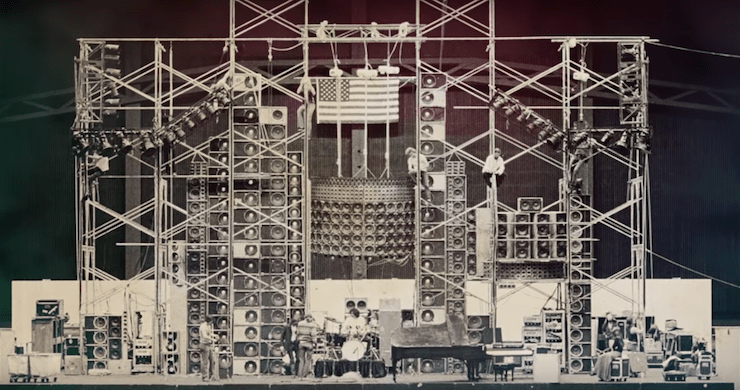
Perhaps no project better demonstrated the Grateful Dead’s willingness to ignore conventional wisdom than the Wall of Sound.
Most concert sound systems of the early 1970s suffered from distortion, uneven volume, and limited clarity.
The Grateful Dead believed audiences deserved something better.
Working alongside brilliant audio engineers including Owsley “Bear” Stanley and Dan Healy, the band designed what became the largest and most ambitious concert sound system ever assembled.
Towering behind the musicians stood hundreds of speakers.
Separate speaker arrays handled different instruments.
The system produced astonishing clarity even at tremendous volume.
Musicians could hear themselves without relying heavily on stage monitors.
Fans described the experience as unlike anything they had ever heard.
The Wall of Sound became almost as famous as the band itself.
Its size, however, created enormous logistical challenges.
Transporting it required multiple trucks.
Assembly often consumed an entire day.
Operating expenses soared.
While technically revolutionary, the system proved financially unsustainable.
Still, its influence can be seen in modern concert audio design.
Endless Creativity
The Grateful Dead entered concerts with confidence few bands could match.
A single performance might include thirty songs spanning blues, folk, country, jazz, rock, gospel, and psychedelic improvisation.
Set lists changed every night.
Songs disappeared for months before returning unexpectedly.
Improvisational transitions connected compositions in surprising ways.
Fans never knew exactly what awaited them.
That unpredictability kept audiences returning year after year.
Hiatus
By late 1974, constant touring, recording, and the enormous costs associated with the Wall of Sound had exhausted both the musicians and their organization.
The Grateful Dead decided to take a break from touring.
For a band that had spent nearly a decade living on the road, the decision seemed almost unimaginable.
The hiatus allowed members to pursue side projects, spend time with family, and recharge creatively.
Many wondered whether the Grateful Dead would ever return with the same energy.
History would answer that question quickly.
The break proved temporary.
When the band reunited in 1975, they entered yet another fascinating chapter—one marked by musical reinvention, increasingly adventurous concerts, new technologies, changing personnel, and a fan community that was beginning to grow into one of the most remarkable cultural phenomena in American music.
The Grateful Dead had already survived changing musical fashions, personal tragedy, financial risks, and the end of the psychedelic era. Their greatest commercial success, however, still lay more than a decade in the future, waiting for a song that almost never became a hit.
Returning From Hiatus
When the Grateful Dead stepped away from touring in late 1974, many wondered if the break might become permanent. Few bands had maintained such an exhausting schedule for nearly a decade, and the physical, emotional, and financial demands had become overwhelming. The Wall of Sound, while a technological marvel, had proven enormously expensive to transport and operate. The members were also eager to spend time with their families and pursue outside interests.
The hiatus ultimately lasted less than a year.
Rather than returning with the same formula, the Grateful Dead used the time to rethink their approach. The first public glimpse of the new era came with a series of performances at San Francisco’s Great American Music Hall in 1975. These intimate concerts were filmed and recorded, showing a band that sounded refreshed and eager to explore new musical territory.
The performances were looser than ever. The songs breathed naturally, and the musicians seemed to enjoy the freedom that came from stepping away before burnout could permanently damage the group.
Blues for Allah
Released in September 1975, Blues for Allah became one of the Grateful Dead’s most adventurous studio albums.
If Workingman’s Dead and American Beauty had embraced traditional American songwriting, Blues for Allah once again pushed toward jazz, progressive rock, world music, and extended instrumental composition.
The album featured pieces like “Help on the Way,” “Slipknot!,” and “Franklin’s Tower,” a sequence that would become one of the most beloved combinations in the band’s live repertoire.
“Help on the Way” opened with intricate guitar lines and sophisticated harmonies.
Without pause, the music flowed into “Slipknot!,” an instrumental workout filled with shifting rhythms and dazzling interplay between Garcia, Weir, Lesh, and the drummers.
Finally, the suite resolved into the joyful “Franklin’s Tower,” whose uplifting groove often sent audiences into celebration.
Fans simply referred to the sequence as “Help > Slip > Franklin’s.”
It became one of the defining musical journeys of the late-1970s Grateful Dead.
The title track, “Blues for Allah,” demonstrated just how far the band had moved beyond conventional rock music. Combining Middle Eastern influences, jazz improvisation, and spiritual themes, it challenged listeners while rewarding repeated attention.
Although the album never approached mainstream commercial success, it remains a favorite among longtime fans because of its ambition and musicianship.
Back on the Road
By 1976, touring resumed in earnest.
The Grateful Dead immediately settled back into the rhythm that had always suited them best.
Unlike many veteran bands, they showed little interest in becoming a nostalgia act. Their concerts continued evolving from night to night. New songs appeared alongside old favorites, and arrangements constantly changed.
One night “Playing in the Band” might stretch beyond twenty minutes.
Another evening “Eyes of the World” could become the centerpiece of the second set.
“Scarlet Begonias” frequently flowed into “Fire on the Mountain,” creating another pairing that audiences eagerly anticipated.
Even familiar songs remained unpredictable because the improvisation between them was never planned.
The musicians listened carefully to one another, allowing ideas to emerge naturally.
Mickey Hart Returns
An important reunion occurred in 1975 when drummer Mickey Hart rejoined the Grateful Dead.
Hart had originally joined the band in 1967, creating the famous “Rhythm Devils” partnership with Bill Kreutzmann. The dual-drummer approach became one of the band’s signature sounds.
However, Hart left in 1971 following a financial scandal involving his father, who had served as the band’s manager. Although the remaining members never blamed Mickey personally, the situation created understandable tension.
After several years apart, Hart returned.
His reappearance restored the two-drummer lineup that many fans considered ideal.
The interplay between Kreutzmann and Hart gave the Grateful Dead remarkable rhythmic flexibility. Sometimes they locked together tightly, while at other moments they seemed to pull in different directions, creating a constantly shifting rhythmic landscape beneath the rest of the band.
Their percussion duet, known simply as “Drums,” gradually became a nightly feature.
Eventually it would expand into an even more experimental segment called “Drums/Space,” where traditional song structures disappeared entirely.
The Rise of the Deadheads
As the band entered the late 1970s, something extraordinary was happening outside the concert halls.
The audience itself was changing.
Earlier fans had often attended local performances whenever the Grateful Dead visited town. Now, increasing numbers of people began traveling from city to city.
Some followed entire tours.
Others spent months living on the road.
These devoted followers became known as Deadheads.
The nickname originally appeared somewhat informally before being embraced by both fans and the band. Soon it represented an entire way of life rather than simply musical taste.
Parking lots outside Grateful Dead concerts became temporary communities known as Shakedown Street
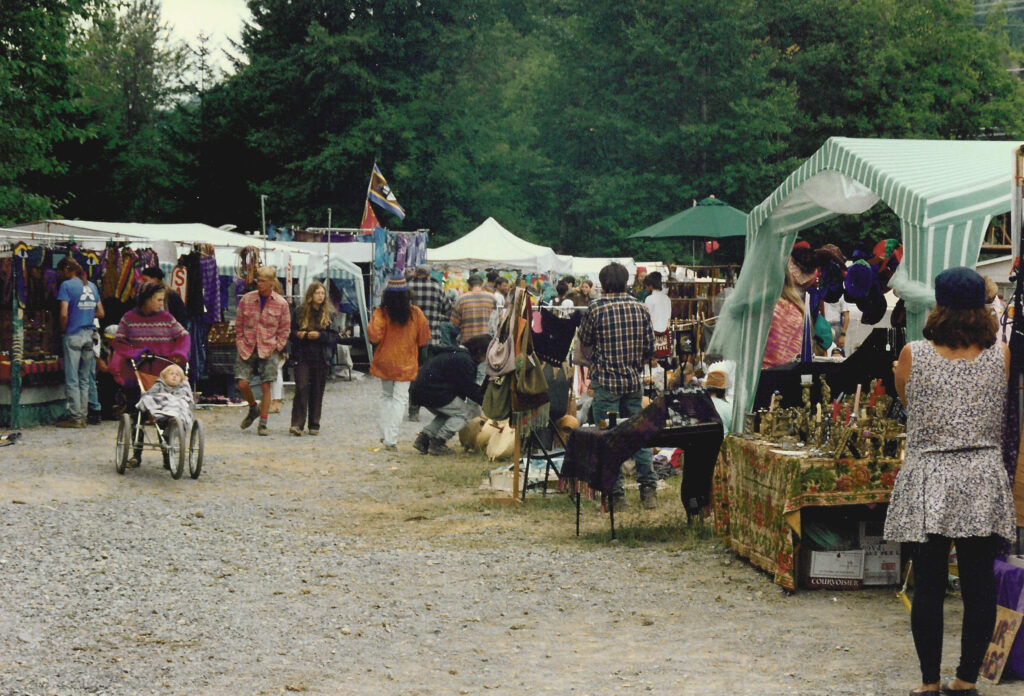
People sold handmade artwork, tie-dyed clothing, jewelry, vegetarian food, and bootleg recordings.
Musicians gathered to play acoustic instruments.
Friends reunited after weeks or months apart.
For many attendees, the parking lot became almost as important as the concert itself.
Unlike most touring acts, the Grateful Dead never attempted to discourage this culture.
If anything, they quietly welcomed it.
Tape Trading
One of the most remarkable decisions the Grateful Dead ever made involved live recordings.
Most artists aggressively fought unauthorized concert taping.
The Grateful Dead chose another path.
Eventually they established designated “taper sections” where audience members could set up microphones to record performances.
The band asked only one thing:
Do not sell the tapes.
Trade them freely.
That single decision helped create one of the largest grassroots music-sharing communities ever assembled.
Fans mailed cassette tapes across the country.
Entire collections were carefully cataloged.
People compared different performances of the same songs, searching for favorite versions.
Long before the internet connected music lovers worldwide, Deadheads had built their own network.
The result was extraordinary.
Instead of reducing ticket sales, tape trading introduced thousands of new listeners to the Grateful Dead.
Most people who discovered the music this way eventually bought albums and attended concerts.
The band’s trust in its audience paid off.
A Constantly Changing Set List
By the late 1970s, the Grateful Dead’s catalog had grown enormous.
Rather than repeating a fixed show each night, they rotated through well over one hundred songs.
Some compositions disappeared for months before suddenly returning.
Others became staples.
Fans analyzed set lists with incredible attention.
Would tonight feature “Terrapin Station”?
Would “China Cat Sunflower” transition into “I Know You Rider”?
Would “Estimated Prophet” lead into “Eyes of the World”?
The uncertainty became part of the excitement.
No one—not even the band—knew exactly what would happen.
Terrapin Station
In 1977, the Grateful Dead released one of their most ambitious records.
Terrapin Station centered around an epic multi-part composition inspired by mythology, storytelling, and Robert Hunter’s poetic imagination.
The title suite occupied an entire side of the original LP.
Producer Keith Olsen encouraged a more polished sound than previous Grateful Dead albums, including orchestral arrangements that divided fans.
Some appreciated the expanded scope.
Others preferred the band’s rawer recordings.
Regardless of opinion, “Terrapin Station” quickly became a concert favorite.
Live performances emphasized improvisation rather than orchestration, allowing the piece to grow organically.
It became one of Garcia’s favorite vehicles for exploration.
The Legendary Spring of 1977
Among Deadheads, few periods are discussed with more admiration than the spring tour of 1977.
Concerts from May of that year have achieved near-mythical status.
The performance at Cornell University on May 8, 1977, in particular, is frequently cited as one of the greatest Grateful Dead concerts ever played.
Whether it truly deserves that title remains endlessly debated.
Deadheads enjoy those debates.
Ask ten longtime fans for the greatest Grateful Dead show and you’ll likely receive ten different answers.
That diversity of opinion reflects the band’s greatest strength.
There was never one definitive performance.
Every listener connected with different moments.
By the end of the 1970s, the Grateful Dead had accomplished something almost unimaginable.
Without relying on hit singles, flashy marketing campaigns, or constant radio airplay, they had become one of the highest-grossing touring bands in America. Their concerts were no longer simply performances—they were annual reunions for an ever-growing community of fans who viewed the Grateful Dead not just as musicians, but as companions on a lifelong musical journey.
The next decade would bring dramatic change. New technology, new personnel, personal struggles, and an unexpected burst of mainstream popularity would push the Grateful Dead into territory they had never anticipated. It would be their most challenging era—and, surprisingly, their most commercially successful.
A New Keyboard Player Brings New Energy
By the late 1970s, the Grateful Dead had once again undergone a significant lineup change. Keith Godchaux, whose elegant piano playing had helped define the band’s sound throughout much of the decade, and his wife Donna Jean Godchaux departed the group in early 1979. Their years with the Dead had produced countless memorable performances, but constant touring, personal struggles, and changing musical interests had taken their toll.
The band now faced an important decision.
Finding a keyboard player for the Grateful Dead was unlike hiring a musician for almost any other rock band. Technical ability alone wasn’t enough. Whoever joined would need to improvise nightly, react instantly to musical changes, and blend naturally with six other strong personalities.
The choice was Brent Mydland.
Brent was younger than the rest of the band, but he immediately impressed everyone with both his musicianship and his personality. He could move effortlessly between Hammond organ, piano, and the rapidly evolving world of synthesizers without overwhelming the group’s sound.
More importantly, he listened.
That quality mattered more than flashy solos.
Within weeks, Brent sounded as though he had always been part of the Grateful Dead.
Brent’s Voice
Brent Mydland also brought something the band had been missing for years.
His voice.
The Grateful Dead had always been known for harmonies rather than polished vocal perfection, but Brent possessed a rich, soulful tenor that blended beautifully with Jerry Garcia and Bob Weir.
Songs immediately gained new depth.
Whether singing harmony on classics like “Friend of the Devil” or taking the lead on his own compositions, Brent became an essential part of the band’s evolving identity.
Many longtime Deadheads consider the Garcia-Weir-Mydland vocal blend to be one of the strongest in the band’s history.
The Concert Experience Evolves
Entering the 1980s, Grateful Dead concerts continued changing.
While the overall format remained familiar—two sets with an intermission—the musical vocabulary expanded.
A typical first set mixed concise songs with blues covers and newer material.
The second set often became an extended suite where songs flowed together almost seamlessly.
“Scarlet Begonias” might melt into “Fire on the Mountain.”
“China Cat Sunflower” frequently led directly into “I Know You Rider.”
“Estimated Prophet” could transition into “Eyes of the World.”
Then came “Drums.”
Bill Kreutzmann and Mickey Hart transformed percussion into an adventure of its own.
Using everything from traditional drum kits to electronic percussion, hand drums, gongs, bells, and unusual world instruments, they created rhythmic landscapes that changed nightly.
After “Drums” came “Space.”
This wasn’t a song.
It wasn’t even structured improvisation.
It was pure exploration.
Garcia experimented with feedback.
Phil Lesh generated strange bass textures.
Weir manipulated unusual guitar sounds.
The music became abstract, often sounding more like modern classical composition than rock.
Eventually recognizable melodies emerged again, guiding the audience back toward familiar songs before the evening concluded.
For newcomers, the sequence could be bewildering.
For longtime fans, it became one of the highlights of every concert.
A Community Unlike Any Other
By the early 1980s, Deadheads had become one of the most recognizable fan communities in America.
Unlike fans who simply attended concerts, many structured large portions of their lives around Grateful Dead tours.
Some quit traditional jobs to follow the band for months.
Others carefully planned vacations around concert schedules.
College students arranged semesters so they could catch summer tours.
Families introduced children to the community, creating multiple generations of Deadheads.
The parking lots outside venues developed into temporary villages.
Rows of colorful vans filled with travelers appeared days before concerts.
Handmade clothing, jewelry, artwork, vegetarian meals, grilled cheese sandwiches, and countless other goods were sold by fans to other fans.
Musicians gathered informally.
Strangers became friends.
The phrase “Shakedown Street” gradually became associated with these bustling marketplaces, named after the band’s 1978 album.
Although outsiders sometimes focused on the counterculture aspects of the scene, many attendees remember something else entirely.
Kindness.
People looked after one another.
If someone’s vehicle broke down, help usually appeared.
If someone lacked food, another fan often shared.
The Grateful Dead had unintentionally created one of the largest traveling communities in American music history.
The Business That Didn’t Feel Like One
As the Grateful Dead’s popularity grew, so did the organization required to support them.
Their touring operation became enormous.
Road crews handled lighting, sound, transportation, staging, merchandise, recording equipment, and countless logistical details.
Yet despite this increasingly sophisticated infrastructure, the atmosphere remained remarkably informal.
Employees often stayed with the organization for decades.
Many felt less like staff members than members of an extended family.
The Grateful Dead organization developed a reputation for loyalty rarely seen in the music business.
People weren’t simply working for a successful band.
They believed they were participating in something larger.
Jerry Garcia’s Side Projects
During breaks between Grateful Dead tours, Jerry Garcia rarely stopped playing.
Instead, he performed with the Jerry Garcia Band, an ever-changing group that allowed him to explore gospel, rhythm and blues, reggae, jazz, and soul music.
Unlike the Grateful Dead’s collective improvisation, the Jerry Garcia Band centered more directly around Garcia’s singing and guitar playing.
The relaxed atmosphere appealed to him.
He also collaborated with longtime friend David Grisman on acoustic recordings that reflected Garcia’s lifelong love of bluegrass and traditional American music.
These projects reminded fans that Garcia’s musical interests extended far beyond psychedelic rock.
He seemed genuinely curious about nearly every style of music.
Fame Arrives Slowly
Unlike most famous rock stars, Jerry Garcia never cultivated celebrity.
He disliked interviews.
He avoided glamorous lifestyles.
 He dressed simply.
He often appeared almost uncomfortable being recognized.
Yet by the early 1980s, he had become one of America’s most respected guitarists.
Young musicians studied his improvisational approach.
Veteran players admired his versatility.
Jazz musicians appreciated his willingness to take risks.
Country players respected his deep understanding of traditional American music.
Garcia remained puzzled by much of the attention.
He frequently insisted that the Grateful Dead worked because everyone contributed equally.
Although fans often viewed him as the leader, Garcia consistently rejected that title.
He considered the Grateful Dead a true collective.
Challenges Behind the Scenes
While concerts continued attracting devoted audiences, life behind the scenes grew increasingly complicated.
Years of nonstop touring, inconsistent schedules, and unhealthy habits began affecting several members.
Jerry Garcia struggled with exhaustion.
His diet was poor.
He smoked heavily.
He rarely exercised.
Most concerning, his longtime heroin addiction became increasingly difficult to ignore.
Friends worried.
Bandmates worried.
Fans worried.
Garcia himself acknowledged the problem but found overcoming addiction extraordinarily difficult.
Unlike the carefree image sometimes associated with the Grateful Dead, the reality was far more complicated.
The musicians were entering middle age after nearly two decades on the road.
Maintaining that lifestyle became increasingly challenging.
Still, every evening when the lights dimmed and the first notes rang out, those concerns temporarily disappeared.
The music remained extraordinary.
Night after night, the Grateful Dead continued proving why they had become America’s premier live band.
Yet the greatest challenge of Jerry Garcia’s life was approaching rapidly. Within a few years, declining health would nearly end both his career and his life. Against all odds, that crisis would lead to the most surprising chapter in Grateful Dead history—a mainstream commercial breakthrough that no one, least of all the band themselves, ever expected.
A Band at a Crossroads
As the Grateful Dead entered the mid-1980s, they occupied a unique position in American music. They had been together for more than twenty years, had released a remarkable catalog of albums, and remained one of the country’s most successful touring acts. Yet they still existed largely outside the mainstream.
Most rock bands that debuted in the 1960s had either broken up or become nostalgia acts. The Grateful Dead had done neither. Every concert still featured changing set lists, extended improvisations, and new musical ideas. The audience continued to grow almost entirely through word of mouth.
Behind the scenes, however, serious problems were beginning to surface.
Years of relentless touring had taken a physical toll on every member of the band, but no one was struggling more than Jerry Garcia.
Garcia’s health had steadily declined throughout the early 1980s. He was overweight, smoked heavily, rarely exercised, and lived with diabetes. His longtime heroin addiction further complicated matters, leaving friends and family increasingly worried about his condition.
Although he remained capable of breathtaking performances, there were nights when the strain was visible. Fans who had followed the band for years could see that Garcia was growing tired.
No one realized just how close they were to losing him.
Jerry Garcia’s Diabetic Coma
On July 10, 1986, Jerry Garcia collapsed at a rehabilitation center where he had gone in an effort to overcome his drug addiction.
He slipped into a diabetic coma.
For several days, his future remained uncertain.
Doctors weren’t sure whether he would survive. Even if he did, there were fears that permanent brain damage might prevent him from ever playing guitar again.
The news devastated the Grateful Dead community.
For many Deadheads, the idea of the Grateful Dead without Jerry Garcia seemed unimaginable.
Miraculously, Garcia regained consciousness.
Recovery, however, was slow.
He had to relearn basic physical tasks. Even playing the guitar required rebuilding strength and coordination. Friends recalled that Garcia approached rehabilitation with determination, practicing scales and exercises much like a beginner learning the instrument for the first time.
The experience changed him.
He lost weight, improved his health, and returned to the stage with renewed appreciation for simply being alive.
A Remarkable Comeback
When Garcia returned to performing in December 1986, audiences greeted him with overwhelming emotion.
The concerts carried an energy unlike anything the band had experienced in years.
Fans understood they were witnessing something special.
Garcia’s playing seemed inspired.
The band sounded revitalized.
Rather than slowing down after the health scare, the Grateful Dead entered one of the most successful periods of their career.
Recording In the Dark
Unlike many previous studio albums, In the Dark was developed using an unusual approach.
Instead of recording entirely inside a traditional studio, the band rehearsed much of the material on an empty stage at Marin Veterans Memorial Auditorium in California. This allowed the musicians to interact more naturally, almost as though they were performing a concert without an audience.
The method worked beautifully.
The album captured much of the relaxed chemistry that had always defined the Grateful Dead’s live performances.
Released in 1987, In the Dark featured songs that had already become familiar to concert audiences, including “Hell in a Bucket,” “West L.A. Fadeaway,” “Throwing Stones,” and “Touch of Grey.”
No one expected what happened next.
“Touch of Grey”
Written by Jerry Garcia and lyricist Robert Hunter, “Touch of Grey” had been performed live for several years before appearing on In the Dark.
The song’s optimistic chorus—
“I will get by…”
—felt especially meaningful following Garcia’s recovery.
Warner Bros. released it as a single.
Then MTV entered the picture.
The music video featured the band performing as skeleton puppets inspired by the Grateful Dead’s famous artwork. It was humorous, clever, and unlike almost anything else on television.
Viewers loved it.
Suddenly, a band that had spent more than two decades building its reputation through live performances found itself enjoying its first genuine mainstream hit.
“Touch of Grey” reached the Top 10 of the Billboard Hot 100.
It remains the Grateful Dead’s only Top 10 single.
For many artists, such success would have represented the beginning of their career.
For the Grateful Dead, it arrived more than twenty years after they had formed.
Overnight Success…Twenty-Two Years Later
The irony wasn’t lost on anyone.
After decades of avoiding commercial formulas, the Grateful Dead unexpectedly became one of America’s hottest bands.
Album sales soared.
Concert attendance exploded.
Media outlets that had largely ignored the band suddenly wanted interviews and cover stories.
A younger generation discovered the Grateful Dead through MTV, while longtime fans watched with a mixture of excitement and concern.
The band appreciated the new audience.
Some older Deadheads worried that the intimate culture surrounding Grateful Dead concerts might change forever.
Bigger Than Ever
By the late 1980s, the Grateful Dead were selling out arenas and stadiums across North America.
Demand for tickets became extraordinary.
Fans often camped outside ticket outlets overnight.
Shows sold out within hours.
In many cities, obtaining a Grateful Dead ticket became one of the most difficult tasks in live music.
The band’s touring operation expanded accordingly.
Hundreds of crew members traveled alongside the musicians.
Lighting systems grew more sophisticated.
Sound technology continued improving.
Yet despite playing before tens of thousands of people, the Grateful Dead resisted becoming a tightly choreographed stadium act.
Every concert still featured different songs.
Improvisation remained central.
Mistakes still happened.
That unpredictability continued attracting audiences who wanted something more than a polished reproduction of an album.
Brent Mydland Comes Into His Own
During this period, Brent Mydland emerged as one of the band’s strongest creative voices.
His Hammond organ gave many songs a richer, fuller sound than they had possessed during the previous decade.
His emotional singing added another dimension to the Grateful Dead’s harmonies.
He also contributed original compositions, including “Blow Away,” “Just a Little Light,” and “Tons of Steel.”
While Garcia remained the emotional center of the band, Brent increasingly became an important musical catalyst.
The friendship between Garcia and Mydland was evident onstage.
Their musical conversations frequently produced some of the most memorable moments of late-1980s Grateful Dead concerts.
The Deadhead Community Grows
Success brought challenges beyond the stage.
The number of people following Grateful Dead tours increased dramatically.
Parking lots became even larger temporary communities.
For many fans, attending concerts was no longer simply entertainment—it was a lifestyle.
Some spent months traveling from city to city.
Others earned enough money selling food, handmade clothing, jewelry, or artwork in the parking lots to finance the next leg of the tour.
The phrase “Shakedown Street” became synonymous with these vibrant marketplaces.
There was music everywhere.
Drums echoed through the lots.
Acoustic guitars appeared around every corner.
Artists painted murals.
Friends reunited after weeks apart.
For countless Deadheads, the concerts represented only part of the experience.
The community itself mattered just as much.
Fame’s Unintended Consequences
The Grateful Dead had always welcomed new listeners, but the explosive growth of their audience created problems.
Some newcomers understood the band’s traditions.
Others did not.
Crowd sizes became increasingly difficult to manage.
Ticket shortages encouraged scalping.
Parking lots occasionally attracted people with little interest in the music itself.
The relaxed atmosphere that had characterized earlier tours became harder to maintain as attendance climbed into the tens of thousands.
The band found themselves in an unusual position.
They had spent decades building a devoted audience through honesty, openness, and constant touring.
Now that success had reached unprecedented levels, it threatened to overwhelm the very culture that had made the Grateful Dead unique.
Still, the music remained remarkably strong.
Garcia appeared healthier than he had in years.
The band continued performing with enthusiasm.
Few could have predicted that another devastating loss was only a short time away—one that would profoundly alter the Grateful Dead’s chemistry during the final chapter of their remarkable career.
The End of an Era
The Grateful Dead entered the 1990s riding the greatest commercial success of their long career. Their concerts routinely sold out within hours, In the Dark had introduced millions of new fans to the band, and Jerry Garcia appeared healthier than he had just a few years earlier. For the first time, the Grateful Dead were not just one of America’s premier live bands—they were one of its biggest attractions, capable of filling stadiums across the country.
Yet beneath the success, the band faced new challenges. Touring had become larger, more complicated, and more exhausting than ever before. The intimate atmosphere of earlier years was becoming increasingly difficult to maintain as crowds grew into the tens of thousands. The parking lot communities that had once been gatherings of dedicated fans were now attracting people who had little interest in the music itself.
The Grateful Dead had become victims of their own success.
Then tragedy struck once again.
Losing Brent Mydland
On July 26, 1990, keyboardist Brent Mydland died of an accidental drug overdose at the age of thirty-seven.
The news stunned the band and its fans.
Brent had spent more than eleven years with the Grateful Dead, longer than either Pigpen or Keith Godchaux. During that time, he had become one of the group’s defining musical voices. His Hammond organ gave many songs their distinctive warmth, his harmonies strengthened the band’s vocals, and his energetic personality had become an important source of life on stage.
Jerry Garcia took the loss especially hard.
The two musicians had developed a close friendship over the previous decade. Brent’s soulful singing and fearless improvisation had pushed Garcia creatively, and many of the band’s finest late-1980s performances featured remarkable exchanges between the two.
Replacing him would be nearly impossible.
Vince Welnick and Bruce Hornsby
The Grateful Dead responded quickly, knowing that canceling months of scheduled concerts would disappoint thousands of fans.
Former The Tubes keyboardist Vince Welnick joined as Brent’s permanent replacement.
To help ease the transition, acclaimed pianist Bruce Hornsby also joined the touring lineup for many shows between 1990 and 1992.
The combination proved surprisingly successful.
Hornsby’s grand piano added a rich acoustic texture that the band had not featured consistently since Keith Godchaux’s departure. His energetic style challenged the other musicians, often pushing jams in fresh directions.
Meanwhile, Vince Welnick gradually found his place within the group. Rather than attempting to imitate Brent, he developed his own approach, relying more heavily on synthesizers while contributing his own vocal harmonies.
Deadheads welcomed both musicians warmly.
Although everyone understood Brent could never truly be replaced, the Grateful Dead once again demonstrated an extraordinary ability to adapt.
The Music Never Stopped
One of the remarkable characteristics of the Grateful Dead was their resilience.
Pigpen’s death had not ended the band.
Keith and Donna’s departure had not ended the band.
Mickey Hart leaving and returning had not ended the band.
Now Brent’s passing would not end the band either.
Concerts continued.
Set lists continued evolving.
New musical conversations emerged every night.
Songs introduced decades earlier remained fresh because they were never played exactly the same way twice.
A version of “Eyes of the World” in 1991 bore little resemblance to one performed in 1974.
That constant evolution kept both musicians and audiences engaged.
The Weight of Success
While the music remained strong, life on the road became increasingly difficult.
The Grateful Dead had grown into an enormous touring organization employing hundreds of people. Every tour required fleets of trucks, buses, sound equipment, lighting systems, security personnel, and support staff.
The audience had also changed.
Many longtime Deadheads still traveled from show to show because of the music and the community.
Others arrived primarily for the party.
Parking lots became more crowded than ever before.
Local police often viewed Grateful Dead concerts as major public safety events.
The relaxed atmosphere that had defined the 1970s became harder to preserve.
The band never blamed its fans.
They simply recognized that success had fundamentally altered the experience.
Jerry Garcia’s Final Years
Jerry Garcia remained the emotional heart of the Grateful Dead, but the physical demands of constant touring continued taking a toll.
Although he had recovered from his diabetic coma, maintaining his health proved difficult.
Years of smoking, poor diet, diabetes, and recurring struggles with addiction gradually weakened him.
Friends noticed he seemed increasingly tired.
Performances varied more noticeably from night to night.
Some evenings Garcia still produced astonishing improvisations reminiscent of the band’s greatest years.
Other nights, fatigue became apparent.
Yet audiences continued cheering every note.
For Deadheads, perfection had never been the point.
The journey mattered more than flawless execution.
The Final Concert
On July 9, 1995, the Grateful Dead performed what would become their final concert at Soldier Field in Chicago.
No one in attendance realized they were witnessing history.
The set included familiar favorites such as “Touch of Grey,” “Box of Rain,” and “Black Muddy River.”
Like thousands of previous Grateful Dead performances, the concert featured moments of beauty alongside moments of imperfection.
Fans left expecting another tour.
Instead, it marked the end of an era.
Jerry Garcia’s Death
Less than a month later, on August 9, 1995, Jerry Garcia died of a heart attack while staying at a rehabilitation facility in Forest Knolls, California.
He was fifty-three years old.
The news spread rapidly around the world.
For millions of fans, it felt impossible.
Garcia had become more than a guitarist.
He represented curiosity, creativity, kindness, humility, and a lifelong commitment to musical exploration.
Tributes poured in from every corner of the music world.
Artists from rock, jazz, country, folk, bluegrass, and classical music praised Garcia’s influence.
Deadheads gathered in parks, concert venues, and public spaces to celebrate his life through music rather than mourning alone.
The Last Song ever played was “Box of Rain” at Soldier Field 7/9/1995
The End of the Grateful Dead
Later that year, the surviving members announced that the Grateful Dead would not continue under the same name.
They believed the band had always been more than its individual members, but they also recognized that Jerry Garcia’s role could never truly be filled.
His guitar playing, voice, and personality had been woven into the group’s identity from the very beginning.
Ending the Grateful Dead after Garcia’s death felt like the only honest decision.
For many fans, it was heartbreaking.
Yet there was also understanding.
The Grateful Dead had always valued authenticity over commercial opportunity.
Continuing simply because it might be profitable would have betrayed everything the band had stood for.
Still, while the Grateful Dead had come to an end, the music itself was far from finished. The surviving members would soon discover that the songs, the community, and the spirit they had created over thirty years refused to disappear. Instead, they would evolve once again, finding new audiences and proving that the Grateful Dead was never just a band—it had become a living musical tradition.
Life After Jerry
When Jerry Garcia died in August 1995, many believed the story of the Grateful Dead had reached its final chapter. After all, Garcia had been there from the very beginning. He had been the band’s primary guitarist, one of its principal singers, and, whether he liked the title or not, its spiritual center. His laid-back personality and unmistakable guitar playing had become inseparable from the Grateful Dead’s identity.
The surviving members, however, knew something important.
The music still existed.
The songs still meant something.
The audience was still there.
Rather than pretending they could simply replace Garcia, they chose another path. Over the following decades they would perform under a variety of names, each acknowledging that while the Grateful Dead had ended, the musical journey continued.
The first major project became The Other Ones, formed in 1998 by Bob Weir, Phil Lesh, Mickey Hart, Bill Kreutzmann, and Bruce Hornsby. Rather than attempting to recreate the past, the group celebrated the Grateful Dead’s enormous catalog while introducing different musicians into the fold.
Later came The Dead, another incarnation that continued touring throughout the 2000s.
Each project reflected the same philosophy that had guided the Grateful Dead for decades: the music should remain alive rather than frozen in time.
Phil Lesh and Friends
Bassist Phil Lesh approached the post-Dead years much the way he had approached his bass playing—with curiosity.
His project, Phil Lesh and Friends, featured constantly changing lineups of musicians drawn from rock, jazz, bluegrass, and jam bands.
Every tour felt different.
Every performance explored familiar songs from fresh perspectives.
The format echoed one of the Grateful Dead’s oldest beliefs: no song is ever truly finished.
Lesh also opened the venue Terrapin Crossroads in California, creating a gathering place where musicians could perform together in the same spontaneous spirit that had defined the Dead’s earliest years.
Bob Weir Never Slowed Down
If anyone embodied the Grateful Dead’s relentless touring spirit after Garcia’s death, it was Bob Weir.
Already known as one of rock’s most inventive rhythm guitarists, Weir continued performing almost constantly through projects including RatDog, Wolf Bros, and numerous collaborations.
Over the years, many guitarists have cited Jerry Garcia as an influence.
Far fewer receive enough credit for studying Bob Weir.
His rhythm playing remains unlike almost anyone else’s in rock music.
Rather than simply strumming chords, Weir built moving, melodic patterns that often sounded like a second lead instrument. Jazz musicians, in particular, have praised the sophistication of his approach.
As younger players began analyzing Grateful Dead performances in greater detail, appreciation for Weir’s remarkable musicianship only continued to grow.
Fare Thee Well
In 2015, surviving members Bob Weir, Phil Lesh, Mickey Hart, and Bill Kreutzmann reunited for a series of concerts celebrating the Grateful Dead’s fiftieth anniversary.
Appropriately titled Fare Thee Well, the performances featured guitarist Trey Anastasio of Phish filling the impossibly difficult role of lead guitarist.
Anastasio wisely avoided attempting to imitate Jerry Garcia.
Instead, he approached the material respectfully while bringing his own musical personality to the performances.
More than 70,000 fans attended each of the Chicago concerts.
Millions more watched through live broadcasts.
For many Deadheads, it represented both a farewell and a celebration.
The Grateful Dead’s story had come full circle.
** Note: You can view all my videos from those shows at Concert-vids.com **
Dead & Company
Only a few months after Fare Thee Well, another chapter began.
Bob Weir, Mickey Hart, and Bill Kreutzmann joined forces with bassist Oteil Burbridge, keyboardist Jeff Chimenti, and guitarist John Mayer to form Dead & Company.
Mayer’s involvement initially surprised many observers.
Known primarily as a pop and blues guitarist, he seemed an unlikely choice.
Then audiences heard him play.
Rather than copying Garcia note for note, Mayer immersed himself in the Grateful Dead’s improvisational philosophy.
His respect for the material quickly earned widespread acceptance among longtime fans.
Dead & Company introduced the Grateful Dead’s music to an entirely new generation while continuing to satisfy veteran Deadheads who had followed the band for decades.
The concerts maintained many familiar traditions.
The set lists changed nightly.
Songs flowed together unpredictably.
Improvisation remained central.
The music continued evolving.
Exactly as Jerry Garcia would have wanted.
The Deadhead Family
Perhaps the Grateful Dead’s greatest accomplishment has nothing to do with album sales or ticket revenue.
It is the community.
Deadheads have always been different from typical fan bases.
The relationship extends beyond admiration for musicians.
It resembles an extended family.
Parents introduce children to the music.
Those children grow up attending concerts.
They introduce the next generation.
Entire families now span three or even four generations of Deadheads.
The community continues through festivals, tribute bands, online discussions, tape trading archives, and annual gatherings.
Many friendships formed while following Grateful Dead tours have lasted longer than most marriages.
That sense of belonging remains one of the band’s greatest legacies.
A New Way of Listening
Long before streaming services, the internet, or social media, the Grateful Dead encouraged a concept that now feels remarkably modern.
Sharing.
Rather than fighting audience recordings, they welcomed them.
Rather than controlling every aspect of the fan experience, they trusted their listeners.
Thousands of concerts were preserved because of that philosophy.
Today, the Grateful Dead may be the most thoroughly documented live band in history.
Fans can compare performances from nearly every era, studying how songs evolved across decades.
Few artists have left behind such an extensive musical archive.
Influence Beyond Rock
The Grateful Dead’s influence reaches far beyond jam bands.
Country musicians admire their songwriting.
Jazz artists respect their improvisation.
Bluegrass players appreciate Garcia’s lifelong devotion to traditional music.
Alternative rock bands have borrowed their willingness to experiment.
Modern touring artists have adopted their emphasis on community and live performance.
Even the business side of music has been influenced by the Grateful Dead.
Their focus on touring over record sales anticipated the modern music industry, where concerts often generate more revenue than albums.
Their direct relationship with fans became a model long before social media allowed artists to communicate without intermediaries.
Why the Grateful Dead Endure
Many legendary bands become frozen in time.
People remember them through a handful of classic albums or hit singles.
The Grateful Dead are different.
Their reputation grows because people continue discovering the live recordings.
A teenager who hears a 1977 performance today experiences much the same excitement that audiences felt nearly fifty years ago.
Every version sounds alive.
Nothing feels mechanical.
No concert becomes obsolete.
The Grateful Dead never chased perfection.
They chased possibility.
Some nights the experiments failed.
Other nights they achieved moments of collective improvisation that few groups in any genre have ever equaled.
That willingness to risk failure in pursuit of something extraordinary remains their defining characteristic.
The Long, Strange Trip Continues
It is tempting to describe the Grateful Dead simply as a rock band.
The description is accurate—but incomplete.
They were also pioneers of live sound, innovators in fan engagement, masters of improvisation, students of American musical traditions, fearless experimenters, and builders of one of the most enduring communities in popular culture.
They survived changing musical trends, personal tragedies, financial crises, lineup changes, addiction, and enormous commercial success without abandoning the principles that had guided them since the Acid Tests of the mid-1960s.
More than thirty years after Jerry Garcia’s passing, new listeners continue to discover the Grateful Dead every day. They arrive through a parent’s record collection, a streaming playlist, an old concert tape, a recommendation from a friend, or a modern Dead & Company performance. However they arrive, many find themselves captivated by the same idea that has drawn fans for generations: that music should be an adventure rather than a routine.
In the end, perhaps the Grateful Dead’s greatest legacy is not any particular album, concert, or song. It is the belief that every performance can be unique, every audience can become part of the music, and every journey is worth taking, even if no one knows exactly where the road will lead.
For a band that rarely cared about hit singles or chart positions, that may be the most remarkable achievement of all. The Grateful Dead did far more than create songs—they created a living tradition that continues to inspire musicians and listeners around the world, proving that while bands may end, great music never truly stops.
This post has already been read 51116 times!