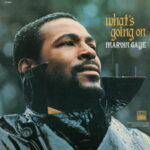
 Some albums entertain. Some become commercial successes. A rare few fundamentally change what popular music is capable of accomplishing. Marvin Gaye’s What’s Going On, released in 1971, belongs firmly in that last category. More than fifty years after its release, it remains one of the most celebrated, influential, and emotionally resonant records ever made. It is a masterpiece that transcends genres, generations, and eras, proving that popular music can simultaneously be beautiful, socially conscious, deeply personal, and commercially successful.
Before What’s Going On, Marvin Gaye was already one of Motown’s biggest stars. He had built a remarkable career through a string of unforgettable hits including “I Heard It Through the Grapevine,” “How Sweet It Is (To Be Loved by You),” and countless duets with Tammi Terrell. Yet despite his success, Gaye felt creatively confined by the Motown assembly line that had made him famous. The label specialized in polished three-minute singles built for radio, but Gaye envisioned something much larger.
Personal tragedy also weighed heavily on him. The death of Tammi Terrell devastated Gaye emotionally, while reports from his brother Frankie, who had returned from serving in Vietnam, exposed him to the grim realities facing American soldiers. Combined with political unrest, racial inequality, environmental concerns, and urban poverty, these experiences inspired Gaye to create something radically different from anything Motown had previously released.
The result was What’s Going On, a concept album that flows as one continuous conversation rather than a collection of disconnected songs. Each track naturally leads into the next, creating an immersive listening experience that feels remarkably modern even today.
The album opens with the title track, and within seconds it’s clear listeners are entering unfamiliar territory. Instead of an energetic introduction, we’re greeted by the sounds of a lively gathering—people talking, laughing, and socializing before gentle saxophone and lush orchestration begin to emerge. Gaye’s layered vocals immediately create an almost spiritual atmosphere.
“What’s Going On” asks questions instead of providing easy answers. Rather than preaching, Gaye pleads for understanding, compassion, and empathy. His smooth delivery makes every lyric feel heartfelt rather than confrontational. The song remains astonishing because its message has never lost relevance. Decades later, calls for unity and understanding continue to resonate across generations.
“What’s Happening Brother” shifts the perspective to returning Vietnam veterans attempting to readjust to civilian life. Gaye paints a picture of soldiers coming home to an America that barely resembles the one they left behind. Rather than celebrating military service through patriotic slogans, the song explores uncertainty, unemployment, and emotional displacement. It’s an empathetic portrait that gives voice to individuals often overlooked.
“Flyin’ High (In the Friendly Sky)” takes an even darker turn, examining addiction with extraordinary sensitivity. Instead of judging those caught in dependency, Gaye explores hopelessness and desperation. The music floats almost dreamlike, creating an unsettling contrast with the emotional pain embedded in the lyrics. The arrangement perfectly mirrors the emotional numbness the song describes.
“Save the Children” is among the album’s most moving moments. Delivered partly through spoken word, Gaye directly addresses listeners with heartfelt concern about the world’s future. While spoken-word passages can sometimes feel dated on classic albums, this one remains remarkably effective because it sounds sincere rather than theatrical. It feels like an honest conversation from someone genuinely worried about the next generation.
“God Is Love” serves as a brief but uplifting reminder of hope amid the album’s heavier themes. Lasting only a couple of minutes, it reinforces the spiritual thread woven throughout the record. Rather than promoting organized religion, Gaye emphasizes compassion, forgiveness, and humanity as guiding principles.
“Mercy Mercy Me (The Ecology)” was decades ahead of its time. Environmental concerns were far from mainstream popular music in 1971, yet Gaye addressed pollution, poisoned skies, contaminated oceans, and humanity’s impact on nature with remarkable foresight. Today, discussions about climate change and environmental degradation dominate global conversations, making the song feel prophetic. The beauty of its melody only enhances the sadness underlying its message.
“Right On” expands the album’s musical palette with Latin-inspired percussion, jazz influences, and extended instrumental passages. Clocking in at over seven minutes, it gives the musicians room to breathe while maintaining the album’s meditative atmosphere. Jam-oriented without becoming self-indulgent, the track showcases Gaye’s willingness to push beyond traditional Motown structures.
The album concludes with “Inner City Blues (Make Me Wanna Holler),” one of the most powerful closing statements in popular music history. Addressing economic hardship, police brutality, taxation, and systemic inequality, Gaye channels frustration into one final emotional release. The repeating refrain lingers long after the music fades, bringing the album full circle while emphasizing that the problems raised throughout remain unresolved.
Musically, What’s Going On is every bit as revolutionary as its lyrical content. Rather than relying on Motown’s signature upbeat pop-soul formula, Gaye blends soul, jazz, gospel, classical orchestration, funk, and R&B into a seamless whole. The arrangements are sophisticated without becoming inaccessible.
The legendary Funk Brothers provide extraordinary musicianship throughout the album. James Jamerson’s bass playing is especially remarkable, delivering melodic lines that almost function as secondary vocal performances. His work on the title track alone has become one of the most studied bass performances ever recorded.
Strings drift gently through the mix without overpowering the rhythm section. Delicate percussion adds warmth rather than force. Saxophone passages appear at precisely the right moments. Every instrument serves the songs rather than competing for attention.
Perhaps most groundbreaking was Marvin Gaye’s vocal production. Instead of choosing one lead vocal take, he layered multiple performances together, allowing different versions of his voice to weave in and out throughout each song. This technique creates a conversational quality, almost as if Gaye is debating with himself. Today, vocal layering is common practice, but in 1971 it represented an innovative production approach that gave the album its distinctive sound.
The production itself remains astonishingly fresh. While many recordings from the early 1970s clearly reveal their age through dated recording techniques, What’s Going On continues to sound warm, detailed, and immersive. Every instrument occupies its own space while contributing to the album’s cohesive atmosphere.
The album’s influence cannot be overstated. It demonstrated that soul music could address serious social issues without sacrificing commercial appeal. It encouraged artists to pursue greater creative freedom and inspired generations of musicians across countless genres.
Its impact can be heard in artists ranging from Stevie Wonder and Prince to D’Angelo, Kendrick Lamar, John Legend, and countless others who blend personal storytelling with broader social commentary. The concept of an R&B artist creating a cohesive, thematic album owes an enormous debt to Marvin Gaye’s artistic gamble.
Even beyond music, What’s Going On influenced how audiences viewed popular artists. It proved musicians could engage thoughtfully with complex issues while maintaining artistic excellence. Rather than diminishing entertainment value, deeper subject matter elevated the emotional power of the music.
One of the album’s greatest strengths is its refusal to become cynical. Despite discussing war, addiction, poverty, racism, environmental destruction, and injustice, hope remains present throughout. Gaye never suggests humanity is beyond redemption. Instead, he continually argues that empathy, love, understanding, and compassion remain possible solutions.
That optimism separates What’s Going On from many protest albums that followed. Rather than expressing anger alone, it seeks healing. Rather than dividing listeners, it invites reflection. Its emotional intelligence allows it to remain relevant regardless of changing political climates.
Few albums reward repeated listening as generously. Every return reveals another subtle harmony, another instrumental flourish, another lyrical nuance, or another production detail previously unnoticed. It functions equally well as background listening and as a focused, front-to-back experience with headphones.
More than five decades after its release, What’s Going On remains astonishingly current. The specific headlines may have changed, but the album’s central themes—compassion, equality, environmental stewardship, economic hardship, and the search for understanding—remain just as urgent today. That timelessness is one of the clearest signs of truly great art.
Marvin Gaye took an enormous professional risk by insisting on making this record. Motown initially resisted releasing the title track, believing it was too political and unlike the label’s established sound. Had Gaye accepted that decision, popular music might have developed very differently. Instead, he stood by his artistic vision, and history rewarded him.
What’s Going On is more than Marvin Gaye’s greatest achievement; it is one of the defining artistic statements in the history of recorded music. Its melodies remain unforgettable, its performances are extraordinary, its production still sounds stunning, and its message continues to inspire new listeners with every passing generation.
There are classic albums, there are legendary albums, and then there are records that permanently reshape the possibilities of music itself. What’s Going On belongs in that smallest and most exclusive category. It is not simply one of the greatest soul albums ever made—it is one of the greatest albums, regardless of genre, ever committed to tape.
Rating: 10/10
This post has already been read 742 times!