 The opening notes are unmistakable.
Da-da-da-dum.
Four tones written in the early 1800s by Ludwig van Beethoven—arguably the most famous motif in classical music history—suddenly reappear in a completely different setting: beneath a pulsing bassline, wrapped in strings that shimmer like a mirrored disco ball, driven by a rhythm section built for Saturday night.
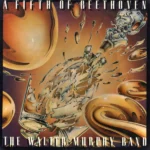
The transformation came courtesy of Walter Murphy and his studio ensemble, The Big Apple Band. The track was “A Fifth of Beethoven.”
Released in 1976, the song became a surprise smash hit, climbing to No. 1 on the Billboard Hot 100. It was more than a novelty. It was a cultural moment—proof that even the most revered classical compositions could survive, and thrive, under the glittering lights of the disco era.
Turning a Symphony into a Saturday Night Anthem
Beethoven’s Symphony No. 5 in C minor opens with one of the most iconic motifs in Western music. For centuries, it symbolized drama, fate, intensity. It echoed in concert halls and classrooms. It was studied, analyzed, revered.
Walter Murphy heard something else in it: groove.
Murphy, classically trained and deeply versed in composition, understood Beethoven’s structure intimately. That knowledge allowed him to reinterpret rather than simply sample. “A Fifth of Beethoven” isn’t a lazy loop. It’s a carefully arranged reimagining.
The song takes the symphony’s urgent motif and stretches it across a driving disco rhythm. Strings surge where orchestras once swelled. A steady four-on-the-floor beat anchors the drama. The urgency remains—but it’s redirected toward movement rather than solemnity.
Beethoven’s storm becomes a dancefloor release.
The Disco Context
By the mid-1970s, disco had evolved from underground club culture into a mainstream phenomenon. The sound was lush and orchestrated—string sections, sweeping arrangements, tight rhythm sections, and infectious grooves.
At the same time, pop culture was becoming increasingly experimental. Boundaries between genres were blurring. Rock artists dabbled in funk. R&B producers borrowed from jazz. Why not classical?
“A Fifth of Beethoven” arrived at the perfect moment. It bridged perceived high art and pop accessibility. It was sophisticated enough to intrigue, but catchy enough to dominate radio.
The title itself was playful—a pun referencing both Beethoven’s Fifth Symphony and a “fifth” of liquor. That wink signaled the track’s irreverence. This wasn’t a museum piece. It was party music.
Craftsmanship Over Gimmick
It would have been easy for “A Fifth of Beethoven” to feel like a throwaway novelty. Instead, it works because of its meticulous arrangement.
Murphy didn’t simply slap a drumbeat onto Beethoven’s melody. He reconstructed the composition to fit disco’s architecture. The strings don’t just echo the classical theme—they expand it. The rhythm section doesn’t overpower—it propels.
There’s tension and release. Build and drop. The structure feels natural, even inevitable.
Murphy’s classical background ensured that the integrity of the original motif remained intact. The grandeur of Beethoven’s writing survives the transformation. It just swaps powdered wigs for platform shoes.
Saturday Night Fever and Cultural Immortality
While the song was already a hit, its legacy was cemented when it appeared on the soundtrack to Saturday Night Fever.
The film became a defining document of the disco era. Its soundtrack—dominated by the Bee Gees—was a cultural juggernaut. Nestled among those falsetto-driven anthems, “A Fifth of Beethoven” stood out as something both familiar and futuristic.
Its inclusion tied the track permanently to disco’s golden age. Even listeners who might not recognize Walter Murphy’s name would recognize that string-driven surge from the dancefloor scenes of the film.
The association with Saturday Night Fever elevated the song beyond novelty status. It became part of a cinematic movement.
High Art Meets Pop Culture
There’s something deeply symbolic about Beethoven’s Fifth being reborn in a disco context.
Classical music has often been positioned as elite—associated with concert halls, formal attire, and academic study. Disco, by contrast, was communal, physical, and rooted in nightlife culture.
By blending the two, Murphy disrupted those boundaries.
“A Fifth of Beethoven” suggests that music is malleable. That motifs written centuries ago can still move bodies in new ways. That art isn’t fixed—it evolves.
It also hinted at a larger trend in the 1970s: the democratization of culture. Classical music wasn’t confined to orchestras. It could live in clubs, on radio, in cars.
The symphony had left the concert hall.
The Groove as Equalizer
Disco’s power lies in its rhythm. The steady four-on-the-floor beat creates unity on the dancefloor. It’s inclusive. It’s relentless.
In “A Fifth of Beethoven,” that rhythm acts as an equalizer. It smooths the edges of classical drama and invites listeners to participate physically.
Instead of sitting quietly in a theater seat, you’re encouraged to move.
The song’s momentum builds gradually, layering instrumentation until the motif feels almost triumphant. The drama remains—but it’s joyful rather than ominous.
It’s fate reimagined as celebration.
Commercial Success and Chart Domination
Reaching No. 1 on the Billboard Hot 100 was no small feat. Disco was competitive. Radio was crowded with hits.
Yet “A Fifth of Beethoven” cut through.
Its success proved that audiences were open to unexpected hybrids. It also validated Murphy’s gamble. What could have been dismissed as kitsch instead became a chart-topping phenomenon.
The song even found international success, reinforcing disco’s global reach.
Critical Reception and Reevaluation
At the time of its release, some critics questioned the legitimacy of disco adaptations of classical works. Purists scoffed. Traditionalists frowned.
But over time, the song has been reassessed.
Rather than trivializing Beethoven, Murphy arguably introduced the motif to new generations. For many listeners in the 1970s, “A Fifth of Beethoven” may have been their first exposure to that famous theme.
Instead of diminishing classical music, the track extended its lifespan.
Listening Today
Decades later, “A Fifth of Beethoven” still feels vibrant.
The production captures disco’s warmth without sounding dated. The string arrangements shimmer. The groove remains irresistible.
Modern listeners, accustomed to genre mashups and remixes, might take such hybridity for granted. But in the mid-1970s, this was bold.
Today, the track functions as both nostalgia and innovation—a reminder of disco’s orchestral ambition and classical music’s adaptability.
Influence and Legacy
While few classical-disco crossovers reached similar commercial heights, “A Fifth of Beethoven” paved the way for later genre fusions. It showed that sampling or reinterpreting older compositions could yield mainstream success.
In the decades since, hip-hop producers have sampled classical motifs. Electronic musicians have blended symphonic elements into club tracks. The wall between “high” and “low” art has continued to erode.
Murphy’s experiment helped normalize that erosion.
The song also stands as a time capsule of disco’s maximalist ethos—strings, groove, drama, and flair.
Why It Endures
Ultimately, “A Fifth of Beethoven” endures because it works on multiple levels:
-
As a novelty, it’s clever.
-
As a disco track, it’s infectious.
-
As an arrangement, it’s skillful.
-
As cultural commentary, it’s subversive.
It invites both appreciation and movement.
And perhaps most importantly, it’s fun.
There’s no irony in its execution. No self-conscious wink beyond the title pun. It commits fully to its concept—and that confidence carries it.
Final Reflection
Walter Murphy and The Big Apple Band took one of the most recognizable themes in music history and asked a simple question:
What if fate had a backbeat?
The answer was “A Fifth of Beethoven”—a song that transformed symphonic tension into dancefloor exhilaration.
It’s a reminder that great music doesn’t belong to a single era or genre. It can be reshaped, reframed, and rediscovered.
From candlelit concert halls to mirrored disco balls, Beethoven’s four-note motif proved immortal.
And in the hands of Walter Murphy, it didn’t just survive.
It danced.
This post has already been read 17826 times!