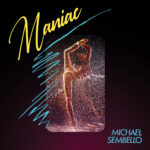
 Few songs capture the sensation of motion quite like “Maniac.” From its opening pulse to its final surge, Michael Sembello’s 1983 smash doesn’t just play—it sprints. It’s a track built on velocity, on the idea that obsession can be both dangerous and transformative, and on the intoxicating rush that comes when talent meets unyielding drive. More than four decades after its release, “Maniac” remains one of the defining sounds of the early ’80s, inseparable from Flashdance yet powerful enough to stand alone as a pure shot of pop adrenaline.
At first listen, “Maniac” feels engineered to move bodies. The tempo is urgent, the rhythm relentless, and the synthesizers gleam with that unmistakable early-’80s sheen. But beneath the sweat and neon lies a song that’s more psychologically sharp than it initially appears. It’s not simply about dancing or chasing fame—it’s about compulsion, about the fine line between discipline and self-destruction, and about the price of wanting something badly enough to give everything else up.
Michael Sembello was already a seasoned musician before “Maniac” catapulted him into the mainstream. A gifted guitarist who had worked with artists like Stevie Wonder, Sembello came from a background that blended funk, rock, and pop sophistication. That pedigree matters, because “Maniac” is not a novelty hit or a one-note dance track. Its construction is meticulous. Every element—the drum programming, the layered synths, the clipped guitar accents, and Sembello’s tightly controlled vocal—serves the song’s central idea of forward momentum.
The opening seconds establish everything. A pulsing synth line locks into a rigid, almost mechanical groove, immediately creating tension. This isn’t a warm or inviting soundscape; it’s demanding. When the drums snap into place, they don’t swing or relax—they drive. The rhythm feels like a heartbeat under stress, fast and unyielding. By the time Sembello’s voice enters, the song has already made its point: this is about intensity, not comfort.
Lyrically, “Maniac” is deceptively simple, yet strikingly effective. Lines like “She’s a maniac, maniac on the floor / And she’s dancing like she’s never danced before” are easy to sing along to, but they carry a darker undertone. The word “maniac” is not flattering. It suggests loss of control, fixation, and isolation. The protagonist isn’t dancing for fun or social connection; she’s dancing because she has to. The floor becomes both a stage and a battlefield, a place where identity is forged through exhaustion.
What makes the lyrics resonate is their universality. While Flashdance frames the song around a dancer chasing her dreams, “Maniac” works just as well as a metaphor for any all-consuming pursuit. Athletes, artists, entrepreneurs, and obsessives of all kinds can see themselves in this song. It’s about the grind before the glory, the lonely hours when everyone else has gone home, and the internal voice that says stopping is not an option.
Sembello’s vocal performance is key to selling that narrative. He doesn’t belt in a traditionally soulful way, nor does he deliver a detached, ironic performance. Instead, his voice is tight, urgent, and slightly strained, as if he’s running alongside the music just to keep up. That sense of effort enhances the song’s theme. It feels earned. You can hear the pressure in his delivery, particularly in the pre-chorus and chorus, where the melody climbs and the tension peaks.
Musically, “Maniac” is a masterclass in early ’80s pop production. The synthesizers are bold but controlled, layered in a way that creates depth without clutter. There’s a precision to the arrangement that mirrors the discipline described in the lyrics. Nothing is wasted. The guitar parts, though subtle, add a sharp edge, grounding the song in a rock sensibility that keeps it from drifting into pure electronic territory. The drums, punchy and forward in the mix, keep the song locked into its driving rhythm from start to finish.
The chorus is where everything clicks. It’s explosive without being messy, an ideal balance of melody and force. The repetition of “maniac” becomes hypnotic, almost obsessive in itself, reinforcing the idea that this mindset can take over completely. It’s a hook that doesn’t just stick in your head—it drills in, echoing long after the song ends.
Of course, it’s impossible to discuss “Maniac” without acknowledging its role in Flashdance. The film and the song are permanently intertwined, each elevating the other. In the movie, “Maniac” accompanies one of the most iconic training montages in pop culture history. Sweat pours, muscles strain, and the camera lingers on the raw effort behind artistic excellence. The song doesn’t just underscore the scene; it is the scene’s emotional engine. Without “Maniac,” that montage wouldn’t hit nearly as hard.
Yet the song’s success goes beyond its cinematic context. “Maniac” dominated the charts, reaching number one and becoming one of the most recognizable hits of the decade. It helped define the sound of ’80s pop at a moment when synthesizers were becoming the genre’s dominant force. But unlike many songs from that era that feel locked into their time, “Maniac” retains a timeless intensity. Its themes of obsession and ambition remain relevant, and its sonic punch still lands.
Part of the song’s longevity comes from its adaptability. Over the years, “Maniac” has been used in countless movies, TV shows, commercials, and sporting events. It’s become shorthand for extreme focus and high stakes. Play it during a workout, and it pushes you harder. Drop it into a montage, and it instantly signals transformation through effort. Few songs communicate that idea so efficiently.
There’s also an interesting tension in “Maniac” between empowerment and warning. On one hand, it celebrates dedication and the willingness to go further than everyone else. On the other, it hints at the cost of that mindset. The protagonist is alone, consumed, defined entirely by her pursuit. The song doesn’t moralize, but it doesn’t romanticize blindly either. It presents obsession as powerful, even necessary, while leaving space for listeners to question how far is too far.
Michael Sembello never quite replicated the massive success of “Maniac,” but that fact doesn’t diminish the song’s impact. If anything, it reinforces how singular the track is. “Maniac” feels like lightning in a bottle—a perfect alignment of artist, moment, and medium. It’s the rare hit that transcends its chart position to become a cultural symbol.
Today, “Maniac” still sounds urgent. It still makes hearts race. It still conjures images of late nights, sweat-soaked floors, and the relentless pursuit of something just out of reach. In a pop landscape that often favors irony or detachment, “Maniac” remains refreshingly sincere in its intensity. It doesn’t wink at the listener. It doesn’t apologize for its excess. It commits fully, and that commitment is precisely why it endures.
Ultimately, “Maniac” is more than an ’80s pop classic. It’s an anthem of obsession, a sonic embodiment of ambition pushed to its limits. Whether heard through the lens of Flashdance or experienced on its own, the song captures a universal truth: greatness often demands a kind of madness. And for three and a half electrifying minutes, Michael Sembello makes that madness feel unstoppable.
This post has already been read 2357 times!