This post has already been read 667 times!
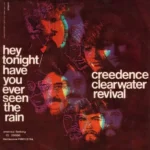 “Have You Ever Seen the Rain” doesn’t sound like a song written in anger, but it carries the weight of one. Released in 1971 on Pendulum, it arrived during a period of deep internal strain for Creedence Clearwater Revival, a band that had defined American rock at the turn of the decade and was now beginning to fracture from the inside. What makes the song remarkable is how gently it holds that tension. Instead of lashing out or wallowing in bitterness, John Fogerty shaped his feelings into something reflective, almost tender—a song that speaks in metaphors and questions rather than accusations.
At first listen, “Have You Ever Seen the Rain” feels deceptively simple. The melody is warm and familiar, the tempo unhurried, the arrangement stripped down. Acoustic guitar leads the way, supported by a steady rhythm section and understated harmonies. There’s nothing flashy or aggressive here. The song unfolds with the calm assurance of someone who has already made peace with difficult truths, even if those truths still hurt.
The central image of the song—rain falling on a sunny day—is one of the most evocative metaphors in popular music. It suggests contradiction, confusion, and emotional dissonance. How can something so gloomy exist alongside brightness? Fogerty never explains the image outright, and that ambiguity is key to the song’s power. The question isn’t meant to be answered definitively; it’s meant to be felt. Anyone who has experienced sadness in the midst of apparent success understands exactly what he’s asking.
Musically, the song reflects that emotional balance. There’s a gentle bounce to the rhythm, a sense of movement that keeps it from becoming morose. The melody rises and falls naturally, mirroring the ebb and flow of reflection. Fogerty’s vocal delivery is restrained, almost conversational. He doesn’t push for dramatic emphasis. Instead, he lets the phrasing breathe, trusting the listener to meet him halfway.
That restraint is a hallmark of Creedence Clearwater Revival’s best work. While the band was capable of driving, swampy rockers, they were equally adept at quiet moments, and “Have You Ever Seen the Rain” is one of their most understated performances. Every instrument serves the song rather than competing for attention. The result is a track that feels intimate without being insular, universal without being vague.
Context adds another layer of meaning. By 1971, CCR was unraveling. Creative control issues, personal resentments, and the looming departure of band members were casting shadows over their once-unified sound. Fogerty later explained that the song was inspired by these internal conflicts—success on the outside, turmoil within. Knowing this doesn’t limit the song’s interpretation; if anything, it expands it. The metaphor becomes a lens through which to view any situation where appearances don’t match reality.
That universality is why the song has endured far beyond its original context. Listeners have heard it as a reflection on failed relationships, personal loss, political disillusionment, or the quiet sadness that can accompany adulthood. The lyrics are open enough to accommodate all of those readings without feeling diluted. Fogerty’s decision to frame the song as a question rather than a statement invites listeners to bring their own experiences into the space he creates.
The chorus is especially effective in this regard. Repeating the title question over and over reinforces the sense of searching. There’s no resolution, no climactic revelation. The song doesn’t promise that the rain will stop or that the sun will prevail. It simply acknowledges the coexistence of both. That honesty is what gives the song its emotional credibility.
There’s also a subtle sense of acceptance woven into the track. Lines like “Someone told me long ago there’s a calm before the storm” suggest an awareness of cycles—of hardship following ease, and vice versa. The narrator isn’t shocked by the presence of rain; he’s reflecting on it, recognizing it as part of a larger pattern. That perspective gives the song a quietly philosophical tone, one that resonates more deeply as listeners grow older.
Production-wise, “Have You Ever Seen the Rain” is a study in tasteful minimalism. The acoustic guitar provides warmth and structure, while the rhythm section maintains a gentle forward motion. The backing vocals add texture without overwhelming the lead. Everything feels natural, almost effortless, which is deceptive given how carefully balanced the elements are. The song’s simplicity is its strength, but it’s a simplicity born of craft, not limitation.
Over the years, the song has been covered by countless artists across genres, from folk to country to pop. Each interpretation brings out different shades of meaning, but the core remains intact. That adaptability speaks to the song’s strong foundation. It’s built on emotion rather than trend, metaphor rather than fashion.
Listening to “Have You Ever Seen the Rain” today, it feels as relevant as ever. The world is full of moments where optimism and anxiety coexist, where progress is accompanied by uncertainty. The song doesn’t offer solutions or slogans. It offers recognition. Sometimes, just knowing that others have felt the same contradiction is enough to bring comfort.
What’s particularly striking is how calm the song feels despite its subject matter. There’s no sense of panic or despair. Instead, there’s patience. Fogerty sounds like someone who has learned to sit with uncomfortable emotions rather than trying to escape them. That maturity is rare in popular music, especially in a genre often driven by extremes.
Ultimately, “Have You Ever Seen the Rain” endures because it captures a truth that never really goes away: life is rarely one thing at a time. Joy and sadness, success and struggle, sunshine and rain often arrive together. By giving that contradiction a simple, unforgettable image, Creedence Clearwater Revival created a song that continues to speak softly—and powerfully—to anyone who’s ever felt out of sync with their own circumstances.
It’s not a song that demands attention. It earns it, quietly, every time the clouds roll in.