This post has already been read 607 times!
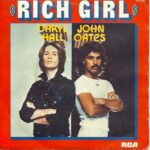 “Rich Girl” is often remembered as a breezy slice of 1970s pop-soul, the kind of song that glides out of car speakers and supermarket sound systems with effortless charm. But beneath its smooth piano line and radio-friendly hook, it’s a surprisingly pointed song—one that skewers entitlement, dependence, and the illusion of self-sufficiency with a smile that’s just a little too knowing to be innocent. Released in 1976, “Rich Girl” became Hall & Oates’ first number-one hit, and in many ways, it announced the duo’s ability to combine pop accessibility with lyrical bite.
From the opening piano riff, the song establishes a tone that’s both inviting and sly. The melody feels light, almost carefree, but there’s a sense of tension underneath it, as if the music is winking at the listener. That tension mirrors the song’s subject matter: a woman who believes she’s independent and worldly, but who keeps falling back on money and status when things go wrong. The contrast between sound and message is deliberate, and it’s what gives “Rich Girl” its lasting appeal.
Daryl Hall’s vocal performance is central to that effect. He sings with a smoothness that borders on affectionate, but there’s an unmistakable edge in his delivery. This isn’t a bitter rant or a moral lecture; it’s an observation, delivered with just enough sarcasm to make the point land. Hall doesn’t raise his voice or sharpen his tone. Instead, he lets the lyrics do the work, trusting the listener to catch the irony embedded in lines like “You’re a rich girl, and you’ve gone too far.”
What makes “Rich Girl” especially interesting is its perspective. The narrator isn’t an outsider criticizing wealth from a distance. He knows this woman personally, and that familiarity adds complexity to the song. There’s frustration in his voice, yes, but also a hint of resignation. He’s seen this pattern before, and he knows how it ends. The song isn’t about hating wealth; it’s about recognizing how financial safety nets can distort a person’s sense of consequence.
Musically, the song sits at a crossroads between soul, pop, and soft rock. The piano-driven arrangement nods to classic R&B, while the crisp rhythm section keeps the song firmly in pop territory. The backing vocals, a Hall & Oates trademark, add texture and warmth, reinforcing the chorus without overwhelming it. Everything is polished but not sterile, giving the song a sense of ease that made it perfect for radio while still retaining personality.
There’s also a subtle sophistication in the song’s structure. “Rich Girl” doesn’t rely on big dynamic shifts or dramatic bridges. Instead, it maintains a steady groove, reflecting the cyclical nature of the behavior it describes. The woman at the center of the song keeps making the same mistakes, and the music mirrors that repetition. It’s a clever alignment of form and content, one that rewards attentive listening.
Over the years, “Rich Girl” has sometimes been misinterpreted as a general critique of women or wealth, but its origins are far more specific. The song was inspired by a real person from Hall’s past—someone whose financial privilege shielded them from the consequences of their actions. That specificity is what gives the song its clarity. It’s not a broad stereotype; it’s a character study. The narrator isn’t attacking success or comfort. He’s pointing out the difference between independence and insulation.
That distinction is key to understanding why the song still resonates decades later. The idea of someone mistaking financial security for personal strength is as relevant now as it was in the 1970s. “Rich Girl” taps into a universal frustration: watching someone avoid growth because they’re protected from failure. The song’s critique isn’t cruel, but it is unsparing. It suggests that money can delay reckoning, but it can’t replace self-awareness.
Part of the song’s enduring popularity comes from how effortlessly it masks its critique in melody. You can sing along to “Rich Girl” without ever engaging with its message, and that’s part of its genius. Hall & Oates understood that the best pop songs often work on multiple levels. On the surface, it’s catchy and fun. Beneath that, it’s sharp and observant. That duality allows the song to age gracefully, remaining enjoyable even as listeners’ interpretations evolve.
The timing of the song’s release also mattered. In the mid-1970s, America was grappling with economic uncertainty and shifting social norms. Conversations about class, privilege, and self-made identity were gaining prominence, even if they weren’t always articulated in those terms. “Rich Girl” slipped into that cultural moment not as a manifesto, but as a pop reflection—a mirror held up briefly, then lowered before things got uncomfortable.
Hall & Oates’ chemistry is another crucial ingredient. Their collaborative sensibility—Hall’s soulful vocals and melodic instincts paired with John Oates’ grounding influence—gives the song balance. There’s no excess, no unnecessary flourish. Everything serves the song. That restraint is part of why “Rich Girl” feels so confident. It knows exactly what it’s doing and doesn’t feel the need to prove itself.
Listening to “Rich Girl” today, it’s striking how contemporary it can feel. The language may be rooted in its time, but the themes are evergreen. The song doesn’t moralize or demand change; it simply observes and lets the listener draw conclusions. That observational quality is what elevates it above novelty or nostalgia. It’s not frozen in the 1970s—it’s still very much alive in the present.
Ultimately, “Rich Girl” endures because it understands the power of subtlety. It critiques without preaching, entertains without pandering, and delivers its message with a smile rather than a snarl. In doing so, it exemplifies what Hall & Oates did better than almost anyone else: turning smart, socially aware songwriting into irresistible pop.
More than just a hit single, “Rich Girl” is a reminder that the sharpest commentary often comes wrapped in the smoothest melodies.