 In 1977, amid a United Kingdom simmering with economic hardship, class tension, and a general sense of disillusionment, The Sex Pistols unleashed a song that would ignite fury, fascination, and an enduring cultural dialogue. “God Save the Queen” was more than a song—it was a defiant proclamation, a brazen critique of establishment values, and a lightning rod for controversy. Its release coincided with the Silver Jubilee of Queen Elizabeth II, a moment intended for national celebration, but the Sex Pistols turned it into a platform for rebellion, exposing cracks in the veneer of British society and channeling the frustrations of a disenchanted youth. The song embodies the spirit of punk in its raw energy, confrontational lyrics, and refusal to conform, encapsulating an era where music became a battlefield for social and political expression.
The provocative nature of “God Save the Queen” begins with its title, a direct challenge to the monarchy and the reverence it commanded. From the opening notes, the song declares itself a rupture from tradition. Steve Jones’ distorted, snarling guitar riffs cut through the air with unapologetic aggression, paired with Paul Cook’s driving, unrelenting drums, creating a sonic assault that matches the lyrics’ incendiary tone. Sid Vicious’ bass, though rudimentary in technical skill, provides a thunderous pulse, grounding the track while amplifying its menace. At the forefront, Johnny Rotten—real name John Lydon—delivers vocals with venomous clarity, his sneer carrying a mixture of anger, mockery, and theatrical defiance. Lydon’s delivery is crucial: it transforms the song from mere noise into a searing statement, one that demands attention and refuses polite reception. The energy is immediate and infectious, a chaotic force that mirrors the social upheaval it addresses.
Lyrically, “God Save the Queen” is both pointed and irreverent. The song doesn’t shy away from attacking symbols of authority and societal complacency. Lines like “God save the Queen / She ain’t no human being” cut straight to the heart of the band’s critique, questioning not only the monarchy’s relevance but also the unquestioning loyalty it demanded. Other lyrics, such as “There is no future in England’s dreaming,” encapsulate a sense of generational despair, a commentary on youth alienation, economic stagnation, and the disillusionment of living in a country that seemed increasingly indifferent to its working class. The words resonate because they are both specific and universal: they reference a moment in British history while articulating feelings of frustration, powerlessness, and rebellion that transcend borders and decades. In this way, the song functions as a mirror, reflecting the discontent of its time while remaining unsettlingly relevant for listeners encountering inequality, political stagnation, or institutional hypocrisy in any era.
The song’s musical structure complements its confrontational message. At just over three minutes, it is tight, explosive, and relentless. The verse and chorus cycle with a sense of urgency, refusing moments of respite, mirroring the intensity of the band’s critique. The simplicity of the instrumentation is deceptive; beneath the surface, there is careful construction that amplifies the song’s emotional punch. The distorted guitar, pounding drums, and unpolished vocal harmonies create a sense of immediacy and danger, as though the song itself is an act of rebellion encoded in sound. The repetition of certain lyrical motifs reinforces the message, making it both memorable and impossible to ignore, ensuring that the confrontation it presents lingers in the listener’s mind long after the music stops.
The release of “God Save the Queen” was as incendiary as the song itself. Scheduled to coincide with the Jubilee celebrations, it immediately drew the ire of the British establishment. Radio stations refused to play it, record stores were pressured not to stock it, and the press alternated between outrage and morbid fascination. The single was banned by the BBC, which only amplified its notoriety. The band, and particularly Lydon, relished the controversy, understanding that censorship would fuel their message rather than suppress it. The release became a cultural moment, a flashpoint in the battle over free expression, youth rebellion, and the role of music as political commentary. The uproar surrounding the single elevated it beyond a mere hit—it became a symbol of defiance, a challenge to authority, and a rallying cry for those feeling marginalized by the prevailing social order.
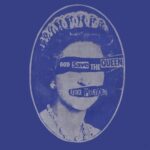
The single’s packaging was equally provocative. The cover featured a defaced portrait of Queen Elizabeth II, obscured with safety pins over her eyes and mouth, encapsulating the song’s confrontational spirit. This imagery was designed to shock and provoke, and it succeeded, ensuring that the visual representation of the track reinforced the audacity of the lyrics and music. The artwork became iconic in its own right, synonymous with the punk movement’s disdain for authority and conventional norms. Together with the song, it created a complete cultural statement: audacious, inescapable, and unapologetically confrontational.
Critically, “God Save the Queen” occupies a complex place in music history. Some saw it as a dangerous provocation, a threat to social cohesion, or a disrespectful attack on national identity. Others recognized it as a brilliant exercise in cultural critique, a song that used the raw power of punk to articulate societal frustrations that had long been ignored. Over time, the latter perspective has gained prominence, with the track frequently cited as one of the defining moments in the history of punk rock and British popular music. Its enduring influence is evident in the work of countless artists across genres who have drawn inspiration from its audacity, its raw energy, and its willingness to confront social and political norms head-on.
The legacy of “God Save the Queen” is inseparable from the mythos of the Sex Pistols themselves. The band, known for their volatility, outrageous public statements, and chaotic live performances, were the perfect vehicle for such a provocative statement. Lydon’s persona, in particular, lent authenticity and gravitas to the song’s confrontational stance; he embodied the rebellion the track demanded, and his sneering delivery ensured that the song’s critique felt genuine rather than performative. The music, lyrics, and presentation coalesced into a singular cultural moment that cemented both the song and the band in the annals of music history.
Beyond the immediate context of the 1970s UK, the song resonates as a study in rebellion and the power of music to challenge authority. It exemplifies how a song can operate as both an artistic statement and a social intervention, provoking discussion, inspiring outrage, and shaping cultural consciousness. The audacity of the track, the bluntness of its critique, and the uncompromising nature of its execution all contribute to its status as a touchstone for understanding the power of punk rock as a cultural movement. It is a reminder that music is never merely entertainment; it can be a tool for social commentary, a mirror reflecting societal inequities, and a spark for generational consciousness.
“God Save the Queen” also exemplifies the contradictions inherent in punk rock. While its sound is raw, aggressive, and unpolished, the song is carefully crafted to maximize its impact. The energy of rebellion is matched with precision in rhythm, guitar, and vocal delivery, creating a track that is as memorable musically as it is politically. Its ability to combine chaos with meticulous design speaks to the skill of the Sex Pistols as musicians and their understanding of music as a medium for disruption. The song’s enduring resonance is a testament to this balance: it is chaotic enough to feel dangerous, precise enough to remain compelling decades after its release.
Moreover, the song’s influence extends far beyond the UK. Internationally, it became a symbol of punk’s global reach, demonstrating how music could carry political and social critique across borders. The audacity of the Sex Pistols, the raw emotional intensity of their performance, and the boldness of their message inspired countless bands and movements worldwide, helping to establish punk as a legitimate cultural and political force. Its impact is evident not only in music but also in fashion, visual art, and youth culture, cementing the song as a pivotal moment in the global history of countercultural expression.
Even decades after its release, the song remains provocative. Modern audiences, encountering “God Save the Queen” in retrospectives or historical contexts, are struck by the audacity and clarity of its message. Its critique of authority, institutional complacency, and societal inequities continues to resonate, reminding listeners that the frustrations of youth, the desire for change, and the power of art to provoke thought are constants across generations. The track’s place in popular culture is secure, not merely as a relic of its time but as a living, breathing statement about rebellion, art, and the role of music in society.
The cultural significance of “God Save the Queen” is magnified when considering the broader context of the Sex Pistols’ career and the British punk scene. Emerging from a milieu of economic downturn, social unrest, and generational frustration, the band captured a zeitgeist that was raw, urgent, and politically charged. Their music, confrontational image, and public antics created a perfect storm in which a song like “God Save the Queen” could explode into public consciousness. The song exemplifies the power of punk to distill societal tensions into a concentrated, explosive form, creating music that is both immediately compelling and intellectually provocative.
“God Save the Queen” is also a reminder of the enduring tension between art and authority. The song provoked censorship, sparked debate, and became a lightning rod for political outrage, yet its continued popularity underscores the limits of suppression. Attempts to silence or marginalize the track only reinforced its message, demonstrating the capacity of music to transcend constraints and to serve as a vehicle for dissent. In this way, the song exemplifies the subversive power of art, showing how a simple combination of lyrics, melody, and performance can challenge entrenched power structures and spark conversation, reflection, and change.
Ultimately, “God Save the Queen” endures because it captures a moment in time while simultaneously transcending it. The song is a perfect distillation of punk’s irreverent spirit, a raw and uncompromising critique of authority, and a piece of music that continues to resonate emotionally and culturally. Its lyrics, music, and presentation coalesce into a statement that is fearless, confrontational, and unforgettable. The Sex Pistols created a track that is not only a reflection of their era but also a timeless exploration of rebellion, frustration, and the power of music to challenge the status quo.
Even forty-plus years after its release, the song remains an essential touchstone in understanding punk, cultural dissent, and the intersection of music and politics. It serves as a reminder that sometimes the simplest, most direct expressions of anger, frustration, and defiance are the ones that endure. The raw energy of the guitars, the sneer in Lydon’s voice, and the incendiary lyrics combine to create a track that continues to inspire, provoke, and captivate listeners. “God Save the Queen” is a song that refuses to be sanitized, a musical embodiment of defiance that still shocks, still resonates, and still challenges assumptions.
In the annals of music history, few tracks have captured the imagination, ire, and cultural significance that “God Save the Queen” achieved. It remains a testament to the audacity of the Sex Pistols, the power of punk as a vehicle for dissent, and the enduring relevance of music as a tool for societal critique. The song’s legacy is not merely in its controversy, chart performance, or notoriety, but in its ability to distill complex social anxieties into three minutes of explosive, unforgettable sound. It is a work that embodies the chaos, anger, and irreverence of a generation, while continuing to resonate with new listeners who encounter its raw, unflinching critique of authority for the first time. “God Save the Queen” is not just a song; it is a cultural event, a statement, and a reminder that music can be dangerous, powerful, and transformative in ways that extend far beyond the stage or the studio.