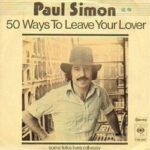
 There’s something almost mischievous about the way Paul Simon delivers the line:
“You just slip out the back, Jack…”
It sounds light. Playful. Catchy.
But underneath that breezy hook lies one of the most subtly heartbreaking songs of the 1970s.
“50 Ways to Leave Your Lover,” from Simon’s 1975 album Still Crazy After All These Years, became his first and only solo No. 1 single on the Billboard Hot 100. It’s remembered as clever, rhythmic, and endlessly quotable. Yet for all its humor and rhyme, it’s also a meditation on emotional exhaustion and the quiet unraveling of a relationship.
It’s a breakup song disguised as a nursery rhyme.
A Song Built on Restraint
By the mid-1970s, Paul Simon had already reshaped American songwriting. As half of Simon & Garfunkel, he helped define the sound of 1960s folk-rock with intricate harmonies and poetic introspection. Songs like “The Sound of Silence” and “Bridge Over Troubled Water” were emotionally grand and musically expansive.
“50 Ways to Leave Your Lover” is different.
There’s no swelling orchestra. No soaring duet harmonies. Instead, it opens with one of the most distinctive drum patterns in pop history.
The Groove That Hooks You
That instantly recognizable rhythm was played by drummer Steve Gadd, and it’s arguably the song’s secret weapon.
Gadd’s pattern is tight, crisp, and syncopated—almost jazzy in its precision. It feels relaxed yet complex, locking into a groove that carries the entire track. Simon reportedly heard Gadd warming up with that rhythm in the studio and immediately decided to build the song around it.
The result is hypnotic.
Layered over the drums are understated bass lines, gentle acoustic guitar, and subtle electric textures. The arrangement leaves space. It breathes. That breathing room allows Simon’s conversational vocal delivery to feel intimate—like he’s sitting across from you at a small kitchen table, offering advice you didn’t necessarily ask for.
The Setup: Weariness, Not Rage
Unlike many breakup songs, “50 Ways to Leave Your Lover” doesn’t begin with anger. There’s no explosive confrontation. No dramatic accusations.
Instead, it opens with emotional fatigue:
“The problem is all inside your head,” she said to me…
The narrator is on the receiving end of advice. A woman—possibly a friend, possibly a romantic interest—gently tells him that his relationship struggles aren’t insurmountable. They’re mental. They’re fixable.
The tone is calm. Reflective.
But beneath that calm lies resignation.
The verses reveal a man stuck in a relationship that no longer works, unsure how to exit gracefully. The advice he receives isn’t cruel or bitter. It’s practical.
And that practicality is what makes the song sting.
The Chorus: Rhyme as Release
Then comes the hook—the part everyone knows:
“You just slip out the back, Jack
Make a new plan, Stan
You don’t need to be coy, Roy…”
The rhymes are playful, almost silly. Jack, Stan, Roy, Gus, Lee. It sounds like a schoolyard chant.
But that sing-song quality creates contrast with the subject matter. Leaving someone you once loved is rarely simple. Yet the chorus makes it sound easy. Casual. Nearly flippant.
That tension between lightness and gravity is where the song thrives.
Simon doesn’t actually list fifty ways. He only names a handful. The exaggeration in the title becomes part of the humor. There aren’t fifty poetic solutions to heartbreak—just a few blunt, awkward exits.
Emotional Ambiguity
One of Paul Simon’s greatest strengths as a songwriter is emotional ambiguity.
Is the narrator relieved? Guilty? Conflicted?
The song never fully answers those questions.
The verses suggest introspection and hesitation. The chorus suggests decisiveness. That duality mirrors real-life breakups, which are rarely clean or singular in feeling.
You can feel trapped and compassionate at the same time. You can want out and still care deeply.
Simon captures that complexity without melodrama.
The 1970s Singer-Songwriter Context
The mid-1970s were rich with introspective singer-songwriters. Artists like James Taylor and Carole King were crafting deeply personal songs about love, loss, and self-discovery.
“50 Ways to Leave Your Lover” fits within that tradition—but with a twist.
Where many of his contemporaries leaned heavily into emotional vulnerability, Simon injects irony and rhythmic sophistication. The song is introspective, yes, but it’s also rhythmically playful.
It doesn’t wallow. It grooves.
That balance helped it stand out on radio. It was thoughtful enough for serious listeners but catchy enough for mass appeal.
The Subtlety of the Performance
Simon’s vocal performance is understated. He doesn’t belt. He doesn’t dramatize.
Instead, he delivers the lines with conversational ease, almost as if thinking out loud.
That restraint makes the song feel honest. There’s no theatrical heartbreak. Just quiet acceptance.
In some ways, the narrator sounds tired. Tired of arguments. Tired of trying to fix something that won’t mend.
And that fatigue is universal.
Why It Became a No. 1 Hit
It’s easy to forget how unusual this song is structurally.
There’s no grand instrumental solo. No dramatic key change. The hook relies on rhyme rather than melodic acrobatics. The verses are dense with lyrics.
Yet it became Paul Simon’s only solo chart-topper.
Why?
Because it strikes a rare balance:
-
Clever but accessible
-
Emotional but not heavy
-
Rhythmic but not overwhelming
-
Personal but relatable
It’s the kind of song you can hum casually while doing dishes, only to realize later that it’s about quietly dismantling a relationship.
Cultural Longevity
“Slip out the back, Jack” has entered the cultural lexicon. The phrasing is endlessly quotable, adaptable to jokes and everyday conversation.
The song has been covered, sampled, and referenced across decades. Its groove remains instantly recognizable. That drum pattern alone is enough to trigger nostalgia.
But beyond familiarity, the song endures because its theme never ages.
Relationships end. People hesitate. Advice feels both helpful and oversimplified. The awkwardness of leaving someone kindly remains timeless.
The Art of Saying Less
Perhaps what makes “50 Ways to Leave Your Lover” so effective is what it doesn’t do.
It doesn’t blame.
It doesn’t villainize.
It doesn’t dramatize betrayal.
Instead, it suggests that sometimes love simply runs its course.
That quiet realism can feel more devastating than explosive anger. There’s no dramatic showdown—just the slow understanding that staying might be worse than leaving.
Simon presents departure not as cruelty, but as inevitability.
Listening Today
Hearing the song now, decades later, it still feels fresh. The production hasn’t aged poorly. The groove remains crisp. The rhymes still make people smile.
But as you get older, the song’s emotional core hits differently.
When you’re young, the chorus feels playful.
As you gain experience, the verses feel heavier.
You realize that slipping out the back isn’t always simple. That making a new plan doesn’t erase history. That heartbreak, even when mutual, leaves residue.
Final Reflection
“50 Ways to Leave Your Lover” is a masterclass in tonal balance.
It wraps emotional weariness in rhythmic buoyancy. It disguises relational collapse in clever rhyme. It invites you to sing along while quietly confronting the end of intimacy.
Paul Simon didn’t need fifty ways. He only needed a few perfectly chosen lines, a hypnotic drum groove, and a chorus that sticks in your head for life.
The result is a song that feels light but carries weight. Funny but fragile. Simple but sophisticated.
Slip out the back, Jack?
Maybe.
But as Simon reminds us, even the breeziest goodbye carries a shadow.
And that shadow is what makes the song unforgettable.