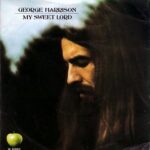
 George Harrison’s “My Sweet Lord” is a landmark in popular music, not only for its commercial success but for the way it bridged the worlds of spirituality and rock ‘n’ roll. Released in 1970 on Harrison’s triple album All Things Must Pass, the song marked his emergence as a solo artist following the Beatles’ breakup, and it immediately established him as a composer with a profound interest in blending devotional themes with contemporary music. “My Sweet Lord” is notable for its elegant melding of Western pop sensibilities and Eastern spiritual influences, creating a track that is both deeply personal and universally resonant. Harrison’s ability to infuse rock music with sincerity, devotion, and melodic beauty allowed “My Sweet Lord” to transcend the conventions of the genre, making it one of the most significant and enduring compositions in his solo career. Its mixture of heartfelt lyrics, soaring melodies, and infectious rhythm captures a sense of longing, reverence, and hope that continues to resonate with listeners across generations.
The song opens with a gentle acoustic guitar riff, played with Harrison’s signature fingerpicking style, establishing a calm and meditative atmosphere. This simple yet evocative guitar work serves as a foundation for the song’s larger arrangements and highlights Harrison’s skill as a guitarist who could convey emotion and nuance with subtlety. The chord progression, while harmonically straightforward, is enriched by Harrison’s melodic sensibilities, providing a sense of serenity and momentum simultaneously. Over this instrumental framework, Harrison’s vocals enter, warm and earnest, immediately drawing the listener into the song’s spiritual journey. The intimacy of his voice, coupled with the clarity of the guitar, creates an opening that feels both personal and expansive, inviting listeners into a contemplative space.
Lyrically, “My Sweet Lord” is a direct expression of devotion and longing for spiritual connection. The repeated refrain of “My sweet Lord” functions as a prayer, a mantra, and an expression of yearning, reflecting Harrison’s fascination with Hinduism and the chanting of the Hare Krishna movement. Harrison seamlessly weaves his personal faith into a universally relatable expression of seeking and devotion, allowing the song to operate on multiple levels. While deeply rooted in his own spiritual journey, the lyrics are broad enough to resonate with anyone seeking guidance, reassurance, or connection with something greater than themselves. Lines such as “I really want to see you” convey a sense of vulnerability and sincerity, emphasizing the intimate, personal nature of his devotion.
The instrumentation of “My Sweet Lord” is notable for its layering and the way it blends rock and gospel traditions with Indian devotional elements. The song features a choir of voices singing in harmony, reinforcing the feeling of collective worship and elevating the track from a simple pop song to a larger spiritual experience. The combination of backing vocals, acoustic guitar, and subtle drumming creates a textured, immersive soundscape that supports Harrison’s central melodic line without overpowering it. The orchestration, while lush, remains controlled, emphasizing the song’s meditative quality while allowing the emotional core to remain front and center. These layers create a sense of grandeur and devotion, echoing the spiritual themes Harrison intended to convey.
One of the most striking features of “My Sweet Lord” is its use of the sliding, melismatic vocal style that Harrison employs throughout the track. These vocal flourishes mimic the qualities of devotional chanting, bridging Western rock vocals with Eastern spiritual expression. This stylistic choice reinforces the song’s themes of reverence and longing, creating a vocal performance that is both technically impressive and emotionally compelling. Harrison’s ability to convey both humility and passion through his voice adds depth to the lyrics, allowing listeners to feel the sincerity and intensity of his spiritual pursuit. The combination of melodic fluidity, heartfelt phrasing, and lyrical repetition imbues the song with a timeless quality that continues to captivate audiences.
The rhythmic structure of “My Sweet Lord” is equally important to its impact. The track maintains a steady, flowing tempo that mimics the cadence of prayer or meditation, creating a sense of inevitability and forward motion. The drumming, while understated, provides a pulse that drives the song and complements both the harmonic structure and the vocal melodies. This rhythmic stability allows the listener to focus on the lyrical and melodic content, reinforcing the meditative and contemplative qualities of the composition. The interplay between rhythm, harmony, and melody exemplifies Harrison’s skill as a songwriter who could integrate complex musical ideas into accessible, emotionally resonant structures.
“My Sweet Lord” also demonstrates Harrison’s mastery of tension and release, a technique that heightens the song’s emotional resonance. The repeated refrain builds gradually in intensity, with layers of instrumentation and vocal harmonies swelling to a climactic point before resolving back into the gentle acoustic opening. This dynamic arc mirrors the spiritual journey of longing, striving, and eventual acceptance, creating an emotional experience that is both cathartic and inspiring. The sense of anticipation and release within the song mirrors the human experience of devotion and desire, making the listener feel the cyclical nature of spiritual pursuit alongside the universal patterns of emotional expression.
Harrison’s integration of Western and Eastern musical influences is a defining characteristic of the song. While the harmonic progression and acoustic instrumentation draw from Western pop and rock traditions, the melodic phrasing, use of vocal slides, and repetitive chant-like motifs reflect Indian devotional music. This synthesis of styles not only enhances the song’s emotional depth but also reflects Harrison’s personal journey and broader cultural engagement. By blending these influences seamlessly, Harrison created a piece that is both accessible to mainstream audiences and deeply respectful of its spiritual inspirations. The result is a song that transcends cultural boundaries, inviting listeners into a contemplative and transcendent space regardless of their religious or musical background.
The commercial and critical success of “My Sweet Lord” speaks to its wide-reaching appeal. The song topped charts around the world, including the United States and the United Kingdom, and became a defining moment in Harrison’s post-Beatles career. Its popularity was fueled not only by its melodic beauty and rhythmic appeal but also by the sincerity of its message and the universal relatability of its themes. The song’s ability to convey a sense of devotion, yearning, and transcendence made it resonate with listeners from diverse backgrounds, bridging the gap between popular music and spiritual expression. Its widespread influence can be seen in the numerous covers, reinterpretations, and homages it has inspired over the decades.
One cannot discuss “My Sweet Lord” without acknowledging the legal controversy surrounding its similarity to The Chiffons’ “He’s So Fine.” While this controversy sparked a high-profile copyright case, it does not diminish the artistic value of Harrison’s work. Instead, it highlights the complex relationship between musical inspiration and originality, emphasizing the broader context in which artists create. Regardless of the legal outcome, “My Sweet Lord” stands as a testament to Harrison’s ability to translate personal devotion into a universally resonant musical statement, combining spiritual intent, melodic genius, and emotive performance in a single, unforgettable track.
Live performances of “My Sweet Lord” further demonstrate its enduring appeal and adaptability. Harrison often expanded the arrangement with additional instrumentation, backing vocals, and improvisational elements, enhancing the sense of communal worship and shared experience. On stage, the song took on an even more immersive quality, with audiences participating in the chanting refrains and experiencing the music as a collective act of devotion. These performances reinforced the song’s emotional impact and showcased Harrison’s ability to connect with listeners on both a personal and communal level, transforming a studio recording into a living, breathing experience of sound and spirit.
The song’s structure contributes significantly to its emotional impact. Its verse-chorus organization is simple yet effective, allowing the central mantra-like refrain to anchor the listener’s attention while the verses provide narrative context and emotional nuance. The repetition of key phrases, combined with subtle variations in melody and harmony, creates a sense of meditation and reflection, inviting listeners to internalize the song’s message. This structural clarity, paired with rich harmonic and textural layering, ensures that “My Sweet Lord” is both accessible and profound, capable of engaging listeners on multiple levels simultaneously.
“My Sweet Lord” remains a powerful example of how popular music can carry profound spiritual and emotional resonance. It illustrates that a rock song can function as a prayer, a meditation, and an artistic statement without losing its melodic appeal or mass accessibility. Harrison’s ability to infuse popular music with spiritual depth set a precedent for future artists seeking to integrate personal belief and artistic expression. The song’s lasting legacy is a testament to the enduring power of sincerity, musical craftsmanship, and the universal appeal of songs that speak to the deepest aspects of human experience.
In examining the enduring appeal of “My Sweet Lord,” it becomes clear that the song’s combination of melodic elegance, lyrical sincerity, and spiritual depth is key to its timelessness. The song captures the duality of human longing—both the desire for connection and the acceptance of life’s mysteries—while offering a musical experience that is uplifting, contemplative, and emotionally resonant. Harrison’s integration of diverse musical influences, combined with his heartfelt performance and careful production, ensures that the track continues to resonate with listeners across generations. Its themes of devotion, yearning, and transcendence are as relevant today as they were in 1970, demonstrating the enduring power of music to communicate universal truths.
In conclusion, George Harrison’s “My Sweet Lord” is a masterful fusion of spirituality, melodic beauty, and emotional authenticity. From the gentle arpeggios of the opening guitar to the soaring vocal refrains and lush backing arrangements, the song exemplifies Harrison’s ability to translate personal faith into universal expression. Its lyrical depth, harmonic sophistication, and emotional resonance create a musical journey that is both intimate and expansive, inviting listeners to reflect on their own spiritual and emotional experiences. “My Sweet Lord” is more than a successful single or a milestone in Harrison’s solo career; it is a testament to the transformative power of music, capable of bridging cultures, inspiring devotion, and evoking profound emotional response. Its enduring legacy reflects not only the genius of George Harrison as a songwriter and performer but also the timeless appeal of a song that speaks to the human heart, capturing the complexities of longing, reverence, and hope in a form that continues to resonate across generations.