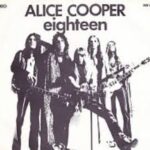
 “I’m Eighteen” by Alice Cooper is one of those tracks that hits like a surge of electricity the moment it begins—spiky, restless, confused, and strangely triumphant. It’s a song that doesn’t try to polish or soften the chaos of becoming an adult; it embraces that chaos, yelling it right back into the world with a snarl and a smirk. Released in 1970, it became the moment Alice Cooper stopped being merely a wild stage act and became a genuine force in rock music. And the beauty of the track is that you don’t need to have lived through the era to feel exactly what it’s saying. The song still lands the same way—messy, urgent, and unmistakably real.
At its heart, “I’m Eighteen” captures the strange limbo between adolescence and adulthood, that weird place where you’re old enough to want control but young enough to realize you don’t have any. The opening guitar riff sets the mood instantly—a gritty, slithering line that walks with uncertainty before it bites. That sound, that feeling, is the essence of being eighteen: wanting to charge ahead but knowing you’re still stumbling through it all. Alice Cooper’s voice enters with that signature rasp, weary but wired, and delivers the line “I’m eighteen and I don’t know what I want” like a confession and a challenge at the same time.
The magic of the song is how honest it is. Not poetic, not polished—just blunt truth. So much of rock music in the early ’70s was either polished psychedelia, heavy blues, or grandiose experimentation. But “I’m Eighteen” cut through all of that with plainspoken frustration. It didn’t dress up the emotions. It didn’t try to say something mystical or symbolic. It said what millions of young people actually felt: that they were floating between worlds, unsure of who they were supposed to be. It was the sound of identity forming under pressure, without guidance or clarity. That rawness made it unforgettable.
Glen Buxton’s guitar riffs scream with the kind of angsty confidence teenagers pretend to have but rarely feel. The rhythm section pounds with a swagger that’s just barely masking insecurity. And Alice Cooper himself sings like someone pacing in circles, talking himself into feeling bigger than the confusion that’s eating at him. The band’s chemistry is part of what gives the song its punch. They weren’t just playing along—they were channeling something genuine. Every instrument sounds slightly on edge, like they’re all part of the same emotional outburst. It’s not chaotic, but it’s not clean either. It feels alive.
The lyrics push deeper into that restless emotional landscape. Lines like “I’ve got a baby’s brain and an old man’s heart” hit with a strange clarity. If you’ve ever felt too young and too old at the same time, those words make instant sense. It’s that confused stretch of life where responsibility is beginning to tap you on the shoulder but immaturity is still gripping your legs. The push and pull creates a tension, and the song rides that tension the whole way through. The band understood something universal: growing up doesn’t feel like a celebration. Sometimes it just feels like being dropped into a maze with no map.
There’s also a gritty humor to “I’m Eighteen.” Alice Cooper’s delivery has a wink buried inside the angst. He knew the melodrama of teenage confusion—how overwhelming and ridiculous it feels all at once. The way he half-growls, half-boasts, half-complains his way through the track captures the high-stakes emotional rollercoaster of being stuck between youth and adulthood. It’s serious, but not self-serious. Intense, but not solemn. That perfect balancing act is part of what makes the song timeless.
And then there’s the chorus: that explosive chant of “I’m eighteen!”—not as a proclamation of pride, but as an attempt to understand the reality of it. The way Cooper stretches the word, lets his voice crack, pushes it to sound unsure and powerful at once, is what makes the chorus resonate so deeply. You can practically hear the confusion turning into catharsis. It’s a release valve for emotions no one in the world seems ready to acknowledge. That emotional release is why the song became such a defining moment for the band. It wasn’t trying to be polished. It wasn’t trying to be pretty. It was trying to be honest.
The musical structure of the song reflects that sense of instability. It shifts between gritty riffs and more open, almost floating passages, as if trying to find balance but failing—intentionally. The band uses dynamics to mirror emotional turbulence, going from brooding to forceful in seconds. The tone feels like a teenager slamming a bedroom door one moment and collapsing into insecurity the next. But the transitions are smooth because they’re rooted in genuine feeling rather than theatrics. It’s a song built on emotional instinct.
When “I’m Eighteen” hit the airwaves, it wasn’t just a breakthrough for the band—it was a breakthrough for the theatrical, confrontational style Alice Cooper would become famous for. Before this song, Alice Cooper was known more for shocking stage shows and elaborate imagery. “I’m Eighteen” proved there was substance behind the spectacle. It gave the band credibility and a sense of purpose. It connected them to listeners in a new way. Suddenly their gritty theatrics had meaning. They weren’t just trying to shock—they were expressing something that resonated with a generation.
During live shows, “I’m Eighteen” became a moment of raw connection between Alice and the audience. He would scream, strut, glare, and gesture like the embodiment of teenage frustration set loose onstage. The crowd would shout the chorus back with a mixture of excitement, relief, and personal identification. The song became a release, a moment to vent all the pent-up pressure of growing up. And even decades later, that dynamic still happens. Even older fans sing along with the same energy, because the feeling the song taps into doesn’t fade—it’s something everyone remembers vividly, no matter how old they get.
The track also helped solidify the band’s relationship with producer Bob Ezrin, who recognized exactly what the song needed: urgency. The production is tight, direct, and free of the unnecessary flourishes common in the era. Ezrin understood that the power of the song lay in its simplicity, its immediacy, and its emotional punch. He helped frame the track so that every instrument felt like a piece of the same emotional outburst. The guitars are sharp but loose, the drums are forceful but human, and the vocals sit right at the edge of control. It’s like the whole song was recorded mid-meltdown, and that’s what makes it compelling.
Lyrically, the song never tries to offer answers or solutions. That’s part of its charm. It’s not trying to tell teenagers who they are supposed to be. It’s not trying to moralize or guide. It simply acknowledges the storm inside that period of life and says, “Yes, this is real.” That kind of honesty was rare in 1970 and remains rare now. So many songs about youth try to romanticize the experience or drown it in nostalgia. “I’m Eighteen” cuts through all that and captures the reality: the doubt, the inconsistency, the confusion, and the small flashes of rebellious courage.
The final section of the song is especially powerful, where Cooper switches from confused declaration to almost desperate plea: “I gotta get out of this place, I’ll go runnin’ in outer space.” It’s the voice of someone who has no idea where freedom is but knows he needs it anyway. That desire, that panic, that fantasy of escape—those feelings are universal. The song ends not with clarity but with a musical and emotional exhale, like Cooper letting out all the tension at once. There’s no resolution, and that’s what makes it authentic. Growing up never ends with a clean answer—it just pushes you into the next stage of uncertainty.
Over the decades, “I’m Eighteen” has remained one of Alice Cooper’s most important tracks because it captures something essential: the feeling of wanting to grow up and run away at the same time. It’s dramatic, but not in a theatrical way—dramatic in the way real life is dramatic when you’re stuck in the middle of becoming someone new. It’s jagged, imperfect, restless, and strangely empowering. It acknowledges that the road to adulthood is messy but doesn’t try to disguise the mess. Instead, it gives the mess a voice, a rhythm, and a riff that still hits with the same punch all these years later.
Listening to the song now, decades after its release, it still stirs up that same jittery energy. It taps into the memory of wanting answers you didn’t have, wanting independence you couldn’t handle, wanting to scream into the world until something made sense. It makes you remember the strange heartbreak of not having your identity figured out—and the strange thrill of realizing you didn’t need to yet.
“I’m Eighteen” endures because it tells the truth without polishing it. It’s loud, it’s raw, it’s unsteady, and it’s emotionally bold. Alice Cooper captured the inner monologue of growing up and turned it into one of the most striking songs of its era. Even now, when that jagged riff kicks in and Cooper unleashes that opening line, it pulls you right back into the whirlwind of becoming yourself. It’s not about nostalgia—it’s about recognition. And that recognition is what keeps the song powerful, resonant, and unforgettable.