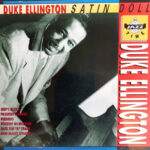
 Few compositions in the history of jazz have attained the enduring elegance and sophistication of Duke Ellington’s “Satin Doll.” Co-written by Ellington alongside Billy Strayhorn and Johnny Mercer, this 1953 classic exemplifies the seamless blend of swing, style, and melodic inventiveness that made Ellington a towering figure in 20th-century music. From its silky chord progressions to its instantly recognizable melody, “Satin Doll” remains a touchstone of jazz, a piece that has been celebrated, studied, and performed by countless musicians over decades. Its enduring appeal lies not only in its compositional brilliance but also in its ability to evoke a sense of suave sophistication and relaxed confidence, qualities that define the Ellington aesthetic.
The piece opens with a deceptively simple introduction, a series of chords that immediately establishes a mood of elegance and poise. The listener is drawn into a world of refined rhythm and tonal beauty, where every note feels deliberate yet effortless. Ellington’s mastery of orchestration is apparent from the outset; each instrument has a defined role, contributing to a texture that is rich, dynamic, and balanced. The piano, often at the forefront, weaves intricate lines that guide the harmonic flow while complementing the brass and woodwinds. The arrangement is simultaneously polished and playful, a hallmark of Ellington’s ability to blend complexity with accessibility.
Melodically, “Satin Doll” is a marvel of simplicity and sophistication. The main theme is immediately memorable, characterized by its elegant contours and flowing phrasing. It is a melody that feels both relaxed and buoyant, evoking the glamour and charm suggested by the title. The interplay between melody and harmony is a defining feature of the piece, with subtle chord substitutions and voice-leading choices adding depth without distracting from the song’s overarching sense of ease. The tune’s structure allows for variations and improvisations, making it a favorite for jazz musicians looking to showcase their interpretive skills while remaining anchored to Ellington’s graceful framework.
The harmonic structure of “Satin Doll” is particularly notable for its ingenuity and sophistication. Built around a series of ii-V-I progressions, the piece incorporates extended chords, passing tones, and chromatic movement in a way that feels organic and smooth. These harmonic choices create a sense of motion and anticipation, propelling the music forward while maintaining a relaxed swing. The arrangement allows for both ensemble cohesion and individual expression, offering soloists ample room to explore melodic and harmonic ideas. Ellington and Strayhorn’s collaboration shines in the subtle balance of tension and release, creating a composition that is intellectually satisfying as well as emotionally engaging.
The rhythm of “Satin Doll” exemplifies the swing style that Ellington helped define. The rhythm section provides a steady, propulsive groove that supports both the melodic lines and the improvisatory flourishes of the soloists. Drums, bass, and piano interact in a fluid manner, emphasizing the natural swing of the piece while maintaining a sense of elegance. The rhythmic phrasing contributes to the song’s sense of motion and energy, allowing the music to breathe while keeping listeners engaged. This mastery of rhythmic interplay is one of the reasons “Satin Doll” has remained a staple of jazz repertoire for decades.
Duke Ellington’s piano playing on “Satin Doll” exemplifies his trademark combination of technical precision and expressive nuance. His touch is both delicate and authoritative, articulating melodies and harmonies with clarity while providing subtle rhythmic and dynamic variations. The piano serves as both a harmonic foundation and a conversational partner for the other instruments, demonstrating Ellington’s skill as both a performer and a bandleader. The piece allows him to showcase his ability to balance structured composition with improvisational freedom, highlighting the duality that defines much of his work.
The contributions of Billy Strayhorn, particularly in the harmonic and melodic subtleties, are integral to the composition’s character. Strayhorn’s influence is evident in the song’s sophisticated chord voicings, elegant transitions, and lyrical phrasing. His understanding of orchestration and harmonic color complements Ellington’s vision, creating a sound that is refined, cohesive, and endlessly engaging. The collaboration between Ellington and Strayhorn is a testament to their mutual genius, resulting in a piece that is both intellectually rigorous and emotionally resonant.
Johnny Mercer’s lyrics, although often secondary to the instrumental versions of “Satin Doll,” add another layer of charm to the composition. The lyrics capture the song’s playful sophistication, reflecting the urbane and cosmopolitan sensibility that the instrumental version evokes. While many jazz renditions focus purely on the melodic and harmonic brilliance of the piece, Mercer’s contribution demonstrates the song’s versatility and its ability to thrive in both vocal and instrumental contexts. The combination of melody, harmony, and lyrical wit ensures that “Satin Doll” remains engaging across multiple interpretations and generations of performers.
Instrumentally, the orchestration of “Satin Doll” is a study in elegance and balance. The brass section punctuates key moments with crisp, clean lines, while the woodwinds provide warmth and counter-melodies that enhance the harmonic richness. Each instrument is given space to shine, whether in ensemble passages or in solos, creating a dynamic interplay that keeps the listener engaged throughout. The careful attention to timbre, phrasing, and dynamics demonstrates Ellington’s mastery of the big band idiom, where each element contributes to the overall texture without overwhelming the composition.
“Satin Doll” has had a remarkable cultural impact, influencing countless jazz musicians and ensembles. Its status as a jazz standard is well-earned, with performers across decades interpreting the piece in their own styles while remaining true to Ellington’s original vision. The song has appeared in recordings, live performances, film scores, and television, cementing its place as one of the most recognizable and influential compositions in the jazz canon. Its combination of sophistication, playfulness, and accessibility has ensured that it remains relevant and beloved by both musicians and audiences alike.
The adaptability of “Satin Doll” is a key factor in its enduring popularity. Its structure allows for a wide range of tempos, instrumental configurations, and stylistic interpretations. From intimate small group performances to full big band arrangements, the piece retains its elegance and charm, demonstrating the timelessness of Ellington and Strayhorn’s writing. This flexibility has enabled “Satin Doll” to evolve with the jazz genre, remaining a staple of both traditional and contemporary repertoires.
The song also exemplifies the duality that makes Duke Ellington’s work so compelling: it is at once cerebral and deeply emotional. The harmonic sophistication and structural precision appeal to musicians and theorists, while the melody, swing, and instrumental colors resonate on an emotional level with listeners. “Satin Doll” is a piece that can be appreciated for its technical brilliance and its ability to evoke mood, style, and atmosphere, a rare combination that underscores Ellington’s genius.
Live performances of “Satin Doll” showcase the dynamic interplay that is central to its charm. Ellington’s bands often took the melody as a launching point for improvisation, allowing individual musicians to shine while maintaining the cohesion of the ensemble. The song’s rhythmic drive, melodic elegance, and harmonic richness provide endless opportunities for exploration, making it a highlight of concerts and recordings alike. The ability of the piece to inspire improvisation without losing its identity is a testament to the strength of its composition.
The legacy of “Satin Doll” extends beyond jazz, influencing pop, film, and broader musical culture. Its sophisticated swing, memorable melody, and urbane elegance have made it a touchstone for musicians seeking to convey class, charm, and style. The piece is instantly recognizable, even to those unfamiliar with its composers, demonstrating the universal appeal of Ellington’s artistry. Its influence can be seen in later generations of musicians who draw inspiration from its harmonic sophistication, melodic inventiveness, and polished performance style.
Ultimately, the brilliance of “Satin Doll” lies in its seamless blend of musical sophistication, elegance, and emotional resonance. Every element—the melody, harmony, rhythm, orchestration, and subtle performance nuances—works together to create a composition that is both timeless and engaging. Its ability to inspire performers and captivate audiences decades after its creation is a testament to Duke Ellington, Billy Strayhorn, and Johnny Mercer’s enduring genius.
In conclusion, “Satin Doll” by Duke Ellington stands as a shining example of the artistry and innovation that define jazz at its finest. The composition embodies elegance, sophistication, and playful charm, showcasing Ellington’s mastery as a composer, bandleader, and pianist. The contributions of Strayhorn’s harmonic brilliance and Mercer’s lyrical wit enhance the piece’s complexity and appeal, creating a work that is both intellectually satisfying and emotionally resonant. Its rhythmic drive, melodic memorability, and orchestral balance make it a favorite for both live performances and recorded interpretations. Decades after its release, “Satin Doll” continues to enchant musicians and audiences alike, securing its place as a timeless jazz standard and a quintessential expression of Duke Ellington’s unparalleled musical vision.