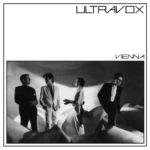
 In the early 1980s, pop music stood at a crossroads. The raw urgency of punk had begun to fade, disco’s glitterball had dimmed, and something colder—more precise, more introspective—was rising in its place. Synthesizers hummed where guitars once roared, and emotion was no longer shouted—it was carefully sculpted. Few songs capture this shift as perfectly as “Vienna” by Ultravox. Released in 1980, it remains one of the most striking, unconventional hits of its era: a haunting, cinematic piece that feels less like a pop song and more like a memory you’re not quite sure you ever lived.
At first glance, “Vienna” shouldn’t have worked. It defied nearly every expectation of a mainstream single. It lacked a traditional chorus, leaned heavily into orchestral arrangements, and moved at a deliberate, almost glacial pace. And yet, it became a defining track of the New Romantic movement, peaking at No. 2 on the UK charts—famously held off the top spot by Joe Dolce’s novelty hit “Shaddap You Face.” History, of course, has corrected that imbalance. Today, “Vienna” is widely regarded as one of the greatest songs of its time, while its chart rival is little more than a footnote.
A Band Reborn
Before “Vienna,” Ultravox was a band searching for identity. Their earlier work leaned toward art-rock and post-punk experimentation, but they struggled to find commercial traction. That changed dramatically when Midge Ure joined as frontman in 1979. Ure brought not only a distinctive, controlled vocal style but also a clear artistic vision—one that embraced the emerging possibilities of synthesizers without abandoning emotional depth.
The result was a reinvention. Ultravox transformed into a band that balanced icy electronic textures with sweeping romanticism. “Vienna,” the title track from their 1980 album, became the ultimate expression of that new identity. It wasn’t just a song—it was a statement of purpose.
Sound as Architecture
From its opening moments, “Vienna” establishes a mood that is both elegant and unsettling. A slow, pulsing synth line sets the foundation, soon joined by delicate piano notes that feel almost classical in their phrasing. The arrangement builds gradually, layer by layer, like a carefully constructed piece of architecture.
Producer Conny Plank played a crucial role in shaping this sound. Known for his work with experimental and electronic artists, Plank understood how to create space within a recording—how to let silence and texture speak as loudly as melody. In “Vienna,” every element feels intentional. The drums don’t drive the song so much as echo through it, while the synthesizers shimmer and swell like distant lights in a foggy city.
And then there’s the viola. In a bold move for a pop track, Ultravox incorporated a classical string section that doesn’t just decorate the song—it defines it. The instrumental middle section, with its sweeping strings, is one of the most memorable moments in the track. It’s dramatic, almost operatic, and completely unconcerned with conventional pop structure.
A Voice of Distance
Midge Ure’s vocal performance is central to the song’s power. He doesn’t belt or emote in the traditional sense. Instead, he delivers the lyrics with a kind of restrained intensity, as if holding something back. This distance is key to the song’s emotional impact.
The lyrics themselves are impressionistic, offering glimpses of a fleeting romance set against the backdrop of Vienna’s grandeur. Lines like “This means nothing to me” are repeated throughout the song, creating a tension between what is said and what is clearly felt. It’s a study in contradiction—detachment masking longing, indifference concealing heartbreak.
Unlike many love songs, “Vienna” doesn’t provide closure. There’s no resolution, no clear narrative arc. Instead, it captures a moment suspended in time, leaving the listener to fill in the gaps. This ambiguity is part of what makes the song so enduring. It doesn’t tell you what to feel—it invites you to project your own emotions onto it.
The Visual Identity
If the song itself feels cinematic, the music video takes that idea and runs with it. Directed by Russell Mulcahy, the video is a stylized homage to classic European cinema, particularly the work of Carol Reed’s The Third Man. Shot in stark black and white, it features shadowy alleyways, dramatic lighting, and a sense of mystery that perfectly complements the music.
At a time when music videos were still a relatively new medium, “Vienna” demonstrated their potential as an art form. It wasn’t just promotional—it was an extension of the song’s atmosphere, adding another layer to its narrative. In many ways, it helped set the stage for the visual ambition that would define the MTV era.
A Song Out of Time
Part of what makes “Vienna” so remarkable is how out of step it was with its contemporaries. In 1980, pop music was still largely driven by upbeat tempos and straightforward structures. “Vienna” ignored those conventions entirely. It was slow, deliberate, and unapologetically dramatic.
And yet, it resonated. Perhaps because it offered something different—something that felt more introspective, more mature. It tapped into a mood that many listeners didn’t even realize they were craving. In doing so, it helped pave the way for a wave of synth-driven, emotionally complex music that would dominate the decade.
Artists like Duran Duran, Visage, and Depeche Mode would go on to explore similar territory, blending electronic instrumentation with a sense of style and theatricality. But “Vienna” stands apart even among these peers. It’s less concerned with fashion or trend and more with mood and atmosphere.
Legacy and Reassessment
Over time, “Vienna” has only grown in stature. It’s frequently cited in lists of the greatest songs of the 1980s, and its influence can be heard in everything from synth-pop to modern indie music. What once seemed unusual now feels timeless.
The song’s enduring appeal lies in its ability to evoke a specific feeling without ever fully explaining it. It’s nostalgic, but not tied to any one era. It’s romantic, but not sentimental. It’s dramatic, but never overwrought. In short, it occupies a space that few songs manage to reach—a kind of emotional ambiguity that allows it to remain relevant across generations.
Even its famous chart defeat has become part of its mythology. The fact that such a groundbreaking track was kept from No. 1 by a novelty song only underscores how ahead of its time it was. Popularity, after all, is not always a measure of significance.
Why “Vienna” Still Matters
More than four decades after its release, “Vienna” continues to captivate listeners. It’s the kind of song that demands attention—not because it’s loud or flashy, but because it’s immersive. It pulls you into its world and asks you to stay there for a while.
In an age of algorithm-driven playlists and instant gratification, its slow build and unconventional structure feel almost radical. It reminds us that music can be more than just background noise—it can be an experience, a mood, a story that unfolds at its own pace.
For Ultravox, “Vienna” was more than a hit. It was a defining moment, a crystallization of everything they were capable of achieving. And for listeners, it remains a rare kind of masterpiece: a song that doesn’t just sound beautiful, but feels like something deeper—something just out of reach.
In the end, perhaps the most fitting description of “Vienna” is the one it gives itself. “This means nothing to me,” Ure sings, again and again. But of course, it means everything.
This post has already been read 58593 times!