This post has already been read 10622 times!
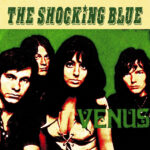 In the vast universe of late-1960s rock, where psychedelic experimentation and blues-soaked guitar heroes dominated the airwaves, a band from the Netherlands managed to crash the party with a song so instantly recognizable that its opening riff alone became part of pop culture history. That band was Shocking Blue, and the song was the immortal 1969 hit Venus.
More than half a century later, “Venus” still sounds powerful, mysterious, and irresistibly catchy. It’s a song that bridged psychedelic rock, pop, and proto-glam energy long before those genres had clear definitions. With its hypnotic riff, dramatic vocals, and mythological lyrics, “Venus” became one of the most successful rock singles ever recorded by a European band.
A Dutch Band with Global Ambitions
Shocking Blue formed in The Hague in 1967 during a period when the Dutch rock scene was gaining momentum internationally. Guitarist and songwriter Robbie van Leeuwen founded the group after leaving the band The Motions. His vision was to blend psychedelic rock with a strong pop sensibility.
Initially, the band struggled to find its identity. That changed dramatically when singer Mariska Veres joined the group in 1968. Veres possessed a striking presence—long dark hair, a commanding stage persona, and a deep, smoky voice that stood out in an era dominated by male rock singers.
Her voice became the perfect instrument for van Leeuwen’s songwriting, and together they created a unique sound that mixed Eastern-tinged melodies, raw guitar riffs, and theatrical vocals.
Then came “Venus.”
The Riff That Conquered the World
“Venus” begins with one of the most famous guitar lines in rock history. The riff is simple but unforgettable, built around a descending pattern that feels both ancient and modern at the same time. In fact, the melody was partially inspired by the folk tune “The Banjo Song,” itself based on the American standard “Oh! Susanna.”
Van Leeuwen transformed that melody into a rock riff that practically demanded attention. When combined with Veres’s powerful vocal delivery, the result was electrifying.
The song’s lyrics lean heavily on mythological imagery:
“A goddess on a mountain top
Was burning like a silver flame…”
Instead of traditional love-song clichés, the lyrics portray a mystical, almost supernatural woman—Venus, the Roman goddess of love. The imagery gave the track an otherworldly vibe that fit perfectly with the psychedelic atmosphere of the late 1960s.
A Transatlantic Smash
When “Venus” was released in 1969, it quickly climbed the charts across Europe. But the real surprise came when it crossed the Atlantic.
In early 1970, the single reached No. 1 on the Billboard Hot 100 in the United States, making Shocking Blue one of the first Dutch bands to achieve that feat. The song also topped charts in several other countries and became an international sensation.
For American listeners, the track felt both exotic and familiar. The guitar riff carried a raw rock energy similar to British acts of the time, while Veres’s vocal delivery had a dramatic flair that set it apart from typical pop singers.
At a time when global hits rarely came from outside the U.S. or U.K., Shocking Blue proved that a European band could dominate worldwide radio.
Mariska Veres: The Voice Behind the Magic
Much of “Venus”’s power comes from Mariska Veres’s commanding performance. Her voice combines strength and sensuality, moving effortlessly between haunting verses and explosive choruses.
In an era when female rock singers were still relatively rare, Veres stood shoulder-to-shoulder with legends like Janis Joplin and Grace Slick.
Her delivery gives “Venus” a sense of drama that feels almost cinematic. When she sings the chorus—“I’m your Venus, I’m your fire, at your desire”—the song erupts into something larger than a typical pop single.
It’s one of those vocal performances that turns a good song into a timeless one.
Reinvention in the 1980s
“Venus” proved so durable that it became a hit all over again nearly two decades later.
In 1986, the British pop group Bananarama released their own version of the song. Their interpretation transformed the psychedelic rock original into a glossy synth-pop dance track.
Remarkably, it also reached No. 1 on the Billboard Hot 100, meaning “Venus” achieved the rare distinction of topping the American charts twice with two completely different arrangements.
The Bananarama version introduced the song to a new generation and cemented its place in pop history.
A Song That Never Disappeared
Even beyond its chart success, “Venus” has endured through decades of cultural appearances. The riff continues to show up in films, commercials, and television shows, often used to evoke instant nostalgia or retro cool.
Musically, the song occupies a fascinating space. It carries psychedelic rock textures, a proto-glam swagger, and a pop structure that makes it endlessly accessible.
Many critics now view “Venus” as one of the most important European rock singles of the late 1960s.
The Legacy of “Venus”
Shocking Blue never matched the global success of “Venus,” but the band continued releasing music throughout the early 1970s and built a loyal fan base. Over time, the song itself grew into something bigger than the band—a universal pop classic.
Today, “Venus” stands as proof that a perfect combination of riff, voice, and atmosphere can transcend decades. The song feels just as powerful now as it did when it first blasted out of transistor radios in 1969.
For many listeners, that opening guitar line still creates the same reaction it always has: instant recognition, a rush of energy, and the feeling that something unforgettable is about to happen.
And when Mariska Veres’s voice finally arrives—bold, mysterious, and unmistakable—it confirms what generations of fans already know.
“I’m your Venus.”
And rock history has never forgotten it