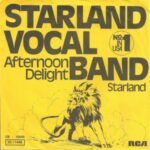
 Few songs in pop history have achieved the rare double status of chart-topping smash and cultural punchline quite like “Afternoon Delight.” It’s breezy. It’s harmonically sweet. It’s relentlessly cheerful. And it’s unmistakably about daytime sex.
Delivered with angelic harmonies by Starland Vocal Band, “Afternoon Delight” soared to No. 1 in 1976 and won a Grammy Award. Yet over the decades, it has also become shorthand for soft-rock cheesiness—referenced, parodied, and meme-ified in ways its creators probably never imagined.
But beneath the smirks and sitcom callbacks lies something more interesting: a snapshot of 1970s pop culture at its most sunny, sincere, and unselfconscious.
The Birth of a Soft-Rock Phenomenon
Starland Vocal Band emerged from the Washington, D.C. folk scene, led by married duo Bill Danoff and Taffy Nivert. Danoff had already co-written John Denver’s “Take Me Home, Country Roads,” giving him credentials in melodic Americana.
“Afternoon Delight” was reportedly inspired by a restaurant in Georgetown called the “Afternoon Delight,” whose menu advertised happy-hour specials. The phrase stuck in Danoff’s mind—but the lyrical meaning he attached to it was far less culinary.
What makes the song fascinating is its tonal balance. The subject matter is undeniably suggestive. Yet the delivery is so wholesome, so harmonically pristine, that it feels almost innocent.
That contrast is the song’s secret weapon.
The Sound: Sunshine in Four-Part Harmony
Musically, “Afternoon Delight” is a masterclass in soft-rock arrangement.
Acoustic guitars strum gently. The tempo is relaxed but steady. The production leans into warm, layered harmonies that feel almost choral. There’s no aggressive percussion. No distorted guitars. No dramatic crescendos.
Instead, the song floats.
The vocal interplay—between Danoff, Nivert, and the other band members—creates a lush harmonic texture that recalls folk revival groups and easy-listening ensembles. It’s closer in spirit to sunshine pop than to the harder-edged rock dominating other corners of the ’70s.
The sweetness of the arrangement makes the lyrics land with a wink rather than a leer.
“Skyrockets in Flight”: Suggestion Over Explicitness
Let’s address the line everyone knows:
“Skyrockets in flight / Afternoon delight…”
The metaphor is cheeky but not crude. The song never descends into graphic detail. Instead, it relies on implication—romantic suggestion wrapped in poetic phrasing.
Lines about “thinking of you’s working up my appetite” and “waiting for tonight” carry a playful urgency, but they’re delivered with choirboy clarity.
That approach reflects the era. The mid-1970s were shaped by the sexual revolution, but mainstream radio still favored subtlety over explicitness. “Afternoon Delight” found the sweet spot—bold enough to feel daring, gentle enough to avoid scandal.
It’s adult content disguised as wholesome pop.
Cultural Context: Post-Hippie Optimism
By 1976, America was navigating the aftermath of Vietnam and Watergate. Disco was rising. Singer-songwriters dominated radio. There was a hunger for feel-good escapism.
“Afternoon Delight” offered just that.
Its vibe is relentlessly optimistic. There’s no angst, no social commentary, no political subtext. It’s about joy. Anticipation. Shared pleasure.
In a decade that oscillated between cynicism and excess, the song’s sincerity stood out.
It’s almost aggressively cheerful.
Grammy Gold and Chart Glory
The song didn’t just climb the charts—it dominated them. Reaching No. 1 on the Billboard Hot 100, “Afternoon Delight” became Starland Vocal Band’s defining hit.
It also won the Grammy Award for Best New Artist, placing the group in prestigious company. That accolade, however, would later be viewed with irony, as the band struggled to replicate the song’s commercial success.
“Afternoon Delight” became both their crowning achievement and their defining shadow.
The One-Hit Wonder Paradox
Starland Vocal Band is often labeled a one-hit wonder—a term that simultaneously acknowledges massive success and limits legacy.
It’s true that no subsequent single matched the cultural impact of “Afternoon Delight.” But reducing the group to novelty status overlooks the craftsmanship involved in creating a hit that endures nearly 50 years later.
One-hit wonders occupy a strange place in pop history. Their songs become cultural shorthand. Their identities blur into a single melody.
For Starland Vocal Band, that melody just happened to be about midday intimacy.
The Soft-Rock Stereotype
Over time, “Afternoon Delight” became emblematic of soft-rock excess—an easy target for parody due to its earnestness and layered harmonies.
The rise of irony-heavy pop culture in the 1980s and ’90s reframed songs like this as kitsch. Its clean-cut image clashed with edgier musical movements like punk and grunge.
But kitsch is often misunderstood.
The very qualities that made the song ripe for mockery—its sincerity, its sweetness, its lack of edge—are the same qualities that make it distinct.
It doesn’t try to be cool.
And that’s precisely why it’s memorable.
The Sitcom Resurrection
If you weren’t alive in 1976, chances are you first encountered “Afternoon Delight” through television or film. The song has been referenced in numerous comedies, most famously in the movie Anchorman, where an awkward newsroom sing-along resurrected it for a new generation.
Those comedic moments leaned into the song’s innocence-meets-suggestion dynamic. The harmonies, once romantic, became hilariously out of place in modern settings.
But parody doesn’t erase impact—it reinforces it.
The fact that “Afternoon Delight” can instantly set a comedic tone speaks to its cultural saturation.
Why It Still Works
Strip away the jokes and nostalgia, and what remains is a well-constructed pop song.
The melody is strong. The harmonies are tight. The arrangement is balanced. The hook is unforgettable.
There’s a craftsmanship here that transcends novelty. The song builds gently, layering voices until the chorus feels expansive without overwhelming the listener.
It’s soft, but it’s not flimsy.
A Time Capsule of Romantic Optimism
Modern pop often treats intimacy with either explicit boldness or detached irony. “Afternoon Delight” occupies a middle ground that feels almost quaint by comparison.
It celebrates desire openly, but without cynicism.
There’s mutual enthusiasm. No manipulation. No emotional games. Just shared anticipation.
That romantic optimism feels rare in contemporary music landscapes.
Listening now, the song feels like a time capsule—capturing a moment when pop music could be flirtatious without being jaded.
The Legacy of Cheerful Suggestion
“Afternoon Delight” remains one of the most recognizable songs of the 1970s—not because it pushed musical boundaries, but because it captured a mood.
It represents:
-
The softness of mid-’70s radio
-
The playful side of the sexual revolution
-
The power of vocal harmony in pop
-
The thin line between sincerity and parody
And perhaps most importantly, it demonstrates how tone shapes perception. Sung differently—grittier, darker—the same lyrics might have scandalized. Delivered with bright harmonies and acoustic warmth, they charmed.
Final Reflection
Starland Vocal Band didn’t set out to write a cultural punchline. They wrote a feel-good pop song about shared intimacy, dressed it in sunshine harmonies, and sent it into the world.
The world embraced it—then laughed with it—then embraced it again.
“Afternoon Delight” may never shed its reputation as soft-rock kitsch. But that reputation doesn’t diminish its impact. If anything, it enhances its longevity.
Because sometimes, the songs that make us smile—maybe blush a little—are the ones we never truly forget.
Skyrockets in flight?
Apparently, they never quite landed.
This post has already been read 23569 times!