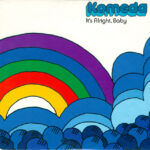
 There’s something quietly magical about a song that doesn’t try to dominate your attention—but ends up living in your head for years anyway. That’s exactly what “It’s Alright, Baby” by Komeda does. It doesn’t explode out of the speakers. It doesn’t chase chart success. Instead, it drifts in, wraps itself around your mood, and leaves you wondering why it feels so familiar… even if you’ve never heard it before.
Released in the mid-1990s during the height of alternative rock’s global surge, Komeda’s music existed just outside the mainstream spotlight. While bands like Blur, Weezer, and The Smashing Pumpkins were defining the era, Komeda carved out their own strange, whimsical corner—one that leaned heavily on vintage pop, orchestral textures, and a sense of playful detachment. “It’s Alright, Baby” is one of the purest examples of that sound: a song that feels both nostalgic and completely out of time.
A Band That Never Fit the Mold
Komeda, hailing from Sweden, was never interested in following trends. Named after Polish composer Krzysztof Komeda, the band leaned more toward art-pop than alternative rock, blending cinematic influences with quirky, almost childlike melodies. Their music often felt like it belonged to a parallel version of the 1960s—a place where sunshine pop met indie experimentation.
That’s the context “It’s Alright, Baby” lives in. It’s not trying to compete with grunge or Britpop. It’s not built for arenas. Instead, it feels like something you’d stumble across late at night—maybe in a film, maybe on a mixtape—and immediately want to replay.
The Sound: Light, Breezy, and Slightly Off-Kilter
From the first few seconds, the song establishes its identity. There’s a softness to it—gentle instrumentation, airy production, and a melody that seems to float rather than drive forward. But underneath that lightness, there’s a subtle tension.
Komeda’s arrangements are deceptively simple. The song leans on classic pop structures—clean guitar lines, steady rhythm, understated percussion—but adds just enough unusual texture to keep things interesting. There’s a slightly off-kilter quality to the timing and phrasing, as if the song is intentionally resisting perfection.
This is where Komeda separates themselves from more straightforward pop acts. “It’s Alright, Baby” doesn’t aim for polish—it aims for mood. And that mood is somewhere between comfort and unease.
A Melody That Lingers
One of the song’s greatest strengths is its melody. It’s immediately accessible, almost deceptively so. The kind of tune that feels like you’ve heard it before, even if you haven’t. There’s a circular quality to it—it loops back on itself in a way that makes it feel endless.
But what really makes it stick is how understated it is. There’s no big vocal climax, no dramatic shift. Instead, the melody just exists, gently pulling you along. It’s the musical equivalent of a quiet reassurance—something that doesn’t demand attention but rewards it.
This restraint is key. In an era where many bands were pushing louder, heavier, or more aggressive sounds, Komeda chose subtlety. And in doing so, they created something that feels timeless.
Lyrics: Comfort With a Hint of Distance
On the surface, “It’s Alright, Baby” feels like a comforting song. The title alone suggests reassurance, a kind of emotional safety net. But like much of Komeda’s work, there’s more going on beneath the surface.
The lyrics are simple, almost minimal, but they carry an emotional ambiguity. Is the speaker genuinely offering comfort? Or is there a layer of detachment—something slightly removed, almost observational?
That duality is what makes the song compelling. It doesn’t fully commit to warmth or sadness. Instead, it sits somewhere in between, allowing the listener to project their own feelings onto it.
It’s the kind of song that can feel soothing on one day and quietly melancholic on another.
The 90s Alternative Landscape—and Where Komeda Fits
To fully appreciate “It’s Alright, Baby,” it helps to understand the musical landscape of the time. The 1990s were dominated by big, defining sounds—grunge in the early part of the decade, Britpop in the mid-90s, and a growing wave of alternative rock that leaned heavier and more aggressive.
Komeda didn’t fit neatly into any of those categories.
Instead, they existed alongside a smaller group of bands that embraced experimentation and retro influences. You can hear echoes of The Beach Boys, Burt Bacharach, and even film scores in their music—but filtered through a distinctly indie lens.
This made them something of an outlier. They weren’t flashy enough for mainstream success, but they were too distinctive to be ignored entirely. Songs like “It’s Alright, Baby” became cult favorites—tracks that resonated deeply with listeners who discovered them, even if they never reached a wide audience.
Why the Song Feels So Cinematic
One of the most striking things about “It’s Alright, Baby” is how visual it feels. There’s a cinematic quality to the arrangement, as if it’s scoring a scene you can almost picture.
Maybe it’s a quiet moment in a film—a character sitting alone, reflecting. Maybe it’s the closing credits, where everything feels resolved but not entirely explained. The song doesn’t tell you what to feel, but it creates a space where emotion can exist.
This is where Komeda’s influences really shine. Their music often feels like it belongs to a film that doesn’t exist—a soundtrack to an imagined story.
And that’s part of its appeal. It invites you to fill in the blanks.
A Cult Classic That Quietly Endures
“It’s Alright, Baby” was never a massive hit. It didn’t dominate radio or climb charts. But over time, it’s gained a kind of quiet longevity.
This is often how cult classics work. They don’t explode—they linger. They get passed along from listener to listener, discovered in unexpected places, and appreciated on a more personal level.
For many fans, Komeda represents a kind of hidden gem—a band that feels like a secret worth sharing. And this song, in particular, captures everything that makes them special.
The Power of Restraint
In a world where so much music is designed to grab attention instantly, “It’s Alright, Baby” stands out by doing the opposite. It doesn’t rush. It doesn’t overwhelm. It simply exists—and trusts that you’ll meet it halfway.
That restraint is what gives it staying power.
The song doesn’t age the way more trend-driven tracks do. It doesn’t feel tied to a specific moment or movement. Instead, it feels suspended in time, equally at home in the 1990s or today.
Final Thoughts: A Song That Lives Between Emotions
“It’s Alright, Baby” isn’t a song that demands interpretation. It doesn’t spell everything out or push you toward a specific conclusion. Instead, it offers a feeling—one that’s hard to define but easy to recognize.
It’s comforting, but not entirely warm. It’s simple, but not simplistic. It’s nostalgic, but not tied to any one memory.
And maybe that’s why it endures.
In a decade full of loud, defining statements, Komeda created something quieter—something that doesn’t try to be everything to everyone, but ends up meaning a lot to the people who find it.
Sometimes, that’s more than enough.