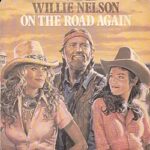
 When Willie Nelson released “On the Road Again” in 1980, few could have predicted just how instantly the song would resonate with audiences around the world. Written for the soundtrack of the film Honeysuckle Rose, in which Nelson also starred, the track is more than a simple country tune; it’s a reflection of a life defined by movement, freedom, and the perpetual pursuit of music. The song’s breezy optimism, combined with Nelson’s signature vocal delivery and warm acoustic guitar tones, immediately made it a favorite among country fans, rock enthusiasts, and casual listeners alike. It captures the restless spirit of a life constantly in motion, and it continues to serve as a touchstone for anyone who has ever felt the thrill and uncertainty of travel.
Musically, “On the Road Again” is deceptively simple, yet it carries a depth that has kept it relevant for decades. The song is built around a straightforward chord progression, anchored by Nelson’s acoustic guitar strumming. This simplicity is part of its charm: the music mirrors the open road itself, wide and unencumbered, with the melody flowing naturally as if the song were moving alongside the listener. The instrumentation is understated but purposeful. Light percussion and subtle bass lines provide a steady backbone, allowing Nelson’s vocals and the melodic guitar lines to shine. Additional instruments, including piano and soft backing harmonies, add texture without overwhelming the song’s core simplicity. The result is a track that feels like it could stretch endlessly, much like the highways and byways it evokes.
Lyrically, “On the Road Again” is a masterclass in capturing the essence of travel, work, and personal fulfillment. Nelson’s words are both literal and symbolic: he sings about the literal act of traveling from city to city, performing in front of audiences, and living a musician’s life, but the lyrics also reflect a deeper philosophy about embracing change, movement, and new experiences. Lines like “On the road again, just can’t wait to get on the road again” convey a sense of eager anticipation, of excitement for what lies ahead, and of joy in doing what one loves. The song embodies the idea that life itself is a journey, and that the experiences, people, and places encountered along the way are what make it meaningful. There’s an inherent optimism in Nelson’s writing, a belief that the road may be long and unpredictable, but it is always worth traveling.
“On the Road Again” is also deeply autobiographical. By the time Nelson wrote the song, he had already experienced decades of life on tour, navigating the challenges of the music industry while building a career that would cement him as a country music legend. Nelson had spent years moving from small-town gigs to larger venues, from recording sessions to national tours, and this constant motion became a defining feature of his life. The song reflects that lived experience with authenticity; when he sings about getting back on the road, there is a sense that he is speaking from experience, and that authenticity is what gives the song its enduring appeal. Listeners are drawn not just to the melody and rhythm, but to the truth in Nelson’s voice, the sense that he knows intimately what it means to live a life constantly in motion.
The song’s infectious energy is further enhanced by Nelson’s vocal performance. His voice, with its gentle twang and unhurried delivery, is perfectly suited to the song’s narrative. He sings with a relaxed confidence, as if inviting the listener along for the ride. There’s warmth and charm in every note, and even in the repetitive phrasing, there is a sense of joy and exuberance. Nelson’s phrasing, slightly behind the beat at times, mirrors the feeling of cruising along a long, open highway — there is momentum, but also space to breathe and enjoy the journey. His voice is at once personal and universal, making it easy for anyone to imagine themselves on the road, experiencing the freedom and excitement he describes.
The cultural impact of “On the Road Again” cannot be overstated. Almost immediately upon its release, the song became a hit, crossing over from country charts to mainstream audiences. It earned Nelson a Grammy Award for Best Country Song and solidified his position as a beloved figure in American music. The track’s widespread popularity helped introduce Nelson’s music to a new generation of listeners, many of whom were drawn in by the song’s accessible melody, relatable lyrics, and unmistakable charm. Beyond its initial success, “On the Road Again” has become a staple of travel playlists, road trips, and concerts, its themes of movement and exploration resonating with people from all walks of life.
Live performances of “On the Road Again” further showcase the song’s enduring power. Nelson has performed it countless times across the globe, often with slight variations in arrangement or tempo, but always maintaining the infectious spirit of the original recording. In concert, the song becomes a communal experience. Audiences sing along with the chorus, tapping into the universal feeling of anticipation, excitement, and joy that the song conveys. There is a sense of shared experience in hearing thousands of voices join together in Nelson’s refrain, a moment of connection that transcends the individual and emphasizes the collective nature of music and travel. The song’s ability to unite listeners, both in recordings and live performances, is a testament to its lasting appeal.
One of the reasons “On the Road Again” has maintained its relevance is its adaptability. While it is firmly rooted in country music traditions, the song has been covered and reinterpreted by artists across genres. Rock bands, pop singers, and even jazz ensembles have taken on the track, finding new ways to explore its melody and rhythm. Each reinterpretation highlights a different facet of the song — its narrative, its musicality, or its emotional resonance — but all retain the essential spirit of Nelson’s original. This versatility speaks to the song’s strength as a composition and its capacity to connect with audiences across diverse musical landscapes.
The song also occupies a unique place in the context of Willie Nelson’s career. Coming at a time when Nelson was already a well-established figure in country music, “On the Road Again” offered a distillation of everything that had made him an enduring artist: his gift for storytelling, his distinctive vocal style, his intuitive sense of melody, and his ability to create music that is both personal and universal. It reinforced Nelson’s image as a troubadour, a wandering musician who is constantly in motion, guided by his love of music and performance. The song became a signature piece, instantly associated with Nelson himself, and it continues to be a highlight in his live shows and greatest hits compilations.
Thematically, “On the Road Again” taps into a deep human desire for freedom, exploration, and connection. It speaks to anyone who has ever felt the pull of the unknown, the thrill of new experiences, or the joy of pursuing one’s passion. In its simplicity, the song captures a complex set of emotions: the exhilaration of leaving behind the familiar, the excitement of discovery, and the comfort of doing what one loves. Nelson’s ability to convey these feelings in a concise, melodic, and accessible way is part of what gives the song its enduring power. It is a celebration of motion, both literal and metaphorical, and a reminder that life’s journey is often as rewarding as its destination.
In addition to its musical and thematic strengths, “On the Road Again” has become an iconic piece of American popular culture. It has appeared in films, television shows, and commercials, and its refrain is instantly recognizable to millions of people. The song evokes a sense of nostalgia and longing, a reminder of long drives, open highways, and the sense of possibility that comes with travel. Its cultural resonance extends beyond music, influencing how people think about movement, work, and leisure, and reinforcing the notion that life on the road, though challenging, is also filled with joy and discovery.
Listening to “On the Road Again” today, more than forty years after its release, it retains the same freshness and vitality that made it a hit in 1980. The acoustic strums, warm harmonies, and Beloved Nelson vocals continue to evoke a sense of optimism and forward momentum. The song’s ability to transport listeners, to make them feel as though they are embarking on a journey, speaks to Nelson’s artistry and the timelessness of the composition. Whether heard on a dusty country highway, a bustling city street, or a quiet living room, the song carries with it a sense of motion, energy, and purpose that remains relevant across generations.
“On the Road Again” is also a testament to the power of simplicity in songwriting. Its uncomplicated structure, clear melody, and repetitive chorus make it instantly accessible, yet its emotional depth and autobiographical resonance give it complexity. It is a song that can be appreciated on many levels — as a catchy tune, a narrative of a musician’s life, or a broader meditation on freedom and the pursuit of one’s passions. Nelson’s ability to balance accessibility with depth is a hallmark of his career, and “On the Road Again” exemplifies that talent perfectly.
Ultimately, “On the Road Again” endures because it captures a universal feeling: the joy of movement, the thrill of discovery, and the satisfaction of doing what one loves. It is a song that celebrates life in motion, whether that motion is literal travel or the metaphorical journey of personal and artistic growth. Willie Nelson’s performance imbues the song with warmth, authenticity, and charm, creating an experience that is both personal and universal. It reminds listeners that the road may be long, unpredictable, and sometimes challenging, but it is also filled with possibility, connection, and joy.
In the broader context of American music, “On the Road Again” stands as one of Willie Nelson’s most enduring and beloved works. It captures the essence of his artistry, from his unique voice to his intuitive sense of melody and his ability to tell stories through song. The track remains a cultural touchstone, a piece of music that transcends its time and continues to inspire new generations of listeners. Its presence in popular culture, from road trips to soundtracks to public performances, is a testament to its power and resonance.
At its heart, “On the Road Again” is about embracing life’s journey, finding joy in movement, and sharing that experience with others. It is a celebration of music, freedom, and the human spirit. It reflects Willie Nelson’s life, his experiences as a touring musician, and his philosophy of living fully and embracing every new experience. The song’s enduring appeal lies in its ability to speak to anyone who has ever felt the pull of the open road, the excitement of exploration, or the satisfaction of doing what they love.
In the end, “On the Road Again” is more than a song; it is a story, an experience, and an invitation. It invites listeners to join Willie Nelson on a journey, to feel the wind on their face, the hum of the tires on the asphalt, and the thrill of new experiences awaiting just around the bend. It is a song that has transcended its era, becoming a timeless expression of movement, joy, and the human desire to explore and connect. Its legacy continues to grow with each new listener, each new road trip, and each new performance, ensuring that the spirit of “On the Road Again” will continue to resonate for generations to come.