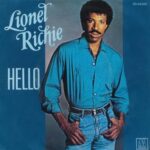
 There’s something quietly disarming about Lionel Richie’s “Hello,” a song that sneaks up on you with the gentlest touch and somehow leaves an impact that feels far larger than the soft, delicate frame it arrives in. It’s a ballad that feels suspended in time, hovering in the cultural consciousness long after its debut in 1984, refusing to fade no matter how many years pass or how often the joke about “Hello… is it me you’re looking for?” resurfaces. It works precisely because it’s not trying too hard. Richie never lunges for dramatic flair. He doesn’t belt, he doesn’t roar, he doesn’t demand. He just calmly enters the room, looks you in the eyes, and whispers a question you can’t forget.
“Hello” sits at a strange crossroads of romance, longing, and pure vulnerability. Richie wrote it during a period when he was honing his ability to pull universal emotion out of the simplest phrases. His songwriting has always been rooted in accessibility—straightforward words wrapped around melodies that feel like they’ve existed forever—and “Hello” is the distilled form of that gift. And while some songs from that era feel tied to their production or shaped by the aesthetics of the moment, this one rises above the trappings of its time. Strip it down to just Richie’s voice and a piano and it would still land with the same graceful weight.
The opening line is a masterstroke. Richie doesn’t ease his way in; he makes a declaration, a confession, and a plea all at once. The tone he uses is almost tentative, as though he’s revealing a secret he’s held onto longer than he’s comfortable admitting. That intimacy is the song’s spine. Listeners aren’t just hearing a romantic thought—they’re hearing someone trying to muster the courage to speak feelings that have been building, swelling, and quietly taking over every corner of his mind.
That balance of nervousness and honesty is what gives “Hello” its emotional gravity. Richie isn’t performing strength. He’s performing the exact opposite: the ache and optimism of someone who wants to believe love is possible but can’t quite bring himself to trust the moment. The fragility in his voice isn’t a limitation; it’s the entire point. And that fragility is what makes the song so enduring—he sings it the way real people feel.
Then there’s the melody, which floats rather than pushes. It’s designed to linger, to dissolve any walls the listener might have put up. Richie was always a master of melody, but “Hello” is one of those moments where everything locks into place so perfectly that it almost feels like a natural occurrence rather than something crafted. When the chorus arrives, it doesn’t burst open. It unfurls slowly, like a letter being opened with shaky hands. Richie isn’t a showy vocal acrobat here; he doesn’t need to be. The emotional clarity of the melody carries him. The notes rise with the kind of inevitability that makes it sound as though the music itself has been trying to confess these feelings, long before Richie even opens his mouth.
A lot of the song’s power also comes from its arrangement. The piano is gentle, unhurried, content to simply sit beside Richie’s vocal. The soft guitar flourishes and subtle orchestration feel like the tiniest gusts of wind—barely there, but adding movement and color. The production is lush but never overpowering, giving Richie all the space he needs to let the song breathe. It’s a perfect example of restraint: nothing extra, nothing wasted.
And then there’s the cultural life of “Hello,” which has evolved into something far larger and stranger than anyone could have predicted. The music video, with its now-iconic clay sculpture scene, has been both deeply embraced and widely parodied over the decades. The image of Richie wandering the halls, longing for the attention of a blind art student who ultimately sculpts his face out of clay, is one of the most unforgettable MTV-era visuals—equal parts touching and surreal. It’s become its own cinematic universe, referenced endlessly in movies, television, and comedy sketches. And yet, the humor around it hasn’t damaged the song’s core emotional resonance. If anything, it shows just how deeply embedded “Hello” is in the cultural bloodstream. You don’t parody something unless it’s widely recognizable. You don’t keep referencing a song unless it carries real staying power.
The song’s sincerity is what keeps it from ever tipping fully into self-parody. Richie delivers every line with total conviction, and that conviction holds even as the world around the song changes. It’s easy to forget how bold that level of sincerity actually is. Pop music often rewards irony, swagger, or exaggerated emotion—but Richie wrote something direct and unguarded, and he sang it without flinching. There’s a purity to that approach that makes “Hello” feel like it exists outside the usual trends and cycles of what pop music is supposed to be.
It also taps into a universal human experience: the fear and exhilaration of unspoken love. Not love that’s been established or returned, but love that lives entirely in the imagination, trapped behind the ribcage, waiting to find an exit. Richie captures that emotional purgatory where you replay conversations in your head, where every mundane moment feels charged with possibility, where the idea of saying something—actually saying something—makes your pulse spike. That internal tension is familiar to nearly everyone. Even if the listener hasn’t lived it recently, the song pulls those memories to the surface.
Part of the song’s impact comes from the directness of its lyrics. Richie doesn’t dress up his longing in metaphor or poetic complexity. He expresses himself with the clean, uncomplicated language of someone genuinely lost in their feelings. That simplicity isn’t a limitation—it’s a precision tool. It invites the listener to bring their own meaning, to place their own history into the spaces between the lines. The openness of the lyrics is what makes “Hello” resonate across generations, cultures, and personal experiences.
The final third of the song is where everything converges into an emotional climax—not with a dramatic belt or a key change, but with intensity that feels internalized rather than projected outward. Richie’s voice gains a touch more urgency, a little more trembling weight, as if the feelings he’s been holding back are finally overflowing. The orchestration rises, mirroring that emotional swell, but never overwhelms the moment. It’s as if the music itself is exhaling after holding its breath for the entire first half of the song.
There’s a reason “Hello” remains one of Richie’s most celebrated pieces, even in a career filled with massive hits. There’s a certain emotional honesty that can’t be manufactured, a softness that feels almost radical in its sincerity. The song doesn’t chase a grand moment; it becomes one simply by being true to what it is. Richie found a way to make longing sound gentle rather than desperate, hopeful rather than pathetic, and vulnerable rather than weak.
“Hello” is the kind of song that drifts into your life unexpectedly and settles in as though it’s always belonged there. You might hear it in a grocery store, in a movie, on an oldies radio station, or during a quiet moment when shuffling through playlists, and no matter the setting, it feels instantly recognizable. It’s one of those tracks where the first few notes trigger a kind of emotional muscle memory. You know exactly where it’s going, exactly how it’s going to make you feel, and yet you welcome it all the same.
There’s also an undeniable warmth to the production that enhances its timelessness. Richie’s voice is recorded with a softness that wraps around you like a warm blanket. The song carries a kind of gentle nostalgia that doesn’t depend on age. Whether someone heard it on the radio in the ’80s or stumbled upon it in the streaming era, the reaction tends to be similar: a brief pause, a softening of expression, a moment where the rest of the world quiets down.
The song’s lasting appeal says something about the enduring power of emotional clarity. “Hello” proves that a simple sentiment, delivered with genuine feeling, can outlast trends, production shifts, and changing tastes. Richie tapped into something elemental—the longing to be seen, to be known, to be wanted. That desire never goes out of style.
In the end, “Hello” remains both instantly recognizable and endlessly affecting because it speaks directly to the heart without trying to dazzle or overwhelm. It wins you over not by force but by presence. Lionel Richie crafted a song that lives at the intersection of love, longing, and hope, and he delivered it with a sincerity that stands untouched by time. That’s why it still resonates. That’s why people still stop what they’re doing when they hear it. That’s why the world hasn’t let it go.
“Hello” isn’t just a reminder of how powerful a soft, vulnerable moment in music can be—it’s the embodiment of one.