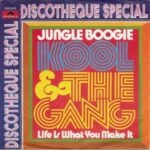
 In the history of funk music, certain songs immediately ignite energy the moment they begin. Few tracks capture that explosive spirit better than “Jungle Boogie” by Kool & the Gang. Released in 1973, the song became one of the group’s most recognizable hits and a defining anthem of the funk era.
With its pounding rhythm, fiery horn section, and unforgettable chants, “Jungle Boogie” delivered the kind of groove that demanded movement. It wasn’t just a song—it was an experience. The track helped solidify Kool & the Gang as one of the most exciting funk bands of the 1970s and laid the groundwork for their later transition into pop and disco stardom.
More than fifty years later, “Jungle Boogie” continues to appear in films, television shows, sporting events, and dance playlists. Its infectious rhythm still carries the same power it did when it first blasted through speakers in the early 1970s.
The Rise of Kool & the Gang
Before “Jungle Boogie” became a funk classic, Kool & the Gang had already been building a reputation as a powerful live band.
The group formed in Jersey City, New Jersey, in the mid-1960s. Founded by brothers Robert “Kool” Bell and Ronald Bell, the band originally performed under several different names before settling on Kool & the Gang in 1969.
From the beginning, the group stood out because of its horn-driven sound and tight rhythm section. Their music blended elements of jazz, soul, funk, and R&B, creating an energetic style that worked perfectly in both clubs and dance halls.
Early songs like “Funky Stuff” and “Hollywood Swinging” showcased the band’s ability to create grooves that were both rhythmically complex and irresistibly danceable.
But “Jungle Boogie” would take that energy to an entirely new level.
The Funk Foundation
At its core, “Jungle Boogie” is built on a classic funk structure: a powerful rhythm section driving a repetitive groove while horns and vocals add explosive accents.
The song begins with a tight drumbeat that immediately establishes the rhythm. The bassline quickly joins in, locking into a groove that becomes the backbone of the track.
Soon after, the horn section bursts into action.
Kool & the Gang’s horns—trumpets, saxophones, and trombones—play sharp, punchy lines that give the song its signature sound. These horns don’t simply accompany the rhythm; they act as another rhythmic force, punctuating the groove with bursts of musical excitement.
The arrangement is dense yet perfectly balanced.
Every instrument contributes to the overall groove.
A Chant That Became Iconic
One of the most memorable features of “Jungle Boogie” is its famous vocal introduction:
“Get down! Get down!”
These shouted commands instantly set the tone for the song. Rather than focusing on complex lyrical storytelling, the vocals function as energetic calls to action, encouraging listeners to join the rhythm.
Throughout the track, the band members trade off vocal phrases that feel more like chants than traditional singing.
This approach reflects the communal spirit of funk music, where the goal is to bring people together on the dance floor.
The simplicity of the lyrics allows the groove to take center stage.
Listeners don’t need to analyze the words—they simply feel the rhythm.
The Groove That Won’t Quit
The magic of “Jungle Boogie” lies in its relentless groove.
Unlike many pop songs that rely heavily on changing chord progressions or melodic variation, funk often focuses on repetition. The groove itself becomes the main attraction.
“Jungle Boogie” is a perfect example of this philosophy.
The bass and drums maintain a steady rhythm throughout the track, while the horns and vocals add layers of excitement on top. This structure allows the energy to build gradually, creating an irresistible momentum.
Once the groove begins, it never really lets up.
It’s music designed for movement.
And audiences responded accordingly.
Chart Success
When “Jungle Boogie” was released in 1973 as part of the album Wild and Peaceful, it quickly became one of Kool & the Gang’s biggest hits.
The song climbed to No. 4 on the Billboard Hot 100 and reached No. 2 on the R&B chart. It also became a staple on dance floors across the country.
The success of the single helped boost sales of the album and introduced Kool & the Gang to a wider audience.
Although the group had already built a loyal fan base through their live performances, “Jungle Boogie” brought them significant mainstream recognition.
It confirmed that the band’s high-energy funk sound could succeed on both radio and the dance floor.
Funk Meets Pop Culture
Over the decades, “Jungle Boogie” has appeared in countless films, television shows, and commercials.
One of the most famous modern uses of the song came in Quentin Tarantino’s 1994 film Pulp Fiction. The track plays during a memorable restaurant scene, introducing the character played by Samuel L. Jackson.
The song’s gritty groove fit perfectly with the film’s stylish atmosphere, introducing a new generation of listeners to Kool & the Gang’s music.
Beyond movies, “Jungle Boogie” has also become a favorite at sporting events, where its energetic rhythm pumps up crowds.
The track’s opening chant alone is enough to spark excitement in a packed arena.
The Funk Era of the 1970s
“Jungle Boogie” arrived during one of the most exciting periods in funk history.
The early 1970s saw artists like James Brown, Parliament-Funkadelic, Sly and the Family Stone, and Earth, Wind & Fire pushing the boundaries of rhythm and groove.
Each of these artists brought their own style to the genre, but they all shared a commitment to creating music that made people move.
Kool & the Gang contributed to this movement with their distinctive horn arrangements and dance-friendly rhythms.
“Jungle Boogie” stands alongside the era’s most influential funk tracks as an example of how powerful a simple groove can be.
The Evolution of Kool & the Gang
Although “Jungle Boogie” represents the band’s early funk style, Kool & the Gang would later evolve into one of the most successful pop-funk groups of the late 1970s and early 1980s.
With the addition of lead singer James “J.T.” Taylor, the band shifted toward a smoother sound that blended funk with pop and disco influences.
This transition produced massive hits like “Celebration,” “Ladies’ Night,” and “Get Down On It.”
Despite these later successes, “Jungle Boogie” remained an important part of the band’s identity.
It reminded audiences of their raw funk roots.
Why the Song Still Works
More than fifty years after its release, “Jungle Boogie” continues to thrive because its core elements are timeless.
The groove is simple yet powerful.
The horn section delivers explosive bursts of energy.
And the chant-style vocals invite listeners to join in.
Funk music has always been about rhythm and participation. It’s designed to create a shared experience between musicians and audiences.
“Jungle Boogie” accomplishes that perfectly.
Even listeners hearing the song for the first time can’t help but move along with the beat.
A Funk Classic That Never Fades
In the long history of funk music, “Jungle Boogie” stands as one of the genre’s most electrifying recordings.
Through its driving rhythm, bold horn arrangements, and unforgettable vocal hooks, the song captured the raw energy of the 1970s funk movement.
It helped elevate Kool & the Gang from a respected club band into a nationally recognized act—and it remains one of their most celebrated songs.
Decades later, the track still carries the same infectious power it did in 1973.
All it takes is that opening drumbeat and the shout of “Get down!” for listeners to know exactly what’s coming.
And once the groove begins, the jungle boogie takes over.