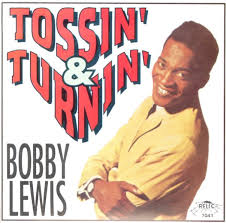
 In the summer of 1961, a record blasted onto American radio that perfectly captured the restless energy of young love. It was frantic, infectious, and impossible to ignore. Within weeks, “Tossin’ and Turnin’” by Bobby Lewis had climbed to the top of the charts, where it stayed for seven weeks—becoming one of the biggest hits of the early rock and roll era.
Clocking in at just over two minutes, the song delivered a simple story: a man lying awake all night because he can’t stop thinking about the woman he loves. But the magic of the record isn’t just its lyrics. It’s the explosive vocal performance, the pounding rhythm, and the sense that the singer is practically bursting out of the speakers.
More than sixty years later, “Tossin’ and Turnin’” still sounds like pure kinetic energy. It’s a snapshot of early-1960s rock and roll at its most electrifying—raw, emotional, and impossible not to move to.
A Song Born in the Brill Building Era
“Tossin’ and Turnin’” was written by Ritchie Adams and Malou Rene, two prolific songwriters working during the peak of the Brill Building era in New York. The early 1960s were a golden age for pop songwriting, with professional writers crafting hits that were then handed to singers capable of delivering them with personality and power.
Adams and Rene understood the formula for a hit: simple lyrics, a relatable emotional hook, and a rhythm that grabbed listeners immediately.
The idea behind “Tossin’ and Turnin’” was universal. Almost everyone has experienced the frustration of lying awake at night because their mind won’t stop replaying thoughts about someone they care about. The writers took that feeling and turned it into a rock and roll explosion.
But the song needed the right voice.
That voice belonged to Bobby Lewis.
Bobby Lewis: A Voice Full of Energy
Bobby Lewis was not a typical pop singer. Born in Indianapolis in 1933, Lewis had a difficult childhood and spent much of his youth in foster homes. Music became his outlet, and by the late 1950s he was performing professionally and recording singles.
What set Lewis apart was his voice.
It was gritty, powerful, and full of urgency. He didn’t simply sing melodies—he attacked them. His style carried a strong gospel influence, something common among many early rock and R&B singers.
When Lewis stepped into the studio to record “Tossin’ and Turnin’,” he brought an intensity that transformed the song from a catchy pop tune into a full-blown rock and roll anthem.
The moment he shouts the opening lines—
“I couldn’t sleep at all last night!”
—you immediately believe him.
It’s not just a lyric. It’s a declaration.
The Recording That Ignited the Airwaves
The recording of “Tossin’ and Turnin’” took place in New York in 1961 and was produced by Bert Berns, who would later become a legendary figure in soul and rock production.
The arrangement is deceptively simple, but every element works perfectly.
The track begins with a pounding drumbeat that immediately sets the pace. The rhythm section drives the song forward like a runaway train, while bright piano chords and horns add bursts of energy throughout.
But the true star of the record is Lewis’s vocal.
He sings with urgency, almost shouting parts of the melody as if he’s too restless to sit still. His voice jumps between playful frustration and passionate longing, mirroring the sleepless emotions described in the lyrics.
Everything about the recording feels alive.
There’s no wasted space, no slow moments, and no unnecessary flourishes. It’s two minutes and eighteen seconds of pure rock and roll momentum.
A Simple Story Everyone Understands
Lyrically, “Tossin’ and Turnin’” couldn’t be more straightforward.
The narrator spends the entire night awake because he’s thinking about the girl he loves. He flips his pillow, counts sheep, and tries every trick imaginable to fall asleep—but nothing works.
Why?
Because she’s the only thing on his mind.
Lines like these capture the feeling perfectly:
“Jumped out of bed, turned on the light / Pulled down the shade, went to the kitchen for a bite.”
The details are small, but they make the story relatable. Anyone who has ever suffered through a restless night instantly recognizes the scenario.
But unlike many sad love songs of the era, “Tossin’ and Turnin’” isn’t melancholy.
It’s energetic.
Even though the singer is frustrated, the music bursts with excitement, making the experience feel almost joyful rather than miserable.
That contrast is part of the song’s genius.
The Explosion on the Charts
When “Tossin’ and Turnin’” was released in 1961, it didn’t just become a hit—it became the hit of the year.
The single climbed to No. 1 on the Billboard Hot 100 and stayed there for seven consecutive weeks, an impressive achievement during a time when the charts were packed with competing rock and pop records.
By the end of the year, it was Billboard’s No. 1 song of 1961.
The record sold more than one million copies, earning a gold certification and making Bobby Lewis a household name almost overnight.
Radio stations couldn’t get enough of it. The song’s frantic rhythm and memorable hook made it perfect for the emerging youth culture that dominated early-1960s pop music.
In many ways, it represented the bridge between the first wave of rock and roll in the 1950s and the more polished pop sound that would dominate the early 1960s.
A Performance That Defined the Song
One of the reasons “Tossin’ and Turnin’” remains so memorable is Lewis’s vocal performance.
His delivery feels almost theatrical. Instead of calmly telling the story, he acts it out in real time.
You can hear the frustration in his voice when he sings about flipping the pillow.
You can hear the impatience when he shouts the chorus.
And you can hear the excitement when he imagines finally seeing the girl who’s been keeping him awake.
The energy is contagious.
Many rock and soul singers have powerful voices, but Lewis’s performance on this track feels especially spontaneous—as though the emotion is pouring out of him in the moment.
That authenticity gives the record a timeless quality.
The Song’s Cultural Moment
“Tossin’ and Turnin’” arrived during a fascinating period in American music.
Rock and roll was evolving rapidly. The raw energy of artists like Little Richard, Chuck Berry, and Elvis Presley had shaken up the music world in the 1950s, but by the early 1960s the sound was beginning to shift toward a more polished pop style.
Yet this record still carries the wild spirit of early rock.
Its pounding rhythm and exuberant vocal style feel closer to the gospel-infused rock of the late 1950s than the smoother pop hits that would soon dominate the charts.
At the same time, the song’s clean production and tight arrangement reflect the professionalism of the Brill Building songwriting system.
It’s the perfect blend of raw energy and pop craftsmanship.
That combination helped it stand out among the dozens of hits released during that era.
The Shadow of a One-Hit Wonder
Despite the massive success of “Tossin’ and Turnin’,” Bobby Lewis struggled to match it with another hit of equal magnitude.
He released several follow-up singles, including “One Track Mind,” which reached the Top 10, but nothing came close to replicating the lightning-in-a-bottle success of his signature song.
Because of that, Lewis is often labeled a one-hit wonder.
But that label can be misleading.
Creating a song that dominates the charts and remains recognizable more than sixty years later is no small achievement. Many artists release dozens of records without ever producing a track that leaves such a lasting mark.
In that sense, Lewis accomplished something extraordinary.
Why the Song Still Works Today
What makes “Tossin’ and Turnin’” endure is its pure simplicity.
The song doesn’t rely on complex lyrics, elaborate production, or changing musical trends. Instead, it focuses on three timeless elements:
-
A relatable emotional experience
-
An unforgettable rhythm
-
A passionate vocal performance
Those ingredients never go out of style.
The record also captures a moment when rock and roll still felt new and exciting. Listening to it today, you can almost imagine teenagers hearing it blasting from car radios or jukeboxes for the first time.
It’s a sound that feels spontaneous and alive.
And that energy hasn’t faded.
A Rock and Roll Time Capsule
In the grand history of rock music, “Tossin’ and Turnin’” might seem like a small moment—a two-minute burst of frustration about a sleepless night.
But its impact was enormous.
For seven weeks in 1961, it was the most popular song in America. It defined the sound of a summer, launched Bobby Lewis into the spotlight, and captured the restless excitement of early-1960s youth culture.
More importantly, it still works.
Play the record today and the rhythm still feels urgent. The chorus still begs to be shouted along with. And Bobby Lewis’s voice still sounds like a man who truly cannot sleep because love has taken over his mind.
That’s the magic of great rock and roll.
Sometimes all it takes is a pounding beat, a great voice, and a feeling everyone understands.
“Tossin’ and Turnin’” had all three—and that’s why it remains one of the most unforgettable hits of its era.