 In 1956, as rock ’n’ roll was beginning to rattle radios and scandalize parents across America, a sly, flirtatious duet slipped onto the airwaves and carved out its own unforgettable space. It wasn’t loud like Little Richard. It didn’t swagger like Elvis. It didn’t wail like the blues shouters before it. Instead, it whispered, teased, and smiled.
That song was “Love Is Strange” by Mickey & Sylvia — and it remains one of the most charmingly intimate hits of the 1950s.
More than a novelty, more than a dance tune, “Love Is Strange” captured something essential about young romance in the early rock era: its awkwardness, its electricity, and its playful power games.
The Duo Behind the Magic
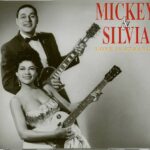
Mickey & Sylvia were Mickey Baker and Sylvia Vanderpool (later Sylvia Robinson), two seasoned musicians who found magic together almost by accident.
Mickey Baker was already a respected session guitarist in New York, backing artists like Ray Charles and Big Joe Turner. He was older, more experienced, and musically grounded in jazz and blues. Sylvia, on the other hand, was young, ambitious, and possessed a bright, conversational vocal style that felt natural rather than theatrical.
When they paired up, their chemistry wasn’t explosive — it was subtle. And that subtlety became their superpower.
The Birth of “Love Is Strange”
“Love Is Strange” wasn’t entirely original in conception. The song has roots connected to Bo Diddley’s rhythmic style, and he’s often credited as a co-writer. The signature guitar riff — sparse, hypnotic, and slightly exotic — reflects that influence.
But what transformed the track into something special was the duet structure.
Instead of a traditional verse-chorus format, the song revolves around a call-and-response flirtation. Mickey sings in a calm, almost instructional tone:
“Love… love is strange.”
Sylvia responds with wide-eyed enthusiasm:
“Lot of people take it for a game…”
The real hook comes in the now-legendary spoken section:
“Sylvia?”
“Yes, Mickey?”
“How do you call your lover boy?”
“Come here, lover boy!”
And then the coy command:
“Say it again.”
It’s theatrical, but intimate. Almost like we’re eavesdropping on a private moment.
A Guitar Riff That Sways, Not Shouts
Musically, “Love Is Strange” is deceptively simple. The song is built around a gentle, Latin-tinged rhythm and a clean, repeating guitar figure. There’s space in the recording — breathing room that lets every vocal nuance shine.
Unlike the frantic rockabilly hits of the time, this track grooves rather than charges. It sways.
Mickey’s guitar playing is economical but precise. The riff feels hypnotic, almost seductive, as if it’s circling the listener rather than confronting them. It’s the kind of musical minimalism that would later influence soul and even early funk.
In 1956, though, it stood out because it didn’t try to overwhelm. It invited.
Romance as Performance
What makes “Love Is Strange” endure is its understanding that romance — especially young romance — is performative.
The spoken exchange in the middle of the song isn’t just cute banter. It reflects a dance of control and vulnerability. Mickey prompts. Sylvia responds. He asks her to repeat it. She complies, but with playful confidence.
There’s power shifting back and forth in those few seconds.
In an era when male dominance often defined pop narratives, Sylvia’s vocal presence feels refreshingly assertive. She’s not passive. She’s not swooning. She’s participating in the flirtation.
The song becomes less about longing and more about the ritual of attraction.
Chart Success and Cultural Breakthrough
Upon its release in late 1956, “Love Is Strange” became a crossover hit. It climbed to No. 1 on the R&B chart and reached the Top 20 on the pop chart — no small feat in a segregated music industry still rigidly divided by race.
The track helped cement the commercial viability of interracial musical influences in rock ’n’ roll. Black artists were shaping the sound of youth culture, even if the mainstream industry often resisted giving them full credit.
For Mickey & Sylvia, the success was significant but fleeting. They would never replicate the massive impact of “Love Is Strange,” though both would continue making important contributions to music — especially Sylvia Robinson, who would later become a pioneering record executive and co-founder of Sugar Hill Records, helping launch hip-hop into the mainstream.
But in 1956, “Love Is Strange” was their moment.
A Soundtrack to Innocence — and Something More
On the surface, “Love Is Strange” feels innocent. The lyrics are clean. The flirtation is PG-rated. It’s the kind of song that could play at a sock hop without raising eyebrows.
But there’s an undercurrent of sensuality in the rhythm and delivery.
The slow tempo. The repeating guitar figure. The almost whispered vocals. It creates intimacy. The space between the words matters as much as the words themselves.
That balance — sweet yet suggestive — allowed the song to appeal across generations. Teenagers heard romance. Adults heard subtext.
It’s a masterclass in implication.
A Second Life on the Silver Screen
Decades after its original release, “Love Is Strange” found new life in cinema. Most notably, it was featured in the iconic 1987 film Dirty Dancing.
In the film, the song underscores one of the most memorable dance rehearsal scenes between Baby and Johnny. As they crawl toward each other on the floor in playful imitation of the lyrics, the track becomes both nostalgic and newly charged.
For a generation of 1980s viewers, “Love Is Strange” wasn’t a 1950s relic — it was part of a modern love story.
The song’s timeless quality lies in its adaptability. It can evoke Eisenhower-era innocence or Reagan-era nostalgia without losing its core charm.
The Simplicity That Makes It Eternal
Some songs endure because of complexity. Others last because they tap into something universal.
“Love Is Strange” belongs firmly in the second category.
There’s nothing ornate about its structure. The chord progression is straightforward. The lyrics are minimal. The performance is restrained.
But that simplicity allows listeners to project their own memories onto it.
First crushes. Awkward flirtations. Inside jokes between couples. The thrill of someone saying your name.
The spoken “Sylvia?” “Yes, Mickey?” exchange feels like it could belong to anyone.
The Gender Dynamic: Subtle but Significant
It’s worth noting how rare it was in the 1950s for a duet to present male and female voices on relatively equal footing in a rock or R&B context.
Often, female singers were either background harmonizers or positioned as the emotional counterpart to a dominant male lead.
In “Love Is Strange,” the conversation feels mutual. Sylvia’s voice isn’t overshadowed; it’s essential. The entire hook depends on her response.
That subtle equality gives the song a progressive edge, even if it doesn’t shout about it.
Influence on Later Duets
The blueprint established by Mickey & Sylvia can be heard in countless later male-female duets.
From Marvin Gaye and Tammi Terrell to Sonny and Cher, the idea of romantic dialogue as musical structure owes something to “Love Is Strange.”
It demonstrated that chemistry could be as compelling as vocal power. That intimacy could sell just as effectively as bombast.
A Snapshot of 1956
1956 was a seismic year in American music. Elvis Presley was exploding into superstardom. Rock ’n’ roll was transforming from a regional phenomenon into a national movement.
Amid that chaos, “Love Is Strange” carved out a softer corner.
It reminds us that the early rock era wasn’t only about rebellion. It was also about connection. About young people discovering each other as much as they were discovering electric guitars.
In a time of social tension and cultural change, a simple duet about calling your lover boy felt comforting.
Why It Still Resonates
Nearly seventy years later, “Love Is Strange” still plays at weddings, in movies, on oldies stations, and on curated nostalgia playlists.
It doesn’t sound dated. It sounds classic.
The production may be rooted in 1950s studio limitations, but the emotion feels contemporary. The playful tension between Mickey and Sylvia could just as easily be exchanged over text messages today.
Love is strange. That truth hasn’t changed.
Legacy of a One-Hit Wonder — and More
While Mickey & Sylvia never again reached the same commercial heights, their impact extends beyond this single song.
Sylvia Robinson would later shape the course of popular music in ways few could have predicted. Her role in producing “Rapper’s Delight” in 1979 would ignite hip-hop’s commercial breakthrough. From doo-wop flirtation to rap revolution — that’s a legacy few artists can claim.
And it all began with a whisper.
“Love Is Strange” stands as a reminder that not every groundbreaking song needs to scream. Sometimes, it just needs to say your name softly — and ask you to say it again.
In the crowded history of early rock ’n’ roll, Mickey & Sylvia’s signature hit remains a sweet, sly gem. A song about romance that understands love’s odd little rituals.
Simple. Intimate. Timeless.
Say it again.