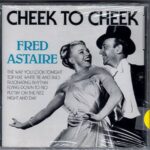
 When Fred Astaire first performed Cheek to Cheek in 1935, the song immediately became synonymous with the glamour and sophistication of Hollywood’s Golden Age. Written by the legendary Irving Berlin for the film Top Hat, the song showcased Astaire’s unmatched combination of vocal charm and physical grace, perfectly aligning music with movement in a way that few performers have ever achieved. Cheek to Cheek was not just a song; it was an experience, a seamless marriage of melody, lyrics, and dance that captured the imagination of audiences around the world and solidified Fred Astaire as one of the most iconic entertainers of the 20th century.
The opening strains of Cheek to Cheek immediately establish its romantic and flowing character. Berlin’s composition is deceptively simple—a lilting, swinging melody that glides effortlessly over a lush harmonic foundation. The song’s structure allows Astaire to infuse each phrase with subtle nuance, emphasizing the lyrical imagery while maintaining a gentle sense of swing. The melody itself is instantly memorable, rising and falling with a graceful elegance that mirrors the feeling of being lifted into a dance, the musical equivalent of floating across the ballroom floor.
Fred Astaire’s vocal performance on Cheek to Cheek is a masterclass in understated sophistication. His delivery is smooth, conversational, and warm, imbuing the lyrics with charm and personality without ever sounding forced. Astaire had an uncanny ability to make every word seem effortlessly natural, as if he were speaking directly to the listener while maintaining perfect timing and musicality. In lines like “Heaven, I’m in heaven, and my heart beats so that I can hardly speak,” Astaire conveys both the exhilaration and vulnerability of romance, translating the joy of dance into pure vocal expression. His phrasing floats over the accompaniment with a relaxed authority, creating a sense of intimacy even as the orchestration swells around him.
The lyrics of Cheek to Cheek are quintessential Irving Berlin—romantic, poetic, and evocative. They capture the thrill of being swept up in the moment with a partner, celebrating the transcendence that comes from music, movement, and connection. The imagery of dancing “cheek to cheek” is both literal and metaphorical, suggesting closeness, trust, and the joy of shared experience. Berlin’s writing is clever yet timeless, allowing the song to resonate across decades. Every line feels meticulously crafted to enhance both the mood and the rhythm of the performance, giving Astaire the perfect framework to deliver a vocal interpretation that is both playful and deeply affecting.
Instrumentally, Cheek to Cheek is lush and elegant, reflecting the sophistication of 1930s orchestral arrangements. The strings provide a warm, sweeping backdrop, while the woodwinds offer delicate ornamentation, dancing around the vocal line in a light and airy fashion. The rhythm section, understated yet precise, anchors the performance, allowing Astaire’s vocals to shine while maintaining a gentle swing that supports the song’s danceable quality. The orchestration is carefully balanced, giving the track a sense of movement and flow that mirrors the choreography it was created to accompany. The music seems to lift and swirl, evoking the sensation of gliding across a polished ballroom floor.
One of the most remarkable aspects of Cheek to Cheek is the way it integrates with Astaire’s dancing. In Top Hat, the song is inseparable from the visual performance: Astaire and co-star Ginger Rogers move with an effortless elegance that makes the melody feel alive. Every step, turn, and lift corresponds to a musical accent, demonstrating Astaire’s incredible musicality and precision. He was not merely a dancer performing to music; he was a musician in motion, translating every note into a physical expression. This integration of dance and song set a new standard for Hollywood musicals and helped redefine what audiences expected from musical cinema. The synergy between the music and the choreography ensures that Cheek to Cheek remains compelling both as an audio recording and as a visual spectacle.
Rhythmically, the song strikes a perfect balance between swing and elegance. Berlin’s melody is inherently danceable, with subtle syncopations and flowing phrasing that encourage movement without ever feeling rushed or forced. Astaire’s vocal timing enhances this rhythm, playing with pauses, elongated notes, and gentle inflections that mirror the nuances of a dance step. The combination of musical swing and lyrical imagery creates a dual sense of motion—physical and emotional—drawing the listener into the exhilaration of the moment.
The song’s impact on popular culture has been profound and enduring. Cheek to Cheek became one of the defining songs of the 1930s, inspiring countless covers and adaptations across genres. Singers from Ella Fitzgerald to Louis Armstrong, from Tony Bennett to contemporary performers, have interpreted the song, each bringing their own style while honoring Berlin’s original composition. Its adaptability speaks to the strength of the songwriting—the melody and lyrics are universal enough to transcend musical eras, yet specific enough to retain the charm of Astaire’s original performance. The song’s presence in films, television, and live performance continues to introduce new generations to the magic of classic Hollywood musicals.
Astaire’s interpretation also highlights his remarkable ability to convey character and emotion through subtle vocal and musical choices. In Cheek to Cheek, there is a sense of narrative: he is not simply singing about dance, but about the emotional transport it provides. The interplay between vulnerability and joy, between intimacy and showmanship, imbues the song with layers of meaning that continue to resonate. Astaire’s voice, coupled with the song’s orchestration, tells a story of romance, elegance, and exhilaration, creating a performance that is as theatrical as it is musically satisfying.
The historical significance of Cheek to Cheek extends beyond its commercial success. The song arrived at a time when Hollywood musicals were reaching new heights of sophistication, blending cinematic storytelling, intricate choreography, and musical excellence. It demonstrated the potential for popular music to be elevated through performance and arrangement, influencing generations of performers, composers, and choreographers. The song also helped cement Irving Berlin’s reputation as one of the greatest American songwriters, capable of crafting music that was both artistically rich and widely appealing.
Even decades later, the song retains its ability to captivate listeners. Its combination of elegance, charm, and rhythmic vitality makes it timeless, while Astaire’s impeccable phrasing and expressive delivery continue to set a standard for musical performance. The song’s charm lies in its simplicity and refinement—the melody is instantly recognizable, the lyrics are heartfelt and clever, and the orchestration supports the narrative without ever overwhelming it. The result is a track that feels effortless, yet reveals layers of artistry and sophistication upon repeated listening.
Cheek to Cheek is also a testament to the collaborative genius of Hollywood’s Golden Age. Berlin’s songwriting, the orchestral arrangements, the recording techniques, and Astaire’s vocal and physical performance all converge to create a seamless artistic experience. Each element enhances the others, resulting in a work that is greater than the sum of its parts. The song captures a moment in time—the glamour, elegance, and romance of 1930s Hollywood—while remaining universally appealing and emotionally resonant.
In the context of Fred Astaire’s career, Cheek to Cheek stands as one of his defining moments. While he achieved fame as both a dancer and a singer, the song encapsulates his unique ability to combine the two, transforming music into movement and movement into music. It is a track that highlights his technical precision, musical sensitivity, and charismatic performance style, reminding audiences why Astaire remains an enduring icon of entertainment. The song’s influence can be felt across the decades, informing musical theater, film choreography, and popular vocal performance alike.
Ultimately, Cheek to Cheek endures because it embodies the perfect marriage of melody, lyric, and performance. Fred Astaire’s gentle yet assured vocals, the song’s elegant orchestration, and Irving Berlin’s timeless composition create a musical experience that is both sophisticated and accessible. It captures the thrill of romance, the joy of dance, and the artistry of musical performance, offering a moment of pure magic that transcends its original era. Nearly a century after its debut, Cheek to Cheek remains an essential piece of American music history, a sparkling example of how a song can be both a cultural touchstone and a timeless work of art.