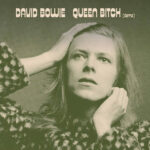
 Before Ziggy Stardust descended from the stars and turned David Bowie into a full-blown icon, there was a moment where everything was still forming—where the influences, the attitude, and the raw edge were all coming together. “Queen Bitch,” from Bowie’s 1971 album Hunky Dory, captures that moment perfectly.
It’s loud, scrappy, and unapologetically direct—a sharp contrast to some of the more polished and introspective songs on the same record. And at its core, it’s a tribute. A loving, swagger-filled nod to The Velvet Underground, a band whose influence on Bowie—and on rock music as a whole—can’t be overstated.
But “Queen Bitch” isn’t just imitation.
It’s Bowie absorbing that influence, twisting it into his own style, and hinting at the glam explosion that was just around the corner.
A Love Letter to the Underground
The Velvet Underground’s impact on Bowie is all over “Queen Bitch.”
From the chugging rhythm to the street-level storytelling, the song feels like it could sit comfortably alongside Lou Reed’s work from the late 1960s. There’s a rawness to it—a sense of immediacy that stands apart from the more theatrical elements Bowie would later embrace.
But what makes the song interesting is how openly it acknowledges that influence.
This isn’t subtle inspiration—it’s a direct homage.
Bowie once admitted that he was consciously channeling The Velvet Underground when writing the track. And rather than diminishing the song, that honesty adds to its charm. It feels like an artist paying respect while also staking his own claim.
The Sound: Rough Edges and Forward Momentum
Musically, “Queen Bitch” is one of the most straightforward rock songs Bowie recorded in this era.
It’s driven by a tight, relentless rhythm—guitars that crunch and push forward, a bassline that keeps everything grounded, and drums that maintain a steady, no-nonsense beat.
There’s very little ornamentation.
Unlike some of Bowie’s more elaborate arrangements, this track thrives on simplicity. It’s about energy, attitude, and momentum. The guitars, in particular, carry a gritty tone that feels almost aggressive, giving the song a sense of urgency.
This stripped-down approach works in its favor.
It creates a sense of immediacy, as if the song is happening right in front of you, unfiltered and unpolished.
A Vocal Performance Full of Attitude
Bowie’s vocal delivery on “Queen Bitch” is a far cry from the theatrical personas he would later adopt.
Here, he sounds grounded—almost conversational—but with a sharp edge that cuts through the mix. There’s a sense of observation in his tone, as if he’s narrating the scene rather than being fully immersed in it.
But that doesn’t mean it’s detached.
There’s a sly confidence in his delivery, a kind of knowing smirk that adds to the song’s character. He plays with phrasing, emphasizing certain lines in ways that highlight their attitude without overdoing it.
It’s a performance that feels natural, but carefully controlled.
Lyrics: Street Scenes and Sharp Observations
Lyrically, “Queen Bitch” paints a vivid picture of urban life.
The song focuses on a specific character—a “queen bitch”—but it’s less about telling a detailed story and more about capturing a moment, a vibe, a slice of life.
There’s a cinematic quality to the writing.
Bowie sketches out scenes with just enough detail to make them feel real, without overexplaining. You get glimpses of characters, hints of interactions, and a sense of place that feels lived-in.
At the same time, there’s an underlying tension.
The song isn’t just observational—it carries a sense of attitude, of judgment, of something slightly confrontational. But like much of Bowie’s early work, it avoids being overly explicit, leaving room for interpretation.
The Glam Rock Blueprint
While “Queen Bitch” is rooted in the sound of The Velvet Underground, it also points forward—to what Bowie would become.
There’s a hint of glam rock in the song’s swagger, in its confidence, in its willingness to embrace style as much as substance. It’s not fully formed yet, but you can hear it taking shape.
This is Bowie on the edge of transformation.
Within a year, he would release The Rise and Fall of Ziggy Stardust and the Spiders from Mars, and everything would change. The theatricality, the personas, the larger-than-life presence—it would all come into focus.
But “Queen Bitch” shows the groundwork being laid.
Why It Stands Out on Hunky Dory
Hunky Dory is often remembered for its more melodic, introspective tracks—songs like “Changes” and “Life on Mars?” that showcase Bowie’s songwriting in a more refined, almost art-pop context.
That’s what makes “Queen Bitch” stand out.
It’s rougher, louder, and more immediate than much of the album. It feels like a burst of energy in the middle of a more contemplative record.
This contrast gives the song a unique role.
It acts as a bridge between different sides of Bowie’s artistry—the thoughtful songwriter and the raw, rock-driven performer.
A Song That Feels Alive
One of the most striking things about “Queen Bitch” is how alive it feels.
There’s no sense of overproduction or excessive layering. The band sounds tight, focused, and fully engaged. Every instrument contributes to the overall momentum, creating a sound that feels cohesive and immediate.
This liveliness is part of what makes the song so enduring.
It doesn’t feel locked into a specific time or place. It feels like something that could happen at any moment—a performance, a scene, a snapshot of energy captured in real time.
The Influence That Keeps Echoing
Over the years, “Queen Bitch” has become something of a cult favorite within Bowie’s catalog.
It may not be as widely recognized as some of his bigger hits, but it holds a special place for fans who appreciate his rawer, more direct work.
It’s also a reminder of how influence works in music.
Bowie took inspiration from The Velvet Underground, filtered it through his own perspective, and created something that would, in turn, influence countless artists in the decades that followed.
It’s part of a larger conversation—one that stretches across generations.
Why It Still Works Today
Decades after its release, “Queen Bitch” still feels fresh.
Part of that is its simplicity.
Because it doesn’t rely on complex production or trends, it avoids feeling dated. The core elements—guitar, rhythm, attitude—are timeless.
But it’s also about the energy.
The song has a drive that’s hard to replicate. It’s confident without being overblown, raw without being sloppy, and focused without being rigid.
That balance is what gives it staying power.
Final Thoughts: A Snapshot of Bowie Before the Explosion
“Queen Bitch” is more than just a great rock song.
It’s a snapshot.
A moment in time when David Bowie was still shaping his identity, still experimenting with influences, still figuring out exactly who he was going to become.
And in that sense, it’s fascinating.
You can hear the past—the influence of The Velvet Underground. You can hear the present—the raw, immediate energy of the track itself. And you can hear the future—the hints of glam rock and theatricality that would soon define his career.
It’s not the most famous song in Bowie’s catalog.
But it might be one of the most revealing.
Because sometimes, the most interesting moments happen right before everything changes.
This post has already been read 30072 times!