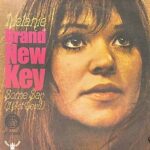
 Few songs from the early 1970s are as instantly recognizable, oddly charming, or deceptively simple as Brand New Key by Melanie. Released in 1971 during the peak of the singer-songwriter era, the song sounded unlike almost everything else on the radio at the time. With its bouncy melody, childlike vocals, and unforgettable chorus about roller skates and keys, “Brand New Key” became both a massive commercial hit and one of the strangest pop songs ever to top the charts.
At first listen, the track sounds innocent and whimsical, almost like a nursery rhyme wrapped in folk-pop production. Yet over the decades, listeners have debated the song’s hidden meanings, questioned its playful double entendres, and transformed it into a cultural curiosity that has endured far longer than many more serious songs from the era.
What makes “Brand New Key” so fascinating is how it balances sweetness and ambiguity. It is cheerful, catchy, and lightweight on the surface, but there is just enough mystery beneath the lyrics to keep people talking about it more than fifty years later.
By the early 1970s, Melanie was already an established figure in the folk scene. Born Melanie Safka, she had gained attention for her emotional songwriting style and distinctive voice during the late 1960s counterculture movement. Unlike many polished pop performers of the time, Melanie projected vulnerability and individuality. Her voice could sound fragile one moment and oddly powerful the next, giving her songs an intimate quality that stood apart from mainstream radio trends.
She had already built credibility with songs like Lay Down (Candles in the Rain), but “Brand New Key” took her career to an entirely different commercial level. The song became a number-one hit in the United States and several other countries, turning Melanie into an international star almost overnight.
Part of the song’s success came from its sheer uniqueness. In an era filled with politically charged folk music, hard rock, soul, and ambitious singer-songwriter albums, “Brand New Key” felt disarmingly simple. The arrangement was light and playful, driven by acoustic instrumentation and a rhythm that almost bounced along like a child skating down a sidewalk.
Then there was Melanie’s vocal delivery. Rather than singing with polished sophistication, she leaned into an intentionally youthful and quirky tone that made the song sound spontaneous and conversational. That style could easily have become irritating in the hands of another artist, but Melanie’s sincerity made it oddly irresistible.
Lyrically, the song revolves around one of pop music’s most famous metaphors:
“I’ve got a brand new pair of roller skates / You’ve got a brand new key.”
On the surface, the lyrics tell a playful story about connection and compatibility. Melanie sings about wanting to skate with someone while awkwardly trying to impress them. The imagery is innocent, nostalgic, and full of youthful energy.
But almost immediately after the song became popular, audiences began interpreting the lyrics as something far less innocent. Many listeners heard sexual undertones hidden beneath the roller-skating imagery. The “key” and “roller skates” became subjects of endless speculation, and the song developed a reputation for containing coded adult themes disguised as bubblegum folk-pop.
Melanie herself repeatedly denied that the song was intentionally sexual. She explained in interviews that she wrote it after seeing a man riding a bicycle and experiencing a nostalgic memory about roller skates from her childhood. According to her, the song was genuinely meant to be playful and lighthearted.
Still, ambiguity often gives songs longevity, and “Brand New Key” benefited enormously from that mystery. Whether listeners viewed it as innocent fun or sly innuendo, the song invited interpretation without ever fully explaining itself.
Musically, the track captures a fascinating blend of folk, pop, and novelty-song energy. It is catchy enough to function as mainstream radio pop, but strange enough to avoid sounding generic. The melody feels almost cartoonishly cheerful, which makes the song memorable even decades later.
In some ways, “Brand New Key” resembles older Tin Pan Alley novelty songs more than serious early-1970s singer-songwriter material. Yet that contrast is precisely what helped it stand out. While many artists were becoming increasingly introspective and serious, Melanie released a song that embraced joy, silliness, and simplicity.
Critics at the time were divided. Some dismissed the song as lightweight fluff, arguing that it lacked the emotional or artistic depth expected from serious folk artists. Others praised its originality and infectious charm. Regardless of critical opinion, audiences loved it. The song became a cultural phenomenon and remains Melanie’s signature hit to this day.
What is particularly impressive is how well the song has survived across generations. Many novelty hits become trapped within the era that created them, but “Brand New Key” continues to appear in films, television shows, commercials, and nostalgic playlists. Younger audiences often discover it decades after its release and react with the same mixture of amusement and fascination as listeners in 1971.
Part of that endurance comes from the song’s timeless sense of innocence. Even if modern listeners recognize possible double meanings, the overall tone remains remarkably warm and harmless compared to much of modern pop music. There is something refreshing about a hit song built around quirky metaphors and playful melodies rather than cynicism or aggression.
The production also deserves credit for its simplicity. Unlike many early-1970s recordings that now sound dated because of excessive orchestration or studio experimentation, “Brand New Key” remains clean and uncluttered. Its acoustic sound gives it an almost timeless quality.
Melanie’s performance is central to that appeal. Her voice carries a combination of vulnerability, humor, and awkwardness that makes the song feel human. She never sounds like she is trying too hard to be cool or commercially polished. Instead, the performance feels spontaneous and genuine, which gives the song much of its charm.
Another reason “Brand New Key” remains memorable is because it perfectly captures a transitional moment in pop culture. The late 1960s counterculture era was fading, and the more introspective singer-songwriter movement was taking over popular music. Melanie existed somewhere between those worlds. She had the individuality and free-spirited energy of the hippie movement, but her songwriting also fit the increasingly personal style of early-1970s folk-pop.
“Brand New Key” reflects that crossover beautifully. It feels carefree and whimsical, yet also intimate and personal. The song does not sound manufactured by a corporate pop machine. It sounds like the product of a unique personality.
Over time, the song has developed an almost cult-like reputation. Some listeners genuinely adore it as a perfect piece of nostalgic folk-pop, while others enjoy it ironically because of its unusual lyrics and quirky delivery. Either way, people remember it.
That memorability matters. Popular music history is full of technically impressive songs that fade from public consciousness, while strange little tracks like “Brand New Key” continue to live on because they create a distinct emotional reaction. The song is impossible to confuse with anything else.
It also represents an era when radio was far more willing to embrace eccentricity. A song this odd would likely struggle to become a mainstream number-one hit today. Modern pop radio tends to favor highly polished production and predictable structures, while “Brand New Key” succeeds precisely because of its unusual personality.
Ultimately, Brand New Key endures because it captures something many songs lose over time: genuine charm. Melanie created a track that was playful without being cynical, catchy without sounding artificial, and mysterious without becoming pretentious.
More than fifty years after its release, the song still rolls along with the same strange, irresistible energy that made it a hit in the first place. Whether listeners hear innocent nostalgia or sly double meanings hidden beneath the roller skates, “Brand New Key” remains one of the most distinctive and unforgettable pop songs of the 1970s.
This post has already been read 24977 times!