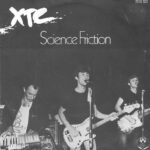
 When XTC burst onto the late-1970s music scene, they didn’t arrive with the polished sheen of mainstream pop or the raw aggression of punk. Instead, they carved out a strange and electrifying middle ground—something jittery, intelligent, and slightly unhinged. “Science Friction,” one of their earliest standout tracks, captures that energy perfectly.
It’s not just a song—it’s a statement. A sharp, anxious, and tightly wound piece of new wave that feels like it’s vibrating with nervous energy. While many bands of the era were either stripping things down or dressing them up, XTC leaned into complexity without losing immediacy. And “Science Friction” is one of the clearest examples of that balance.
A Band on the Edge of Something New
XTC emerged during a time of musical transition. Punk had shaken the foundations of rock, but what came next was still being defined. New wave was beginning to take shape, blending the urgency of punk with more experimental ideas and broader influences.
XTC didn’t just fit into that movement—they helped push it forward.
Led by Andy Partridge, the band brought a distinctly British sensibility to their music: witty, slightly eccentric, and always just a bit off-center. Their songs often felt like they were operating on a different frequency—both musically and lyrically.
“Science Friction,” released on their debut album White Music, introduces that identity in a bold way. It’s a track that feels restless, almost twitchy, as if it can’t quite sit still.
The Sound: Controlled Chaos
From the very first moments, “Science Friction” establishes its tone. The guitars are sharp and angular, the rhythm section is tight but relentless, and everything feels just slightly on edge.
There’s a sense of urgency in the way the song moves forward. It doesn’t groove in the traditional sense—it drives. The tempo feels almost breathless, pushing the listener along without giving much room to settle in.
What makes the song particularly interesting is how controlled that chaos is.
Despite its frantic energy, the arrangement is precise. Every instrument has its place, and nothing feels accidental. The guitars jab and twist, the bass anchors everything with a steady pulse, and the drums keep the whole thing from spiraling out of control.
It’s a delicate balance—one that XTC manages with impressive skill.
A Vocal Delivery Full of Tension
Andy Partridge’s vocal performance is a key part of what makes “Science Friction” so distinctive.
He doesn’t sing in a traditional sense. Instead, his delivery feels urgent, almost breathless, as if he’s trying to keep up with the thoughts racing through his head. There’s a nervous intensity to his voice, a sense that something is just slightly off.
That tension mirrors the music perfectly.
Rather than smoothing things out, Partridge leans into the song’s jagged edges. His phrasing is unpredictable, his tone shifting between controlled and slightly frantic. It’s not about hitting perfect notes—it’s about conveying a feeling.
And that feeling is one of unease.
Lyrics: Science as Anxiety, Not Progress
On the surface, “Science Friction” might seem like a playful take on science fiction themes. But a closer look reveals something more complex—and more unsettling.
The song uses scientific imagery not to celebrate progress, but to question it. There’s a sense of skepticism running through the lyrics, a feeling that science and technology might not be as reassuring as they’re often presented.
Instead of offering answers, they create more questions.
The term “science friction” itself suggests tension—a clash between knowledge and uncertainty, between progress and consequence. It’s not a comfortable relationship. It’s one filled with doubt and unease.
This perspective feels especially relevant given the time period. The late 1970s were marked by rapid technological change, as well as growing anxieties about where that change might lead.
XTC captures that mood perfectly, turning it into something both thought-provoking and slightly unsettling.
The Influence of Punk—And the Departure From It
While “Science Friction” clearly carries the energy of punk, it also represents a departure from it.
Punk was often about stripping things down—simple chords, straightforward structures, and raw emotion. XTC takes that foundation and builds on it, adding layers of complexity without losing the intensity.
The song’s structure is more intricate than typical punk fare. The rhythms shift, the melodies twist, and there’s a sense of unpredictability that keeps the listener engaged.
This is where XTC begins to define their own space.
They’re not rejecting punk—they’re evolving it. They’re taking its urgency and applying it to a more experimental framework, creating something that feels both familiar and entirely new.
A Song That Feels Ahead of Its Time
One of the most striking things about “Science Friction” is how modern it still feels.
The angular guitar work, the nervous energy, the blend of intelligence and urgency—all of it aligns with sounds that would become more prominent in later decades. You can hear echoes of post-punk, indie rock, and even alternative music that wouldn’t fully emerge until years later.
This forward-thinking quality is part of what makes the song so enduring.
It doesn’t feel locked into its era. Instead, it feels like a glimpse of what was to come—a sign that music was heading in new and exciting directions.
The Role of Tension in the Song
Tension is at the heart of “Science Friction.”
It’s in the music—the way the instruments push against each other. It’s in the vocals—the sense of urgency and unease. And it’s in the lyrics—the questioning of ideas that are often taken for granted.
This tension never fully resolves.
The song doesn’t build to a traditional release or catharsis. Instead, it maintains its intensity from start to finish, leaving the listener in a state of heightened awareness.
That lack of resolution is intentional. It reflects the themes of the song, reinforcing the idea that not everything can be neatly explained or understood.
Why It Stands Out in XTC’s Catalog
XTC would go on to explore a wide range of styles throughout their career, from jangly pop to more experimental and orchestral arrangements. But “Science Friction” remains one of their most distinctive early tracks.
It captures a moment when the band was still defining their identity, still experimenting with what they could do. There’s a rawness to it, a sense of discovery that makes it feel especially alive.
At the same time, it contains many of the elements that would define their later work: clever lyrics, intricate arrangements, and a willingness to push boundaries.
It’s both a starting point and a statement of intent.
A Cult Favorite That Rewards Repeat Listening
“Science Friction” may not be the most immediately accessible song in XTC’s catalog, but it’s one that reveals more with each listen.
The first time, it might feel chaotic or overwhelming. But as you become more familiar with it, the structure begins to emerge. The details become clearer. The tension starts to make sense.
This is the kind of song that rewards attention.
It’s not background music. It demands engagement, asking the listener to meet it on its own terms.
Final Thoughts: A Nervous Energy That Still Resonates
“Science Friction” is a song that thrives on unease.
It’s fast, sharp, and slightly unsettling—but also incredibly engaging. It captures a moment in music history when boundaries were being pushed, when artists were exploring new ideas and new sounds.
And it does so with a confidence that feels remarkable for an early track.
Decades later, it still holds up—not just as a piece of new wave history, but as a reminder of what can happen when a band refuses to play it safe.
It’s not comfortable. It’s not easy.
But that’s exactly what makes it great.
This post has already been read 596 times!