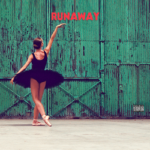
 In 2010, Kanye West released My Beautiful Dark Twisted Fantasy, an album that would be widely regarded as a peak in his career, and at the heart of that record was the ten-minute epic “Runaway.” Co-written and produced with a host of collaborators, including Mike Caren and Emile Haynie, the track stands as one of Kanye’s most candid, complex, and artistically ambitious statements. It is a song that blends confessional lyricism, minimalist piano motifs, and expansive production to explore themes of fame, self-sabotage, romance, and personal accountability. Unlike traditional radio hits, “Runaway” is deliberately confrontational, immersive, and layered, demanding attention and introspection from its audience. The track exemplifies Kanye’s ability to transform personal vulnerability into musical grandeur, merging honesty with spectacle to create a piece that is as haunting as it is memorable.
From the opening notes, “Runaway” immediately establishes its emotional tone. A solitary piano begins the track with stark, echoing chords that feel almost like a confessional room made audible. The simplicity of the piano motif belies the complexity to come, serving as both a foundation and a canvas for Kanye’s evolving narrative. The repeated motif functions as a hypnotic anchor, grounding the listener in a meditative space even as the lyrics and additional instrumentation escalate in intensity. The piano’s austerity contrasts with the lavish production that arrives later in the track, creating a tension between restraint and excess that mirrors the thematic content of self-awareness clashing with public persona. From the first bar, the song signals that it is as much a statement of character as it is a musical composition.
Kanye West’s vocal performance is central to the track’s emotional impact. Throughout the song, he alternates between rapped confession and almost spoken reflection, creating an intimate dialogue with the listener. Lines like “Let’s have a toast for the douchebags / Let’s have a toast for the assholes” immediately establish a duality of self-critique and sardonic humor, balancing humility with bravado. Kanye’s delivery fluctuates between anger, self-pity, and introspection, highlighting the complexity of his persona and the contradictions inherent in fame and relationships. His voice, occasionally layered with reverb or processed with autotune, adds texture and emotional resonance, emphasizing moments of vulnerability while also framing them within the larger, theatrical production of the track. The performance is both confessional and performative, blurring the line between personal diary and public spectacle.
Lyrically, “Runaway” is one of Kanye West’s most raw and self-aware compositions. The song explores his awareness of personal flaws, the impact of his behavior on others, and the often-destructive nature of fame. The recurring toast to the “douchebags” and “assholes” operates as both a personal acknowledgment and a cultural critique, reflecting Kanye’s recognition of his public persona while simultaneously owning it. Throughout the verses, he confronts themes of failed relationships, emotional unavailability, and the tension between authenticity and celebrity. Lines such as “I’m so gifted at finding what I don’t like the most” reveal a brutally honest self-assessment, capturing the paradoxical nature of self-sabotage and human complexity. The lyrics are as much a mirror as they are a confession, asking the listener to engage with Kanye’s contradictions and empathize with the vulnerability embedded within his larger-than-life persona.
The structure of “Runaway” contributes significantly to its immersive and unconventional impact. The track begins with the minimalist piano, gradually introducing strings, percussion, and layered vocal textures, creating a sense of expansion and escalation. The verse-chorus sections are fluid rather than rigidly defined, allowing the song to breathe and evolve naturally over its ten-minute runtime. The repeated refrain of the toast functions as a thematic anchor, a moment of clarity and reflection that punctuates the shifting musical landscape. Towards the final minutes, the track shifts into an extended instrumental section dominated by distorted, high-pitched vocalizations, synthesizers, and piano motifs. This climax operates less as a traditional ending and more as an emotional exhalation, a release of tension and introspection that embodies the song’s themes of self-reckoning and excess. The structural daring of the track ensures that it remains engaging and unpredictable, rewarding attentive listening and repeated exploration.
The production of “Runaway” is an essential component of its impact. Kanye and his collaborators blend minimalism with maximalism, creating an intricate interplay between sparse instrumentation and richly layered soundscapes. The piano motif remains central, but additional elements—including strings, subtle drum machines, and manipulated vocal layers—add depth, tension, and drama. The instrumental section, where vocals are pitched and distorted into near-instrumental textures, demonstrates Kanye’s willingness to experiment and push boundaries, turning a deeply personal song into a sonic exploration of mood, tone, and atmosphere. Every layer of the production is purposeful, emphasizing narrative, emotional resonance, or thematic tension, showcasing Kanye’s mastery of both technical skill and artistic vision.
Thematically, “Runaway” is a meditation on accountability, desire, and public perception. Kanye confronts his own behavior in relationships, acknowledging the ways in which his ego, impulsivity, and celebrity interfere with intimacy. Yet the song is also a reflection on the performative aspects of fame, highlighting the tension between private guilt and public spectacle. By inviting listeners into this space, Kanye transforms personal vulnerability into collective experience, creating a dialogue between artist and audience. The song’s honesty is both uncomfortable and compelling, offering insight into the contradictions of human behavior while framing them within an accessible, aesthetically compelling musical framework.
The song’s extended instrumental outro is particularly significant. For nearly four minutes, the track eschews lyrics entirely, instead building texture, tension, and emotional intensity through repeated piano chords, synthesizer manipulations, and distorted vocal fragments. This section operates almost as a psychological landscape, representing the lingering effects of regret, longing, and introspection. It defies conventional pop structure, demonstrating Kanye’s willingness to prioritize emotional truth and conceptual depth over commercial constraints. The outro transforms the song into an experiential journey, allowing listeners to inhabit the emotional space Kanye is exploring rather than simply observe it.
The cultural impact of “Runaway” was immediate and profound. Upon release, the track was widely praised for its honesty, ambition, and artistry, and it quickly became a touchstone in discussions of Kanye’s career. It stood out within My Beautiful Dark Twisted Fantasy as a moment of clarity and self-examination, highlighting Kanye’s ability to combine confessional storytelling with innovative production. The song’s message—of self-awareness, accountability, and the consequences of fame—resonated with listeners across demographics, solidifying its position as one of Kanye’s most significant works. It also influenced the broader trajectory of hip-hop and popular music, demonstrating that commercial success could coexist with personal and artistic risk-taking.
The song’s legacy is further reinforced by its live performances and visual accompaniments. The 35-minute short film for Runaway, directed by Kanye himself, visualized the themes of the album and extended the song’s narrative into a cinematic form, blending music, imagery, and storytelling. On stage, Kanye’s performances of the track highlight its theatricality and emotional weight, using staging, instrumentation, and audience engagement to amplify its impact. The song’s ability to translate across mediums—from recording to live show to film—demonstrates its versatility and enduring relevance.
“Runaway” also resonates on a personal level because of its exploration of self-perception and human imperfection. Kanye’s willingness to confront his flaws and present them honestly within a highly stylized, almost cinematic framework allows listeners to engage with their own contradictions and insecurities. The song’s extended runtime, structural daring, and production flourishes mirror the complexity of the emotions it explores, making it a profoundly human work as much as a musical statement. Its balance of accessibility and experimentation, narrative and abstraction, ensures that it remains compelling decades after its release.
Musically, the track’s minimalist opening contrasts with the expansive sonic landscape of the outro, highlighting Kanye’s ability to create tension and release through production choices. The piano motif anchors the listener, providing continuity and emotional resonance, while the instrumental layers build texture, disorientation, and catharsis. The manipulated vocals, sometimes pitched into otherworldly timbres, evoke both alienation and intimacy, mirroring the song’s themes of personal struggle and public scrutiny. This combination of technique, experimentation, and emotional honesty is a hallmark of Kanye’s approach to music and is fully realized in “Runaway.”
Ultimately, “Runaway” endures because it is both confessional and ambitious, intimate and grandiose. It captures the contradictions of human behavior, the tension between private guilt and public persona, and the complexity of love and desire, all framed within a meticulously constructed musical composition. Kanye West transforms personal reckoning into art, blending innovative production, compelling vocal performance, and introspective lyricism to create a song that is as immersive as it is memorable. Its combination of technical mastery, emotional depth, and structural daring ensures that it remains a defining work in contemporary music.
The song’s influence extends beyond Kanye’s catalog, inspiring artists across genres to embrace vulnerability, experiment with structure, and merge confessional content with ambitious production. It demonstrates that popular music can operate on multiple levels simultaneously, offering immediate emotional impact, complex narrative exploration, and inventive sonic landscapes. “Runaway” stands as a blueprint for what is possible in modern music when commercial ambition, artistic vision, and personal honesty converge.
In the final analysis, “Runaway” is one of Kanye West’s most compelling and enduring achievements. Its marriage of introspective lyricism, innovative production, and structural experimentation creates a work that is both timeless and of its moment. The track captures the tension, vulnerability, and grandeur of the human experience while showcasing Kanye’s unique artistic vision and technical prowess. It remains a touchstone for listeners and musicians alike, a song that continues to inspire, provoke, and resonate through its unflinching honesty and musical sophistication.
This post has already been read 9362 times!