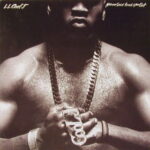
 There’s a special kind of electricity that runs through LL Cool J’s “Mama Said Knock You Out,” the kind that doesn’t just grab your attention but jolts you fully awake. From the first moment the beat drops—thick, confident, unrelenting—you know you’re in the presence of something explosive. This is the rare track where the title, the performance, and the cultural moment all fuse into a single lightning bolt of intensity. LL Cool J didn’t just rap on this song; he attacked it with a precision and fury that turned it into one of the defining records of his career.
When the track was released in 1990, LL Cool J was already a star, but he wasn’t riding a wave of unanimous praise. His previous album, Walking with a Panther, had delivered commercial hits but was often criticized for being too glossy, too pop-leaning, too soft for the evolving hardcore rap landscape. The genre was shifting quickly—Public Enemy was pushing militant political energy, N.W.A was reshaping the West Coast sound with raw street realism, and Rakim was redefining lyrical complexity. LL Cool J, once the bold teenage king of Def Jam, was suddenly facing whispers that he’d fallen behind the curve. For an emcee built on confidence, swagger, and battle-ready charisma, those whispers were gasoline waiting for a spark.
That spark came from an unlikely place: his grandmother. According to long-standing accounts, she listened to her grandson express his frustration with critics and told him the line that would become immortal: “Oh baby, just knock them out!” That line became the seed of a track that would reestablish LL Cool J as one of the fiercest forces in hip-hop. It was a reminder not to curl inward or retreat but to fight back—with talent, with fire, with absolute conviction.
“Mama Said Knock You Out” plays like a mission statement. It doesn’t tiptoe around its intent. It hits instantly. Marley Marl’s production is a masterpiece of stripped-down power. The beat doesn’t need complexity; it needs impact. It begins with that simple spoken introduction—“Don’t call it a comeback”—delivered with icy precision, as if LL Cool J is staring directly into the eyes of anyone who doubted him. Then the drums slam in, thick and booming, instantly recognizable. The track is anchored by a looping sample of James Brown’s “Funky Drummer,” one of the most iconic and omnipresent breaks in hip-hop history, but here it’s sculpted into something sharp and aggressive. Layered on top are punctuating horns, scratches, and LL’s vocal dominance, all mixed into a sound that feels like a fighter entering the ring to a crowd ready to explode.
LL Cool J’s performance is pure adrenaline. He doesn’t just rap; he commands, threatens, boasts, and taunts with the confidence of someone who knows his critics will be eating their words by the time the final chorus hits. His delivery is explosive, rhythmic, and theatrical in the best possible way. Every line feels like a jab or a dodge or a perfectly timed hook. The song moves with the momentum of a bout—verses that build pressure, choruses that release it in a knockout blow. His voice has always been one of the strongest instruments in hip-hop, but here it’s volcanic. His breath control, his tone, his emphasis—they’re all honed to perfection.
What separates this track from other battle-oriented rap songs is the precision of its swagger. LL doesn’t just puff out his chest; he surgically dissects the doubts surrounding him. He shouts, “I’m gonna knock you out,” but he backs up every threat with the bars and delivery to justify it. There’s no false bravado here; it’s earned. He’s not begging to be taken seriously. He’s showing you why you always should have.
The lyrics are packed with some of the most quotable lines in his entire catalog, sharp bursts of bravado that showcase why LL was—and remains—one of rap’s great stylists. He blends menace with rhythm, aggression with showmanship, and raw power with a performer’s ear for hooks. Every verse escalates the energy. The imagery he uses—boxing gloves, explosions, crushing blows—turns the track into a cinematic fight scene, with LL Cool J both the director and the unstoppable action hero.
The song is also a brilliant example of how hip-hop can draw strength from the past. Where many artists of the era leaned heavily into sampling as a way to build layered soundscapes, Marley Marl and LL kept things focused and lean. The James Brown influence isn’t subtle—LL even references the Godfather of Soul directly—but it’s more than homage. It’s a way of connecting the rebellious, explosive spirit of funk with the rising aggression and confidence of hip-hop. The song feels like the natural next step in a lineage of musical confrontation, a fist raised in defiance across generations.
One of the most exciting things about “Mama Said Knock You Out” is the synergy between LL and Marley Marl. Marley was already a legendary producer, a pioneer of sample-based hip-hop, and someone who understood how to craft beats that hit like steel-toed boots. He gave LL a beat that felt like a battlefield—space to strike, space to breathe, space to land every punch with force. This wasn’t just a producer giving an emcee a good track. It was a producer giving an emcee exactly the weapon he needed to reclaim his throne.
And reclaim it he did. The song became a smash hit, winning a Grammy, topping charts, and becoming one of the defining tracks not just of LL Cool J’s career but of early ’90s hip-hop as a whole. It resonated because it spoke to a universal feeling: the need to prove yourself again, to silence the doubters, to rise from a setback and show your true strength. You didn’t have to be a rapper to understand the fire behind the music. It was the sound of someone reclaiming their identity in the most defiant, electrifying way possible.
What’s remarkable is how fresh the track still sounds. Many songs from the era feel tethered to their moment, but “Mama Said Knock You Out” pulses with timeless energy. It still hits as hard now as it did when it first rattled speakers in 1990. The drums are enormous. LL’s voice snarls with perfect authority. The production crackles with tension. The song feels alive, fierce, and thrillingly confident. It’s the kind of track that can turn a mild mood into a charged one in seconds.
The music video only intensified the song’s legacy. LL appears shirtless and glistening in a boxing ring, the camera capturing him like a heavyweight fighter ready to destroy anything in front of him. Sweat, ropes, and stark lighting amplify the raw, physical aggression of the song. Every movement he makes in that video underscores the message: he’s not just rapping about knocking someone out—he’s embodying the idea of fighting back, refusing defeat, and rising forcefully above criticism. The imagery became iconic, replayed countless times and cementing LL as one of the most visually striking figures of the hip-hop era.
It’s easy to forget how young he still was at this moment. LL Cool J had debuted at 16 and had already been through multiple career cycles by the time he was barely old enough to rent a car. His entire rise, criticism, and resurgence happened before many artists even get their first record deal. “Mama Said Knock You Out” was not the defiant return of an aging veteran—it was the roar of a still-young artist reminding the world that he wasn’t going anywhere.
And he didn’t. The track didn’t just revive his standing—it redefined it. LL Cool J would go on to become one of the most versatile figures in entertainment: hip-hop trailblazer, actor, TV star, entrepreneur, influencer. But for many listeners, this track remains the purest crystallization of his fire. It’s the moment where every part of his talent—his voice, his charisma, his lyricism, his toughness, his showmanship—aligned perfectly.
Decades later, “Mama Said Knock You Out” hasn’t faded. It’s in films, commercials, sporting event playlists, workout mixes, and celebrations of hip-hop history. It’s the kind of song that people use to psych themselves up for life’s personal battles—whether literal competitions or emotional ones. The energy is infectious, empowering, and undeniable.
LL Cool J created many hits, but this one stands apart. It’s not just the ferocity or the flawless production or the quotability. It’s the emotional truth inside it. The song is driven by the very real feeling of having something to prove, of knowing your worth, of fighting your way back into the spotlight not because the world handed it to you, but because you seized it with clenched fists and unshakable belief.
“Mama Said Knock You Out” is a high-voltage declaration that the fire inside someone cannot be extinguished by critics, trends, or temporary missteps. It’s a masterclass in confidence, a showcase of lyrical force, and a reminder of how powerful hip-hop can be when an artist raps as if their life depended on every verse.
By the time LL Cool J hits that final chorus, his voice roaring over the beat, the message is unmistakable. He didn’t just knock them out—he made sure they never forgot who landed the blow.