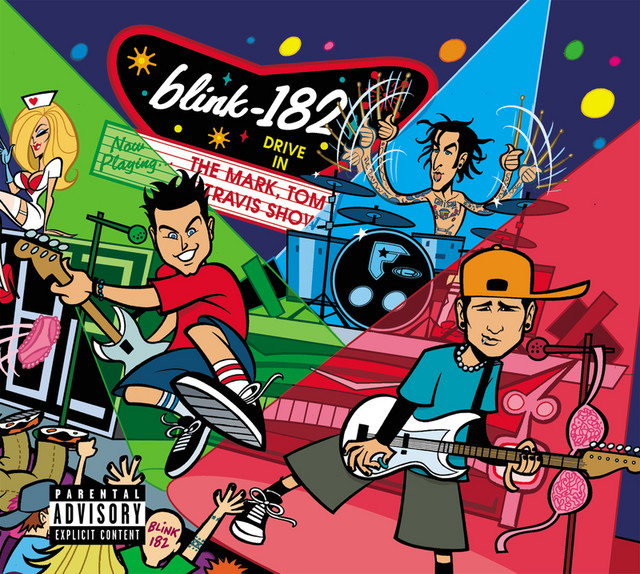
 Blink-182’s “Dammit,” released in 1997 on their breakthrough album Dude Ranch, isn’t just one of the band’s most memorable songs—it’s one of the most important tracks in pop-punk history. It’s the sound of youthful frustration crystallized into two and a half minutes of raw energy, self-deprecating humor, and unexpectedly sharp emotional insight. “Dammit” became an anthem for anyone who’s ever been dumped, blindsided by growing up, or caught in that messy transition between teenage chaos and adult responsibility. It’s fast, simple, and loud, yet it captures something universal: the moment you realize life doesn’t bend to your will, and the world keeps moving even when you’re not ready to go with it. With “Dammit,” Blink-182 didn’t just write a catchy punk tune—they created a cultural touchstone that has survived decades of changing trends, shaping the DNA of every pop-punk band that followed.
From its opening guitar riff, “Dammit” instantly announces itself as a classic. That unmistakable, jangly, slightly out-of-tune riff—written by bassist Mark Hoppus—hits like a shot of caffeine straight to the soul. It’s one of the most instantly recognizable guitar intros of the ’90s, a riff that captures the sound of suburban garages, scraped knees, skateboards thudding on asphalt, and the frantic heartbeat of adolescence. It’s sloppy in the best way, full of urgency and imperfections that make it feel alive. In an era dominated by post-grunge angst and polished commercial alternative rock, “Dammit” stood out precisely because it didn’t sound clean. It sounded real. It sounded like three guys in a room banging out a song the only way they knew how—loud, honest, and unfiltered.
Lyrically, “Dammit” hits a nerve that few punk songs of its time dared to approach with this mix of sincerity and humor. Mark Hoppus’s songwriting walks a tightrope between emotional vulnerability and sarcastic resignation, capturing the complicated feelings of heartbreak without slipping into melodrama. The opening line—“It’s all right to tell me what you think about me”—sets the tone: defensive, insecure, and painfully self-aware. The narrator knows he screwed up, knows things fell apart, and knows he’s not dealing with it well. But instead of wallowing, he turns the whole experience into something almost comical. The humor isn’t a deflection; it’s a coping mechanism. That blend of sadness and sarcasm became a hallmark of Blink-182’s style and a defining trait of the entire pop-punk genre.
What makes “Dammit” so enduring is how uncomfortably relatable it is. The song isn’t about a dramatic breakup—it’s about the awkwardness that comes afterward. Running into your ex at a movie theater. Pretending you’ve moved on when you haven’t. Watching them smile with someone else while you try to act mature. It’s about the humiliating reality of seeing your old life continue without you. The line “And it’s happened once again / I’ll turn to a friend” hits especially hard. That desperation, that reliance on your friends to pick you up, is a universal part of growing pains. And then, of course, the iconic chorus: “Well, I guess this is growing up.” It’s one of the most deceptively profound lines in pop-punk history. It sums up the entire emotional arc of adolescence in eight words—an acknowledgment that pain, loss, and awkwardness are just part of the deal.
The creation of “Dammit” has become something of a legendary story in Blink-182 history. Mark Hoppus supposedly wrote the song in one night on an acoustic guitar, banging out the now-famous riff while half-convinced it wasn’t any good. Little did he know that he had accidentally written the band’s first major hit and one of the defining anthems of the decade. Even more famously, Hoppus injured his finger shortly before the band recorded the song, forcing him to play the riff with just two fingers. That limitation helped cement the frantic, slightly sloppy energy that defines the track. Instead of hindering the song, the imperfection made it feel more human, more Blink-182, more raw and immediate.
“Dammit” arrived at a perfect time for pop-punk. In the mid-to-late ’90s, the genre was bubbling just beneath the surface of mainstream music. Green Day had kicked the door down in 1994 with Dookie, but the style was still largely associated with fringe youth culture—skaters, outcasts, kids with dyed hair and thrift-store wardrobes. Blink-182 brought something different: humor, relatability, and a melodic sensibility that made punk feel accessible without sacrificing energy. “Dammit” was the bridge between underground pop-punk and the massive explosion that came in the early 2000s. Its success paved the way for Enema of the State, for bands like Sum 41, Good Charlotte, Simple Plan, and for the entire wave of Warped Tour-era acts that dominated MTV for years. In many ways, “Dammit” is the song that made pop-punk safe for the mainstream—while still keeping its beating, chaotic heart intact.
Vocally, the track showcases what made Mark Hoppus such a distinct voice in the genre. His delivery is half-shout, half-conversation, full of urgency and cracks that give the song emotional texture. There’s no polish, no vocal gymnastics, no glossy studio tricks. Just a guy sounding like he’s trying to convince himself he’s fine while knowing he absolutely isn’t. That rawness is refreshing and honest. It’s why “Dammit” has aged better than many other late-’90s pop-punk tracks. It’s not trying to be cool; it’s trying to be truthful.
Instrumentally, the band works as a perfect unit. Tom DeLonge’s guitar tones are messy in the most endearing way, with that classic nasally energy he would later become famous for. His playing complements Mark’s rhythmic bass lines, creating a full wall of sound despite the minimalist setup. And then there’s drummer Scott Raynor, whose frenetic drumming gives the song its unstoppable forward momentum. The track feels like it’s sprinting toward a finish line it barely reaches in time. This sense of speed and urgency mirrors the emotional chaos of young heartbreak—it feels like everything is happening too fast, too intensely, and without any brakes.
Even the music video has cemented itself as a pop-punk classic. Set in a movie theater and featuring Blink-182 goofing around in typical fashion, it captures the exact essence of the song: awkwardness, youth, humor, and heartbreak colliding in a chaotic swirl. Blink wasn’t afraid to look silly, to embrace immaturity, to poke fun at themselves. And that authenticity is what made fans connect with them so deeply. “Dammit” wasn’t created for image—it was created because it felt true.
Over time, the song evolved into a rite-of-passage moment for fans and band members alike. It became one of the most beloved staples of Blink-182’s live shows, often performed with playful mistakes, extended jams, or chaotic energy. It’s the kind of song that fans scream at the top of their lungs, not because the notes are pretty, but because the feelings are real. At concerts, “Dammit” transforms into a shared catharsis—thousands of people singing “Well, I guess this is growing up” together, each one connecting it to their own heartbreak, their own mistakes, their own memories of youth slipping away faster than they realized.
The song’s impact on culture stretches far beyond the pop-punk scene. It has appeared in films, TV shows, video games, and nostalgic playlists for decades. It’s the kind of song that instantly transports people back to a specific moment in their lives. Maybe it reminds listeners of high school heartbreak, of blasting music in a friend’s car, of local shows in sweaty basements, of skateboarding until sundown, of making dumb mistakes and learning who they were in the process. “Dammit” is more than a song—it’s a time capsule.
Part of what makes “Dammit” timeless is its emotional honesty. Blink-182 didn’t try to dress up heartbreak in metaphor or abstract imagery. They told the truth plainly, with humor and vulnerability. The pain of seeing someone you loved move on. The frustration of pretending everything’s fine. The embarrassment of bumping into them when you least expect it. The slow, reluctant acceptance that life doesn’t give you closure wrapped in a bow—you have to create it yourself. That truth hits just as hard at 14 as it does at 40. And because the feelings are universal, “Dammit” continues to resonate across generations.
There’s also a deeper thematic layer to the song. For all its humor and simplicity, “Dammit” is ultimately about the inevitability of change. Growing up isn’t something you choose—it’s something that happens to you whether you like it or not. The phrase “Well, I guess this is growing up” isn’t triumphant or optimistic. It’s resigned. It’s the voice of someone who has realized that adulthood doesn’t begin with grand revelations—it begins with heartbreak, with awkward conversations, with letting go of people and parts of yourself. That worldview became one of Blink-182’s defining thematic pillars, shaping albums like Enema of the State, Take Off Your Pants and Jacket, and even their more mature later work like Neighborhoods and the 2020s reunion singles. “Dammit” planted the seeds for Blink’s entire emotional identity.
Musically, the song influenced an entire wave of young musicians who found comfort and inspiration in its imperfections. Hundreds of bands picked up instruments because they heard “Dammit” and thought, I can do that. The riff is simple enough to learn in an afternoon but catchy enough to feel like magic. Its DIY, garage-band spirit helped launch countless careers. Even today, new pop-punk and emo revival bands cite Blink-182—and specifically “Dammit”—as a foundational influence. It’s a song that made punk feel accessible, not elitist. It told young people they didn’t need virtuoso skills or expensive equipment to express themselves. They just needed honesty and a willingness to shout their feelings into the void.
As Blink-182 themselves grew up, the meaning of the song evolved. When the band took long hiatuses, when members struggled with addiction, personal challenges, creative differences, and growing families, “Dammit” remained a constant—a reminder of where they started and why their music connected so deeply. It became a nostalgic anchor not just for fans but for the band members themselves. After Tom DeLonge left and returned years later, “Dammit” once again became a symbol of reconnection—a reminder of the past they shared and the music that launched them into history.
The longevity of “Dammit” also reflects Blink’s ability to balance immaturity with insight. They were goofy, irreverent, crass, and unserious—but they were also emotionally perceptive in a way that caught people off guard. “Dammit” embodies that duality. It’s silly and serious, heartbreaking and hilarious, messy and immaculate in its own punk-rock way. It’s a song that feels like a friend—the kind of song you turn to when you’re hurting and need a voice that understands.
Even decades after its release, “Dammit” continues to appear in viral videos, cover versions, TikTok trends, and nostalgia-fueled playlists. It has transcended its genre and era to become a permanent fixture in modern pop culture. Every generation rediscovers it, and every generation finds something of themselves in it. Whether it’s the riff, the chorus, the humor, or the angst, the song continues to speak to anyone standing at the crossroads of youth and adulthood—confused, frustrated, heartbroken, and ultimately hopeful.
At its core, “Dammit” is about survival. Emotional survival. Growing up may be painful, but it’s also inevitable. And Blink-182 takes that sting and transforms it into something loud, cathartic, and strangely beautiful. It’s a song that doesn’t sugarcoat anything. It acknowledges the hurt, laughs at the absurdity, and keeps moving forward. Because that’s what life demands.
Blink-182’s “Dammit” remains one of the greatest pop-punk songs ever written not because it’s perfect, but because it captures the imperfections of youth with uncanny accuracy. It’s raw, honest, loud, messy, and unforgettable. It’s a breakup song that feels like a punch to the gut wrapped in a joke. It’s a growing-up anthem for people who never wanted to grow up in the first place. And it’s a timeless reminder that sometimes the only way to survive heartbreak is to admit how much it sucks, turn the volume up, and scream along with a song that understands you better than you understand yourself.
Nearly three decades later, the world has changed, Blink-182 has changed, and the pop-punk landscape has evolved countless times. But “Dammit” is still here—still blasting through car speakers, still echoing in crowded venues, still teaching new listeners that heartbreak is temporary but great songs last forever. It remains one of the defining musical artifacts of the ’90s and a permanent part of the emotional vocabulary of anyone who has ever loved, lost, and learned the hard way that growing up rarely goes according to plan. And that’s exactly why “Dammit” will outlive every trend, every era, and every wave of nostalgia that comes after it. It’s not just a Blink-182 classic—it’s a generational anthem etched into the collective memory of millions.