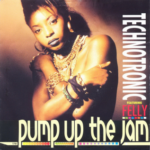
 More than three decades after its release, “Pump Up the Jam” by Technotronic still feels like a song rushing in from the future. There’s something almost supernatural about its staying power, a kind of musical immortality that defies trends, generations, and shifting tastes. It’s not just a club song, not just a dance anthem, not just a late-’80s curiosity that found unexpected global success—it’s a cultural artifact that somehow remains alive every time a DJ drops those opening synth stabs. If anything, the track has only grown more iconic, because the world has changed in ways that have made it even easier to appreciate how ahead of its time it was. The moment that rhythm kicks in, time collapses, nostalgia floods the room, and you remember all over again why Technotronic became a household name without ever really trying to be one.
Released in 1989, “Pump Up the Jam” is one of those songs that emerged at the perfect intersection of technology, energy, and pure dancefloor experimentation. The late ’80s were a period of boundary-breaking in popular music—house was moving out of Chicago’s basements, hip-hop was exploding into new rhythmic and lyrical territories, electronic producers were inventing fresh sounds by pushing hardware beyond its intended use. And in the middle of that sonic revolution, this Belgian project—yes, Belgian—came out of nowhere with a track that immediately sounded like an evolution of everything happening in dance music. It was house, it was hip-hop, it was pop, it was electro, and it was something entirely its own. Most songs chase trends; “Pump Up the Jam” seemed to invent a new one on arrival.
Part of the track’s magic is its sense of propulsion. Even people who don’t dance, who refuse to dance, who physically cannot be bothered to move, find themselves helpless against this beat. The song doesn’t politely ask you to move—it commands you. The drum machine is crisp and insistent, every kick a tiny earthquake, every snare a spark. The bassline is hypnotic, almost sinister, moving in a way that feels like it’s tugging you closer to the speakers. And then those synth bursts shoot out like neon beams cutting through a foggy club. It’s not a complicated arrangement, but that’s the point: it’s engineered for maximum kinetic impact. Everything serves the rhythm. Everything is there to push the momentum a little harder. There’s a reason “Pump Up the Jam” still feels massive even on tiny speakers—it’s built from the ground up to be unstoppable.
And then there’s the vocal performance—one of the most essential ingredients in the song’s alchemy. Ya Kid K’s delivery is iconic, even if the history behind the project became a bit tangled. Her voice is confident without being showy, rhythmic without being overly melodic, forceful without being aggressive. It’s the perfect fit. She doesn’t dominate the track so much as merge with it, becoming another rhythmic layer in the song’s architecture. Her presence is undeniably cool, but approachable, almost conversational, which makes the song feel like a friend hyping you up before you hit the dancefloor. There’s a charisma there that can’t be taught or faked—just raw energy captured on tape.
The lyrics themselves are a big part of what makes the song timeless. They’re simple, but not empty; direct, but not boring. Lines like “Pump up the jam, pump it up / While your feet are stompin’” do exactly what they need to do—they hype you up, engage you, and create a sense of communal celebration. There is no overthinking, no metaphor to untangle, no emotional backstory. The song is pure function, pure joy, pure momentum. That clarity is rare, and it’s part of why the track still works in every possible setting: clubs, parties, wedding receptions, sports arenas, TikTok edits, retro playlists, workout mixes. You can’t misinterpret it. You can only feel it.
The song also carries this strangely global sensibility. Despite being created in Belgium, featuring a Congolese-American rapper, and borrowing heavily from Chicago house rhythms, “Pump Up the Jam” feels like a dance anthem that belongs everywhere at once. It doesn’t sound rooted in any one country or culture—it sounds like a world moving forward together. That may be one of the reasons it exploded internationally. When it hit in the U.S., the music video (infamously featuring model Felly lip-syncing the vocals) became MTV fuel. Radio programmers instantly understood its appeal. Kids who didn’t normally listen to dance music suddenly loved this song. And across Europe, where club culture was expanding rapidly, it became one of the defining tracks of the era. In the pre-Internet world, having a song dominate charts around the world was rare. “Pump Up the Jam” did it with almost unnatural ease.
Today, what’s fascinating about the song isn’t just its initial success but how many lives it has lived since. Tracks that explode in the moment often fade quickly once the novelty evaporates. But “Pump Up the Jam” keeps coming back, reinventing itself without changing at all. It remains one of the most sampled, referenced, remixed, and resurrected dance anthems in pop culture. It shows up in movies, commercials, viral videos. It gets used ironically, sincerely, nostalgically, humorously. It’s one of those songs that is just deeply embedded into the global collective memory. You don’t have to know Technotronic, you don’t need to know the late ’80s, you don’t need to be a dance music historian—if you grew up at any point since 1989, this track crossed your path.
And here’s the thing: it’s aged shockingly well. Many late ’80s dance tracks sound dated now—fun, but very much of their time. “Pump Up the Jam” somehow dodged that fate. Something about its production feels almost minimalist, in a modern sense, which allows it to blend seamlessly into contemporary playlists. You can drop it between newer EDM tracks and it doesn’t feel jarring. The beat is clean, the arrangement uncluttered, the hook eternal. It’s not weighed down by the production excesses that sometimes plague ’80s pop. Instead, it feels sleek, modern, even futuristic. It’s no stretch to call it one of the first true mainstream electronic bangers that still bangs today.
Part of the track’s continued cultural power comes from the world’s evolving relationship with electronic music. In 1989, tracks like this were still considered risky, experimental, underground-adjacent. Today, electronic music is one of the dominant forces in global pop culture. The blueprint Technotronic helped define became the foundation of entire genres—house, EDM, Eurodance, and countless hybrids. That means that modern listeners are primed to appreciate “Pump Up the Jam” in ways the original audience might not have fully understood at the time. In a sense, the world finally caught up to Technotronic.
Even the quirks of the song—the slightly off-kilter transitions, the unusual balance between vocals and beat, the mechanical rigidity of the drum programming—now feel charming and character-defining rather than outdated. They give the track personality, texture, a distinct fingerprint. It’s a perfect example of how limitations in early electronic production often resulted in more memorable music. The constraints led to creativity. You had to make every sound count. You had to build a whole vibe with limited tools. And that effort, that ingenuity, radiates from every second of “Pump Up the Jam.”
The song also embodies a feeling that is easy to forget in the contemporary music world: the joy of communal physical movement. In the age of fragmented digital experiences, attention spans, and hyper-personalized media, there’s something wonderfully unifying about a song that exists purely to get people dancing together. “Pump Up the Jam” doesn’t ask anything of the listener except participation. It’s not introspective. It’s not brooding. It doesn’t demand emotional labor. It simply wants you to feel alive for three and a half minutes. That simplicity is refreshing, almost therapeutic. It’s dance as release, dance as celebration, dance as connection.
And maybe that’s why the song has lasted. Trends change, styles evolve, production techniques advance—but the desire to move, to feel, to lose yourself in rhythm, never goes away. “Pump Up the Jam” taps into something elemental and eternal. It feels like a time capsule and a prophecy at the same time. You can hear the past, the present, and the future in it—all those eras colliding on a single dancefloor.
Technotronic themselves would never reach the same level of mainstream success again, but that almost doesn’t matter. Some artists spend entire careers chasing the kind of impact “Pump Up the Jam” made in one burst. It was lightning in a bottle, but not the accidental kind. It was the result of vision, timing, craft, and a willingness to push electronic music into new shapes. Its influence continues to ripple outward, long after many other hits of its era have faded into cultural obscurity.
Ultimately, “Pump Up the Jam” is a song that doesn’t just belong to the late ’80s—it belongs to every generation that discovers it. It’s a workout anthem, a party starter, a nostalgia trigger, a sports arena staple, a TikTok soundtrack, a wedding reception classic, a club essential. It’s everywhere because it works everywhere. There’s no context in which its energy feels misplaced. And that’s the true sign of a timeless track—not just that it survives, but that it thrives.
Three decades later, the jam is still pumped. The dancefloor is still ready. The beat is still undeniable. And Technotronic’s greatest creation continues to prove that a perfect groove never dies—it just keeps moving forward, one stomp at a time.