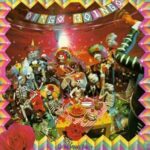
 There’s something irresistibly thrilling about Oingo Boingo’s “Dead Man’s Party,” a song that manages to turn morbidity into celebration, anxiety into exhilaration, and the macabre into pure, kinetic fun. Released in 1985 on the album of the same name, it captures the essence of Oingo Boingo’s unique brand of darkly humorous new wave, blending carnival-esque instrumentation, theatrical flair, and Danny Elfman’s inimitable vocal delivery into a track that is as catchy as it is strange. From the first pounding chords, “Dead Man’s Party” declares itself a song of revelry with an edge, an invitation to a dance floor where the dead and the living converge, and where fear and fun exist in the same thrilling space. The song’s energy is immediate: a rapid, syncopated drum beat propels the listener forward while a bouncy, jittery keyboard riff twinkles ominously in the background, creating a tension that is both playful and eerie. Layered atop this are Elfman’s distinctive vocals, which shift effortlessly between spooky theatricality and mischievous glee, delivering lines that balance tongue-in-cheek horror with genuine exuberance.
Lyrically, “Dead Man’s Party” is a masterclass in blending campy horror imagery with social commentary and existential humor. Elfman opens with the invitation: “I hear the knocking on my door, my neighbors say I’ve gone too far.” Immediately, the listener is plunged into a world where normal life collides with the absurd and uncanny. The lyrics evoke a sense of outsiderdom, of reveling in the fringes of society, while simultaneously referencing the inevitable specter of mortality. “Dead Man’s Party” is less a lament and more an exuberant confrontation with death, a refusal to treat mortality with solemnity, choosing instead to dance with it, quite literally. The chorus—infectious, insistent, and impossible not to sing along with—echoes this idea: the dead may be present, but so is the energy of celebration, and the two are intertwined in a way that feels exhilarating rather than frightening. There’s a cleverness in the lyrics, a sense that Elfman and Oingo Boingo are aware of the absurdity of life and death and are gleefully inviting their audience to acknowledge it in the most entertaining way possible.
Musically, “Dead Man’s Party” is a testament to Oingo Boingo’s ability to merge genres and textures in ways that feel simultaneously accessible and strange. The song’s foundation is firmly rooted in the new wave movement, with its driving synth lines, punchy percussion, and angular rhythms, but it is enriched with elements that feel almost theatrical, almost circus-like, giving it a kinetic energy that sets it apart from its peers. Horn stabs punctuate the rhythm, adding bursts of excitement that mimic the chaotic joy of a party where the living and dead collide. The bassline is funky, propelling the song forward with a bounce that makes it impossible to remain still, while the keyboards, marimba-like in their timbre, add a layer of eerie whimsy. It’s a sonic concoction that feels carefully orchestrated yet wildly spontaneous, capturing the essence of a track that’s both a celebration and a performance, a song that’s as much about the experience of listening as it is about the narrative it presents.
One of the song’s most compelling features is Elfman’s vocal delivery. He alternates between theatrical narration and full-bodied singing, using cadence and phrasing to heighten the sense of playful menace. There’s a mischievousness to his tone, a knowing wink at the audience, as if he’s aware of the absurdity of dancing with skeletons yet fully committed to the revelry. The way he stretches certain syllables, injects pauses, and manipulates pitch adds layers of drama, making each line feel like part of a mini-performance. This performative quality is central to Oingo Boingo’s charm, and “Dead Man’s Party” is a perfect encapsulation of the band’s theatrical sensibility: the music and the lyrics are inseparable from the energy and personality of the performance.
The music video for “Dead Man’s Party” further cemented the song’s place in popular culture. Featuring surreal, playful imagery of dancing skeletons, haunted houses, and Elfman’s own flamboyant stage presence, it captured the song’s blend of horror and humor perfectly. The visuals brought the macabre to life in a way that matched the song’s energy, showing that Oingo Boingo were not merely musicians but performers who understood the importance of theatricality and spectacle. It’s impossible to separate the song from this imagery: the visuals enhance the experience, turning it into a full sensory celebration of life, death, and the blurry line between the two. The video’s popularity, especially during the rise of MTV, helped solidify “Dead Man’s Party” as an anthem for the unconventional, the quirky, and anyone willing to embrace the absurdity of existence.
“Dead Man’s Party” also represents a moment in the 1980s where music could be simultaneously playful and subversive. While the era is often remembered for its glitzy pop and polished production, tracks like this reminded listeners that music could still challenge expectations, blur genre lines, and embrace eccentricity. Oingo Boingo’s approach was unique: their songs were danceable yet intellectually engaging, humorous yet pointed, and “Dead Man’s Party” encapsulates this ethos perfectly. The song’s ability to maintain mass appeal while staying true to Elfman’s singular vision is part of why it remains an enduring favorite decades later. It’s both a product of its time and timeless, capable of thrilling listeners whether they first heard it in the 1980s or discovered it in the decades since.
Thematically, the song’s enduring appeal comes from its embrace of the universal human desire to celebrate life even in the face of mortality. Death is inevitable, yet Oingo Boingo refuses to treat it with solemnity or fear. Instead, they turn it into an invitation to dance, to laugh, to confront the darkness with energy and creativity. There’s a cathartic element here: listeners can embrace their anxieties and fears, but instead of being weighed down by them, they are transformed into exhilaration and movement. The track encourages agency, a playful confrontation with what is normally taboo, and in doing so, it becomes more than just a catchy tune—it becomes an anthem for embracing life in all its messy, darkly comic glory.
Live performances of “Dead Man’s Party” further illustrate its kinetic power. On stage, Oingo Boingo brought the song to life with a manic energy that was impossible to replicate in the studio. The horns, keyboards, and driving rhythm section become even more vibrant in a live context, while Elfman’s charisma and performative vocals elevate the song into a full theatrical experience. Audience participation, dancing, and the shared sense of joyful abandon turn the track into a communal celebration, underscoring its themes of connection, release, and playful confrontation with fear. It’s easy to imagine the track as the centerpiece of a Halloween party, a mosh pit, or even a small living room gathering—the energy translates across spaces because it taps into something fundamentally human: the joy of letting go and celebrating life, even when faced with the inevitability of death.
Culturally, “Dead Man’s Party” has cemented itself as a Halloween staple, but it’s much more than a seasonal novelty. Its influence extends into film, television, and pop culture at large, with the song appearing in multiple soundtracks and referenced in media that seek to evoke both fun and spookiness. Its blend of accessibility, musical sophistication, and thematic audacity has inspired countless artists who aim to merge the theatrical with the danceable, proving that embracing the unusual can yield both artistic and commercial success. The track’s ongoing presence in popular culture is a testament to its unique magic: it is entertaining, memorable, and thematically rich, all at once.
The song’s instrumentation deserves special note. The percussion drives the tempo with relentless precision, mimicking the march of the undead while keeping the listener’s feet moving. The bassline provides a funk-infused anchor, balancing the jittery, whimsical keyboards that suggest carnival music, circus antics, or a haunted fairground. This combination of styles—new wave, ska, funk, and theatrical rock—creates a soundscape that feels otherworldly yet inviting. The horns, particularly, punctuate the track with stabs of excitement and surprise, acting as punctuation marks in a narrative that blends celebration with spooky storytelling. Every element of the arrangement is designed to evoke energy, movement, and a sense of playful menace, reflecting Oingo Boingo’s mastery of both musicality and theatricality.
Ultimately, “Dead Man’s Party” endures because it is more than the sum of its parts. It’s a song that captures the joy of rebellion, the thrill of confronting fear, and the pleasure of surrendering to rhythm and dance. It is a track that invites listeners to embrace their quirks, laugh at the absurdity of life, and celebrate both the dark and light aspects of existence. It exemplifies the genius of Oingo Boingo, a band capable of merging theatrical performance, complex musical arrangements, and pop sensibilities into a single, unforgettable experience. The song’s mix of playful horror, intricate instrumentation, and boundless energy ensures that it remains a touchstone for fans of the unusual, the whimsical, and the exhilarating.
“Dead Man’s Party” is, in essence, a celebration of contradictions: death and dance, fear and fun, darkness and exuberance. It is a song that invites listeners to confront mortality with joy, to take the weight of life and turn it into rhythm, melody, and shared experience. Decades after its release, it remains one of Oingo Boingo’s most recognizable and beloved tracks, a song that captures the band’s signature blend of theatricality, humor, and musical ingenuity. Whether heard for the first time or the hundredth, it retains the power to energize, amuse, and captivate, proving that Danny Elfman and his band were able to craft a song that is simultaneously macabre and irresistible, strange and utterly danceable. In a world where music often chooses between accessibility and artistry, “Dead Man’s Party” refuses the choice, daring listeners to dance with the dead, laugh at the absurd, and celebrate the chaos of life in all its vivid, eerie glory.
It’s the ultimate invitation: the dead are at the door, the music is thumping, and Oingo Boingo is ready to lead the charge. All you have to do is join them. The track’s continued popularity is no accident; it encapsulates a rare alchemy of energy, creativity, and thematic boldness that ensures it will remain a favorite for generations. It’s a song that captures the thrill of the unconventional, the joy of theatricality, and the undeniable power of music to transform fear into celebration. “Dead Man’s Party” is more than a song—it’s an experience, a ritual, and a reminder that even in the shadows, there is rhythm, there is dance, and there is uncontainable fun.