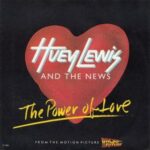
 When Huey Lewis & the News released The Power of Love in 1985, it quickly became one of the defining songs of the decade, perfectly encapsulating the exuberance and optimism of mid-’80s pop-rock. The track, written by band members Huey Lewis, Chris Hayes, and Johnny Colla, was originally recorded for the Back to the Future soundtrack, linking it indelibly to one of the era’s most iconic films. Its success was immediate, topping the Billboard Hot 100 and earning Lewis & the News a Grammy nomination, solidifying their place as one of the most influential bands of the decade. Beyond its commercial achievements, The Power of Love demonstrated a masterful combination of hook-driven songwriting, impeccable musicianship, and a sense of energy that made it feel timeless, even as it epitomized its era.
From the opening chords, the song establishes a confident, propulsive rhythm. The guitar riff is bright, crisp, and instantly recognizable, anchored by a taut rhythm section that drives the song forward without ever overwhelming it. The bassline is melodic yet steady, providing both a foundation and an undercurrent of groove, while the drums maintain a precise, energetic backbeat that propels the track with a sense of unstoppable momentum. What makes the instrumentation so effective is its balance: every element works in service of the song, leaving space for Lewis’s vocals to shine while ensuring that the arrangement never feels cluttered or overproduced. There is a clarity to the mix that allows each instrument’s contribution to be felt distinctly, yet the overall effect is cohesive, punchy, and exhilarating.
Huey Lewis’s vocal performance is at the heart of the song’s appeal. His voice carries a confident, conversational tone that is both accessible and charismatic, with a warmth that invites listeners in. He delivers the lyrics with a sense of urgency and sincerity, even as the song’s upbeat instrumentation gives it an effervescent, celebratory quality. The lyrics themselves explore the transformative and elevating power of love, with lines like “The power of love is a curious thing / Make a one man weep, make another man sing” capturing the universality and unpredictability of romantic emotion. Lewis balances passion and playfulness, creating a vocal performance that is emotionally resonant without ever tipping into melodrama. His phrasing and timing are impeccable, making each line land with both clarity and impact, and ensuring that the song’s message is delivered with maximum effect.
The songwriting on The Power of Love exemplifies precision and craftsmanship. The structure is tight and efficient, with verses, choruses, and a bridge flowing seamlessly into one another. The melody is immediately memorable, with hooks that lodge themselves in the listener’s mind after a single hearing. The chorus, with its soaring vocal lines and layered harmonies, is particularly effective, providing both musical release and thematic emphasis. The bridge introduces a subtle shift in texture and dynamics, creating contrast that heightens the song’s energy when the chorus returns. This combination of melodic inventiveness and structural discipline is part of what makes the track enduringly compelling, allowing it to appeal to both casual listeners and those attuned to musical nuance.
One of the most distinctive elements of The Power of Love is its guitar work. Chris Hayes’s riffs are clean, energetic, and perfectly matched to the song’s rhythm, alternating between driving chordal punches and melodic embellishments that add depth and texture. The guitar lines never dominate; instead, they interact fluidly with the rhythm section and vocals, creating a layered, dynamic sound. In the mid-1980s pop-rock landscape, where synthesizers and electronic production were increasingly prominent, Huey Lewis & the News maintained a focus on organic, instrument-driven arrangements, and The Power of Love is a prime example of how effectively they integrated traditional rock instrumentation with the contemporary sensibilities of the time.
The song’s production, handled by Huey Lewis & the News and co-producer Bob Brown, emphasizes clarity, punch, and balance. Every instrument occupies its own sonic space, yet the overall mix is cohesive and polished, reflecting the band’s meticulous attention to detail. The snare drum has a crisp, snappy quality that cuts through the arrangement, while the bass and guitars provide warmth and resonance. Lewis’s vocals sit prominently in the mix, supported by harmonies that enhance the chorus without overshadowing the lead. This attention to sonic detail contributes to the song’s immediate impact and enduring appeal, ensuring that it remains vibrant and engaging even decades after its release.
The Power of Love also benefits from its cultural context. Released in conjunction with Back to the Future, it became closely associated with the excitement and optimism of the film’s narrative. Marty McFly’s adventures through time, paired with the song’s exuberant energy, created an indelible connection between the track and the era’s popular imagination. The song’s upbeat tempo, major-key tonality, and celebratory lyrics perfectly matched the movie’s sense of adventure and possibility, allowing it to transcend its role as a soundtrack single and achieve broader cultural significance. For many listeners, hearing The Power of Love evokes not just the song itself but the wider feeling of the mid-1980s: youthful exuberance, cinematic wonder, and the optimism of a generation looking toward the future.
Beyond its association with Back to the Future, The Power of Love stands on its own as a masterful pop-rock composition. Its melodies are memorable, its arrangements are meticulously crafted, and its emotional resonance is genuine. The song strikes a balance between accessibility and sophistication, appealing to casual listeners drawn to its catchy hooks while also rewarding more attentive audiences with its musical intricacies. This dual appeal contributed to its commercial success, as well as its longevity in popular consciousness.
The track’s rhythm section deserves particular attention for its role in shaping the song’s infectious groove. The bass and drums work in tandem to create a sense of forward motion that feels effortless yet compelling. The drumming is precise, dynamic, and expressive, providing rhythmic punctuation that accentuates the guitar and vocal lines. The bassline is melodic, offering subtle counterpoint to the guitars while maintaining a steady drive that anchors the arrangement. This synergy between rhythm and melody is a key factor in the song’s enduring appeal, providing both energy and musical sophistication that elevate it above standard pop-rock fare.
The Power of Love also exemplifies Huey Lewis & the News’ skill in blending lyrical content with musical texture. The lyrics, while straightforward, are delivered with a sense of immediacy and conviction that enhances their impact. The band’s instrumentation complements the narrative, with the rhythm and melody reinforcing the song’s themes of joy, emotional transformation, and connection. The result is a song in which every element—lyrics, vocals, and instrumentation—works together seamlessly, creating a sense of unity and coherence that is central to its lasting appeal.
Live performances of The Power of Love have consistently demonstrated the song’s energy and versatility. Huey Lewis & the News bring both precision and spontaneity to their renditions, maintaining the song’s infectious groove while allowing room for improvisation and audience interaction. Lewis’s charismatic stage presence enhances the performance, engaging listeners and creating a sense of shared excitement. Over the years, the song has become a staple of the band’s live repertoire, its energy and immediacy making it a highlight of concerts and a crowd favorite that never fails to elicit enthusiastic responses.
The song’s influence extends beyond its immediate commercial success. It helped define the sound of mid-1980s pop-rock, bridging the gap between traditional rock instrumentation and the polished production values of contemporary mainstream music. Its combination of infectious hooks, musical craftsmanship, and relatable lyrical themes set a standard for radio-friendly rock songs that balanced artistry with mass appeal. Many artists cite Huey Lewis & the News as an influence, and The Power of Love remains a touchstone for those seeking to understand the intersection of commercial success and musical integrity in the 1980s.
Ultimately, The Power of Love endures because it captures something essential about both its creators and its era. It is confident yet playful, technically impressive yet immediately accessible, and imbued with a sense of joy that is difficult to replicate. The track reflects Huey Lewis & the News’ commitment to craftsmanship, their understanding of groove and melody, and their ability to write songs that resonate on multiple levels—emotionally, rhythmically, and culturally. It stands as a testament to the band’s talents, a moment in pop-rock history that continues to captivate listeners, and a song whose energy and optimism remain infectious decades after its release.
The Power of Love is more than a hit single or a movie tie-in; it is a defining statement of mid-1980s pop-rock, a song that combines musicianship, melody, and message with effortless style. Huey Lewis & the News managed to craft a track that entertains, inspires, and endures, proving that the right combination of groove, vocals, and lyrical sincerity can create music that transcends its time. Its continued popularity and influence are proof of its significance, a song that continues to resonate with new listeners while maintaining its place in the hearts of those who first experienced its exuberance.