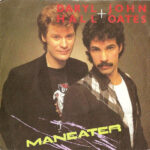
 In 1982, Hall & Oates released “Maneater,” a track that would become one of the defining songs of their career and a landmark in the evolution of 1980s pop and rock. Written by Daryl Hall, John Oates, and Sara Allen, the song captures the tension between charm and danger, seduction and caution, and groove and menace. From its instantly recognizable bassline to its hypnotic synth textures and narrative lyrics, “Maneater” exemplifies the duo’s ability to fuse catchy pop sensibilities with sophisticated musical and lyrical themes. More than just a commercial success, the song demonstrates the darker undertones that Hall & Oates could infuse into their accessible melodies, creating a track that resonates with both dancefloor energy and narrative depth, and solidifying its status as a timeless piece of 1980s pop culture.
From the first beat, “Maneater” establishes its unmistakable groove. The bassline, played with precision and attitude, drives the song forward with a combination of funk and pop sensibilities, immediately commanding attention and setting a sultry tone. The percussion is tight and methodical, complementing the rhythm without overshadowing the melodic and harmonic elements. Synth textures weave throughout the track, providing both atmosphere and rhythmic punctuation, while subtle guitar accents add further depth to the sound. This careful layering of instruments demonstrates Hall & Oates’ mastery of studio production and arrangement, creating a sonic environment that is both inviting and slightly foreboding. Every element of the instrumentation contributes to the sense of tension that underpins the song, reinforcing the narrative of allure mixed with danger.
Daryl Hall’s vocal performance is a critical component of the track’s lasting impact. His voice carries a combination of smoothness and urgency, embodying both fascination and caution as he narrates the story of a captivating yet potentially destructive figure. The delivery is precise and nuanced, balancing storytelling with musicality, and the vocal phrasing enhances the rhythmic and melodic momentum established by the instrumentation. Hall’s tone captures the seductive allure of the subject while maintaining a sense of narrative distance, creating a complex emotional texture that draws listeners into the song’s story. The subtle inflections, controlled vibrato, and dynamic shifts in his singing convey layers of meaning, allowing the listener to sense both attraction and warning simultaneously. John Oates’ backing vocals complement Hall’s lead, adding harmonies that deepen the emotional resonance and enhance the track’s melodic richness. The vocal interplay is carefully arranged, highlighting the duo’s signature style of blending narrative clarity with harmonic sophistication.
Lyrically, “Maneater” explores themes of desire, manipulation, and the potentially destructive nature of charm. The song’s protagonist is a figure who is captivating and alluring but ultimately dangerous, capable of consuming those who fall under her spell. Lines such as “She only comes out at night / The lean and hungry type” immediately establish a sense of intrigue and forewarning, painting a vivid portrait of the subject while drawing the listener into the narrative. The chorus, with the repeated refrain “Whoa-oh, here she comes / Watch out boy, she’ll chew you up,” emphasizes the duality of fascination and danger, encapsulating the song’s central tension. The lyrics are both narrative and symbolic, allowing for multiple interpretations—whether as a cautionary tale about romantic entanglement, a commentary on materialism and ambition, or a reflection on broader human desire and vulnerability. This lyrical sophistication elevates the song above simple pop storytelling, giving it a narrative depth that complements its infectious musical hooks.
Structurally, “Maneater” demonstrates a meticulous balance between repetition, variation, and build. The verses establish the story with concise lyrical lines and restrained instrumentation, creating a sense of anticipation. Each chorus arrives with heightened energy, leveraging both melodic lift and rhythmic propulsion to deliver an emotional and musical payoff. The bridge introduces subtle harmonic shifts and instrumental embellishments, providing contrast and preventing the song from becoming monotonous. The arrangement ensures that the track maintains momentum and engagement over its runtime, with each element—from bass to synths to vocals—carefully orchestrated to maximize both impact and replay value. This balance of structure and spontaneity allows “Maneater” to feel both precise and alive, reinforcing the song’s themes of tension and allure.
The song’s production is emblematic of the early 1980s, blending electronic textures with organic instrumentation to create a sound that is simultaneously modern and timeless. Producer Bob Clearmountain ensured that each element was articulated with clarity, giving the track a sense of space and depth while maintaining the groove and immediacy that make it danceable and compelling. The synth lines add a sense of drama and sophistication, while the rhythm section maintains a steady, infectious drive. Hall & Oates’ attention to sonic detail ensures that the track rewards repeated listening, with subtle instrumental nuances—slight changes in bass articulation, synth accents, and backing vocal flourishes—revealing themselves over time. This careful production contributes to the track’s enduring appeal, allowing it to remain fresh and engaging decades after its release.
One of the defining elements of “Maneater” is its iconic bassline, which immediately sets the tone and carries the groove throughout the song. Played with a precise, syncopated rhythm, the bass serves as both foundation and melodic counterpoint, driving the momentum while adding a sense of menace. The interplay between the bass, percussion, and synths creates a hypnotic effect, drawing the listener in and reinforcing the lyrical themes of seduction and danger. This combination of rhythmic precision and melodic intrigue exemplifies Hall & Oates’ ability to create pop music that is both accessible and musically sophisticated, appealing to casual listeners and discerning audiences alike.
The chorus of “Maneater” is perhaps the song’s most memorable feature, blending melodic clarity, rhythmic drive, and lyrical catchiness. The repeated lines—both in phrasing and vocal inflection—create a sense of inevitability, mirroring the song’s narrative of irresistible attraction. The combination of Hall’s lead vocals with Oates’ harmonies ensures that the chorus resonates emotionally and musically, leaving a lasting impression. The phrasing, timing, and melodic contour of the chorus exemplify the duo’s mastery of pop songwriting, demonstrating their ability to craft hooks that are immediately memorable yet embedded with narrative and emotional complexity.
“Maneater” also reflects the cultural and musical sensibilities of its era. The early 1980s were a period of experimentation in pop, with the integration of synthesizers, drum machines, and other electronic elements transforming the sonic landscape. Hall & Oates embraced these innovations while retaining the melodic sensibilities and vocal harmonies that had defined their earlier work. The song’s combination of electronic textures with live instrumentation exemplifies the era’s hybrid approach, creating a sound that was cutting-edge at the time while remaining grounded in traditional pop craftsmanship. Its success on both pop and adult contemporary charts demonstrates its broad appeal, highlighting the duo’s ability to navigate multiple audiences without compromising artistic integrity.
Live performances of “Maneater” further emphasize its dynamic and seductive qualities. On stage, Hall & Oates use vocal harmonies, stage presence, and instrumental interplay to amplify the tension and energy of the song. The bass and synth lines maintain their hypnotic effect, while the vocal delivery allows for subtle improvisation and emotional expression. Audience interaction—singing along to the iconic chorus, responding to instrumental breaks—reinforces the communal and performative aspect of the track, making it both a narrative experience and a shared musical event. The song’s adaptability to live performance ensures that it remains compelling and engaging across different settings, from radio listeners to concertgoers.
Thematically, “Maneater” is about more than just romantic entanglement; it explores broader ideas of power, attraction, and consequence. The protagonist is both enthralled and cautious, reflecting the tension between desire and self-preservation that is central to human experience. The lyrics’ ambiguity allows listeners to interpret the song in multiple ways, whether as a cautionary tale, a reflection on materialism and ambition, or an exploration of emotional vulnerability. This thematic richness, combined with musical sophistication, ensures that the song continues to resonate with audiences long after its initial release.
The instrumental arrangement of the track demonstrates Hall & Oates’ attention to musical layering and texture. The bassline anchors the groove, the synths add atmosphere, and the guitars and percussion provide rhythmic and melodic accents. Each element interacts with the others to create a cohesive, immersive sound that supports the lyrics and vocal delivery. The production allows space for the narrative to unfold, giving the listener room to engage with both the music and the story it tells. Subtle details, such as rhythmic syncopation, harmonic embellishments, and backing vocal inflections, enhance the song’s complexity and reward careful listening.
Ultimately, “Maneater” endures because it combines infectious musicality with narrative sophistication. Its blend of groove, melody, and thematic tension creates a track that is both immediately engaging and emotionally resonant. Hall & Oates’ vocal performances, the meticulous production, and the carefully crafted arrangement ensure that the song remains compelling across decades, appealing to both casual listeners and devoted fans. Its cultural impact, chart success, and continued presence in media, film, and popular consciousness highlight its significance as a work of both artistry and entertainment.
In the final analysis, “Maneater” is a quintessential Hall & Oates song, capturing the duo’s ability to combine narrative depth, melodic ingenuity, and rhythmic precision. It exemplifies the darker side of pop, transforming themes of seduction and danger into a compelling musical experience that is as engaging as it is memorable. Its iconic bassline, hypnotic groove, and haunting lyrics ensure that it remains a touchstone of 1980s pop music, demonstrating the duo’s mastery of craft, performance, and storytelling. “Maneater” is not merely a hit; it is a study in tension, allure, and musical sophistication, cementing Hall & Oates’ legacy as one of the most innovative and enduring acts of their era.