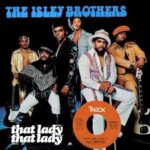
 The Isley Brothers’ That Lady is a song that exemplifies the seamless blend of funk, soul, and rock that defined the group’s groundbreaking work in the 1970s. Released in 1973 as part of their 3 + 3 album, the track represents a pivotal moment in the Isleys’ career, when they expanded their lineup to include younger family members Ernie and Marvin Isley along with brother-in-law Chris Jasper. This expansion brought a fresh musical energy to the group, and That Lady is the result of that infusion—an infectious mix of tight rhythm, soaring vocals, and virtuosic instrumentation. The song demonstrates the Isleys’ ability to create music that is both technically impressive and immediately accessible, bridging the gap between deep musicality and pure listening pleasure.
From the opening bars, That Lady establishes its groove with an unmistakable rhythmic drive. Ernie Isley’s guitar work is the centerpiece of the track, his wah-wah-infused riffs threading effortlessly through the song’s foundation while providing both melodic and percussive texture. The guitar tone is warm and fluid, perfectly complementing the syncopated bass lines laid down by Marvin Isley. This combination of rhythmic sophistication and melodic clarity sets the stage for a track that feels alive with movement, pulling the listener into a danceable, deeply immersive soundscape. The instrumental arrangement is tight yet flexible, allowing for moments of improvisation and dynamic contrast that keep the song fresh and compelling from start to finish.
Vocally, the Isley Brothers showcase their trademark harmony and emotional range. Ronald Isley’s lead vocals glide with effortless smoothness, blending heartfelt tenderness with confident swagger. His phrasing is impeccable, emphasizing certain syllables and elongating notes in a way that conveys both intimacy and intensity. The backing harmonies, delivered by Rudolph and O’Kelly Isley, add depth and texture, creating a lush vocal landscape that elevates the song’s emotional resonance. The interplay between lead and background vocals is a hallmark of the Isleys’ style, and That Lady demonstrates it at its finest—every harmonic layer is carefully placed to enhance the song’s groove without ever overshadowing the lead vocal.
Lyrically, That Lady is a celebration of admiration and attraction, yet it avoids the clichés that often plague songs in the genre. Rather than relying solely on generic expressions of desire, the lyrics incorporate specific, vivid imagery and a sense of narrative that makes the song feel immediate and personal. Lines such as “That lady’s got soul / And that lady’s got style” are simple, yet they capture a nuanced sense of fascination and respect. The song doesn’t merely describe physical attraction; it communicates appreciation for personality, presence, and charisma. This lyrical sophistication, combined with the Isleys’ emotional delivery, ensures that That Lady resonates both as a romantic song and as a testament to musical artistry.
One of the most striking aspects of That Lady is its rhythmic complexity. The song’s groove is anchored by a syncopated drum pattern that alternates between steady backbeat and subtle flourishes, providing momentum while leaving room for instrumental interplay. Marvin Isley’s bass lines are equally dynamic, weaving around the drums and guitar to create a propulsive foundation that never feels rigid. The combination of drums, bass, and guitar produces a sense of forward motion that is simultaneously hypnotic and exhilarating. Listeners are drawn into the rhythm almost instinctively, compelled to nod along or dance while absorbing the song’s intricate musical details.
Ernie Isley’s guitar solo stands out as a defining moment in the track. The solo is both expressive and technically impressive, combining bluesy bends, fluid runs, and wah-wah effects in a way that feels natural and organic. Unlike solos that feel inserted purely for show, this one is integral to the song’s structure, building emotional intensity and adding layers of texture that complement the vocal lines. It is a moment of instrumental storytelling, demonstrating the Isleys’ mastery of musical dynamics and their ability to convey narrative without words. The solo transitions seamlessly back into the groove, maintaining continuity while elevating the overall energy of the track.
The production of That Lady also contributes to its timeless appeal. The song benefits from clarity and balance in the mix, allowing each instrument to shine while maintaining cohesion. The warm analog tones of the recording capture the richness of the vocal harmonies and the depth of the instrumental arrangement. Subtle use of reverb and spatial placement gives the song a sense of dimension, making it feel both intimate and expansive. The result is a track that remains sonically engaging decades after its release, proving the enduring power of thoughtful, meticulous production.
That Lady is also significant in the context of the Isley Brothers’ broader catalog. Coming from the 3 + 3 era, it marked a stylistic evolution for the group, incorporating elements of rock and funk alongside their established soul sensibility. This fusion of genres expanded the Isleys’ audience and demonstrated their versatility as musicians. The song’s success helped solidify their reputation as innovators capable of blending styles without sacrificing authenticity or emotional impact. It stands as a bridge between their earlier R&B work and the funk-rock direction they would continue to explore in the late 1970s and beyond.
The song’s infectious groove and memorable melodies have ensured its enduring presence in popular culture. That Lady has been sampled and referenced by numerous artists across genres, highlighting its influence on contemporary music. Hip-hop producers and R&B musicians alike have drawn inspiration from its rhythmic complexity and harmonic richness, using its textures and motifs to craft new works while paying homage to the Isleys’ artistry. The track’s enduring appeal lies in its ability to function simultaneously as a showcase of technical skill and as a deeply enjoyable listening experience—qualities that few songs achieve with such balance.
Beyond its musical and technical achievements, That Lady carries a cultural resonance that speaks to the Isleys’ ability to capture the spirit of their era. The early 1970s were a time of experimentation and genre-blending in popular music, and the Isleys’ fusion of soul, funk, and rock exemplified that creative energy. The song reflects the optimism, sophistication, and sensuality of the period, while also demonstrating the group’s forward-looking approach to songwriting and performance. It is a snapshot of a moment in musical history, preserving the energy and innovation that made the Isleys such influential figures.
The combination of groove, melody, and vocal mastery ensures that That Lady continues to captivate listeners. Each component—the driving rhythm, the expressive guitar, the lush harmonies, and the compelling lyrics—works together to create a cohesive, unforgettable musical experience. The song’s balance of accessibility and sophistication allows it to resonate with both casual listeners and devoted music enthusiasts, bridging the gap between popular appeal and artistic achievement. This universality is part of what has cemented its place as one of the Isleys’ signature tracks.
Even decades after its release, That Lady feels vibrant and contemporary. The song’s energy, emotional resonance, and technical excellence have aged remarkably well, demonstrating the Isleys’ enduring relevance in the musical landscape. The track exemplifies how great music can transcend temporal boundaries, continuing to inspire, entertain, and engage listeners long after its initial debut. Its fusion of genres, expert musicianship, and heartfelt performance make it a track that rewards repeated listening, revealing new nuances with each play.
In conclusion, the Isley Brothers’ That Lady is a shining example of the group’s artistry and innovation. From the first infectious guitar riff to the final harmonic flourish, the song demonstrates technical brilliance, emotional depth, and cultural significance. Its enduring appeal lies in the seamless integration of rhythm, melody, and vocal expression, creating a track that is both sophisticated and instantly engaging. That Lady not only reflects the creative spirit of the Isleys at a pivotal moment in their career but also stands as a testament to the timeless power of soulful, well-crafted music. Every element of the song—the lyrics, instrumentation, arrangement, and vocal performance—works in harmony to create a listening experience that is unforgettable, captivating, and deeply satisfying. For anyone exploring the legacy of the Isley Brothers or the evolution of soul and funk music, That Lady remains a quintessential touchstone, a song that continues to bloom with life, charm, and musical brilliance decades after it first graced the airwaves.