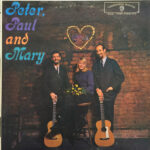
 Few songs have managed to balance simplicity, melody, and a sense of moral urgency as effectively as “If I Had a Hammer” by Peter, Paul & Mary. Originally written by Pete Seeger and Lee Hays in 1949, the song achieved widespread popularity when Peter, Paul & Mary released their version in 1962, turning it into a folk anthem that resonated deeply with the civil rights and social justice movements of the era. Its catchy melody, clear message, and universal appeal helped establish the trio not only as outstanding performers but as voices of conscience in a turbulent period of American history.
The song’s enduring legacy lies in its ability to convey a sense of action and empowerment. Its metaphorical hammer and bell, central to the lyrics, symbolize tools for justice, truth, and love—concepts that transcend time, culture, and context. Over sixty years later, “If I Had a Hammer” remains as relevant as ever, inspiring listeners to consider the ways in which music can motivate, unify, and challenge societal norms.
Historical Context
The late 1940s and early 1950s in America were a time of social tension and political conservatism, yet the folk music revival was beginning to provide a voice for dissent and hope. Pete Seeger and Lee Hays, both members of The Weavers, wrote “If I Had a Hammer” as a song of protest, calling for justice, equality, and freedom. Its original purpose was deeply political, aimed at encouraging activism and a belief that ordinary people could effect meaningful change.
By the time Peter, Paul & Mary recorded their version in 1962, the United States was entering a new era of civil rights activism. The trio, already known for their clear harmonies and engaging performances, recognized the song’s potential to inspire a generation. Their rendition brought Seeger and Hays’ message to a broader audience, combining folk sensibilities with a vocal clarity and warmth that made the song accessible to radio listeners and live audiences alike.
Musical Structure and Appeal
Musically, “If I Had a Hammer” is deceptively simple. It relies on a straightforward chord progression, repetitive structure, and folk instrumentation—primarily acoustic guitar and vocal harmonies. Yet it is precisely this simplicity that makes the song so effective. The melody is instantly memorable, the rhythm accessible, and the harmonies are smooth yet powerful, allowing listeners to focus on the message while easily participating in the performance.
The song begins with a gentle acoustic strum that establishes a sense of communal intimacy. As the vocals enter, the harmonies between Peter Yarrow, Paul Stookey, and Mary Travers are clear and balanced, reinforcing the song’s themes of unity and cooperation. The repetitive nature of the chorus—“If I had a hammer, I’d hammer in the morning, I’d hammer in the evening, all over this land”—creates a call-and-response dynamic that encourages audience participation, whether in a small coffeehouse or at a larger civil rights rally.
Lyrics and Message
The lyrics of “If I Had a Hammer” are both simple and profound. The song begins with a hypothetical, yet evocative premise: “If I had a hammer, I’d hammer in the morning, I’d hammer in the evening, all over this land.” The hammer becomes a metaphor for action and justice, representing the tools needed to combat injustice wherever it arises.
The song continues with references to a bell, which symbolizes truth, and a song, which represents love. Together, the hammer, bell, and song form a triumvirate of moral action: act with strength, speak with clarity, and approach the world with compassion. Unlike many protest songs, “If I Had a Hammer” avoids anger or bitterness, instead channeling optimism, hope, and the belief that positive change is possible.
Peter, Paul & Mary’s delivery enhances this message. Their harmonies emphasize cooperation and collective action, reinforcing the idea that social change is a communal effort. Mary Travers’ clear soprano, paired with the gentle but resonant voices of Yarrow and Stookey, gives the lyrics a warmth and sincerity that makes them timeless.
Impact on the Civil Rights Movement
While “If I Had a Hammer” is often thought of as a folk anthem, its role in the civil rights movement cannot be overstated. The song was performed at rallies, marches, and gatherings, becoming a unifying force for activists. Its simplicity allowed it to be learned and sung by large crowds, creating a shared sense of purpose and solidarity.
The song’s optimistic tone also provided a counterbalance to the often harsh realities faced by activists. By framing justice, truth, and love as attainable goals, the song empowered listeners to take action without despair. In this sense, Peter, Paul & Mary’s rendition was not only musically influential but socially instrumental, helping to motivate and sustain a generation of civil rights activists.
Folk Revival and Mainstream Success
Peter, Paul & Mary were at the forefront of the 1960s folk revival, and “If I Had a Hammer” exemplifies the movement’s ability to bridge traditional music with contemporary social concerns. The song became a commercial success, charting high on the Billboard Hot 100, yet it retained the authenticity of folk performance.
Its success in the mainstream allowed the message of social justice to reach audiences far beyond the activist community. Listeners who may not have attended rallies or read political texts were exposed to the ideals of equality and truth through a catchy, memorable tune. In this way, “If I Had a Hammer” exemplified the potential of folk music to influence public consciousness.
Legacy
The legacy of “If I Had a Hammer” is multi-layered. It remains a staple in the folk repertoire and has been covered by numerous artists across genres, from Trini Lopez to Bobby Darin, and even in more contemporary interpretations. Each version emphasizes the song’s core message, demonstrating its universal appeal and adaptability.
More importantly, the song continues to resonate as an anthem of moral action. Its metaphorical hammer, bell, and song remind listeners that justice, truth, and love are tools available to everyone, regardless of era or context. This universality ensures that “If I Had a Hammer” remains relevant, inspiring new generations to consider how music can motivate, unify, and challenge society.
Conclusion
Peter, Paul & Mary’s rendition of “If I Had a Hammer” is more than just a folk classic—it is an enduring anthem of hope, action, and unity. Its straightforward musical structure, memorable harmonies, and evocative lyrics make it accessible to listeners of all ages, while its message of justice and truth transcends time and place.
In performing the song, the trio combined musical elegance with moral urgency, creating a track that is both enjoyable and inspirational. It stands as a reminder of the power of music to mobilize communities, articulate social ideals, and inspire hope in the face of adversity. Decades after its release, “If I Had a Hammer” continues to hammer in the morning, in the evening, and all over the world—its impact as resonant today as it was when Peter, Paul & Mary first brought it to life.