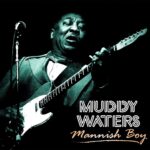
 In 1955, and then again with thunderous force in 1977, a voice rose out of the speakers that sounded less like a singer and more like a declaration. It wasn’t polished. It wasn’t polite. It was primal, repetitive, defiant.
“I’m a man.”
That voice belonged to Muddy Waters.
The song was “Mannish Boy.”
Few blues recordings have achieved the mythic stature of “Mannish Boy.” Built on a hypnotic riff, a call-and-response chant, and a groove that feels both ancient and modern, the track stands as one of the defining statements of electric Chicago blues — and one of the boldest proclamations of identity ever pressed to vinyl.
The Roots of the Riff
“Mannish Boy” didn’t emerge from nowhere. It was, in part, a response.
In 1955, Bo Diddley released “I’m a Man,” itself influenced by earlier blues structures. Muddy Waters and songwriter Mel London answered with “Mannish Boy,” a song that shares a similar rhythmic backbone but shifts the focus from swaggering braggadocio to something deeper and more elemental.
The riff is deceptively simple: a churning, repetitive electric guitar pattern that locks in with bass and drums to create a groove that feels almost ritualistic. There’s no elaborate chord progression. No melodic detours.
Just repetition. Assertion. Power.
The structure mirrors early Delta blues traditions — cyclical, hypnotic — but electrified and amplified for urban audiences.
From the Delta to Chicago
To understand “Mannish Boy,” you have to understand Muddy Waters’ journey.
Born McKinley Morganfield in Mississippi, Waters grew up immersed in Delta blues — a raw, acoustic style rooted in rural Southern life. When he migrated north to Chicago during the Great Migration, he brought that sound with him.
But Chicago was louder. Industrial. Electrified.
So Waters plugged in.
He became one of the architects of electric blues, transforming the intimate Delta style into something forceful enough to compete with city noise and crowded clubs.
“Mannish Boy” is a perfect encapsulation of that evolution. It carries the emotional weight of the Delta but the volume of Chicago.
The Chant That Became a Statement
“I’m a man.”
The lyric is repeated throughout the song, not as a boast in the shallow sense, but as an affirmation. A grounding truth.
Waters’ delivery isn’t smooth. It’s guttural, almost conversational. He doesn’t belt the line so much as growl it. The repetition gives it authority.
Behind him, the band responds in call-and-response fashion — a structure borrowed directly from African American musical traditions, including gospel and work songs.
The effect is communal. It feels less like a solo performance and more like a collective assertion.
And in mid-20th century America, for a Black man navigating systemic racism and social marginalization, that assertion carried weight.
“I’m a man.”
It’s simple. But it’s loaded.
The Groove That Won’t Let Go
Musically, “Mannish Boy” is built around groove rather than melody.
The slide guitar moans between vocal lines. The harmonica wails briefly, adding texture without overwhelming the rhythm. The drums stay steady, almost understated, allowing the guitar riff to dominate.
That restraint is crucial.
Instead of filling every space, the band lets the groove breathe. The repetition becomes trance-like. The longer you listen, the deeper it sinks in.
This hypnotic quality would later influence countless rock musicians who sought to tap into blues authenticity.
A Defining 1955 Recording
The original 1955 version of “Mannish Boy” became a staple of Muddy Waters’ live performances, even if it wasn’t his biggest commercial hit at the time.
It cemented his reputation as a commanding presence in the Chicago blues scene.
But the song’s legend would grow even larger two decades later.
The 1977 Revival: Hard Again
In 1977, Muddy Waters recorded the album Hard Again, produced by guitarist Johnny Winter. The record marked a late-career resurgence for Waters, capturing him with renewed energy and rawness.
The re-recorded version of “Mannish Boy” from Hard Again is the one most listeners know today.
It’s heavier. Dirtier. More aggressive.
The guitar tone is thicker. The rhythm section hits harder. Waters’ voice sounds weathered but powerful — like a man who has lived every word he sings.
The updated version introduced “Mannish Boy” to a new generation of blues and rock fans, solidifying its place in the canon.
Influence on Rock Royalty
The ripple effect of “Mannish Boy” through rock history is immense.
Bands like The Rolling Stones openly cited Muddy Waters as a primary influence. In fact, the Rolling Stones took their name from one of his songs.
The repetitive riff structure and swagger of “Mannish Boy” can be heard in countless rock anthems. Its raw minimalism became a blueprint for artists seeking authenticity and grit.
From Led Zeppelin to Jimi Hendrix, the electric blues foundation laid by Muddy Waters shaped the sound of modern rock.
And at the core of that foundation sits this song.
Masculinity and Meaning
On the surface, “Mannish Boy” might sound like a simple celebration of masculinity. But its deeper resonance lies in its context.
In a society that often denied Black men dignity and autonomy, declaring “I’m a man” wasn’t trivial. It was powerful.
The song doesn’t describe wealth or conquest. It describes existence. Presence.
“I’m a man. I spell M-A-N.”
That spelling-out moment, almost playful in delivery, reinforces identity. It’s emphatic without being arrogant.
The repetition becomes grounding. Affirming.
The Minimalism That Makes It Immortal
Part of what makes “Mannish Boy” timeless is its refusal to overcomplicate.
There are no elaborate solos. No dramatic tempo shifts. No ornate production flourishes.
Just groove, voice, riff.
In an era when production often strives for maximalism, the song’s minimal approach feels refreshing — even radical.
It proves that emotional impact doesn’t require complexity. Sometimes, repetition and conviction are enough.
A Song That Lives on Stage
“Mannish Boy” has always been more than a studio recording. It thrives in live performance.
The call-and-response structure invites audience participation. The groove stretches easily, allowing improvisation and extended solos.
When performed live, the song becomes communal ritual — a shared chant.
That adaptability has kept it alive across decades of blues festivals, rock concerts, and club gigs.
Cultural Reappearance
The song has appeared in numerous films, commercials, and television shows, often used to evoke raw confidence or gritty authenticity.
Its unmistakable riff serves as shorthand for toughness and swagger.
But beyond pop culture usage, its emotional core remains intact.
Why It Still Matters
More than half a century after its first recording, “Mannish Boy” still resonates.
It resonates because it’s primal. Because it’s honest. Because it distills the blues down to its essence: rhythm, identity, feeling.
Muddy Waters didn’t need ornate poetry to make his point. He needed conviction.
And conviction is exactly what the song delivers.
Final Thoughts: The Roar That Echoes
“Mannish Boy” isn’t a complicated song.
It doesn’t chase trends. It doesn’t rely on novelty.
It stands firm.
From its Delta roots to its Chicago amplification, from its 1955 origins to its 1977 revival, the song represents the power of self-assertion through music.
When Muddy Waters growls, “I’m a man,” it’s more than a lyric.
It’s history. It’s pride. It’s resilience.
And that riff — that relentless, churning riff — still echoes through rock clubs and blues bars around the world.
Not as nostalgia.
But as living proof that the blues, at its best, doesn’t fade.
It endures.