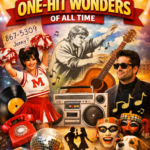
 Pop music history is usually written around legends—artists who dominate the charts for decades and fill arenas long after their first hit. But scattered throughout the timeline of rock, pop, and radio are artists whose entire mainstream legacy rests on a single lightning-in-a-bottle moment. These are the one-hit wonders—musicians who captured the cultural spotlight with one unforgettable song before fading from the charts.
The term “one-hit wonder” can be misleading. Many artists on this list had long careers, loyal followings, and multiple albums. Some were even huge stars in other countries or genres. But in the American mainstream, they are remembered primarily for one defining track that became embedded in the cultural memory.
What makes a one-hit wonder special isn’t the lack of follow-up success—it’s the fact that the one hit was so powerful, so perfectly timed, and so unforgettable that it overshadowed everything else. These songs often define entire eras: the psychedelic experimentation of the late 1960s, the new wave explosion of the early MTV years, or the alternative rock surge of the 1990s.
One-hit wonders also tend to have something unique about them. Maybe it’s a strange instrument, an unusual voice, a quirky lyric, or a once-in-a-generation hook. Whatever the reason, the song sticks around long after the artist’s moment in the spotlight has passed.
Decades later, these tracks remain staples of classic rock radio, party playlists, movie soundtracks, and nostalgic throwback shows. They remind us that sometimes one great song is all you need to make music history.
Here are the 25 greatest one-hit wonders of all time.
25. “Play That Funky Music” – Wild Cherry (1976)
Few songs capture the spirit of 1970s funk-rock better than “Play That Funky Music.” Released in 1976 by Ohio band Wild Cherry, the track blends crunchy rock guitar with an irresistible dance groove that immediately makes listeners want to move.
The story behind the song is almost as famous as the track itself. According to singer Rob Parissi, the band was performing mostly rock music when someone in the crowd shouted, “Play that funky music, white boy!” Instead of being offended, Parissi turned the moment into a song. The result was a self-aware funk anthem that poked fun at the band while celebrating the infectious rhythm of the genre.
The groove is built around a simple but powerful guitar riff, tight bass lines, and punchy horn accents. Its call-and-response chorus made it perfect for dance floors and radio alike.
The song shot to #1 on the Billboard Hot 100, but Wild Cherry never came close to repeating that success. Still, the track has endured as a staple of disco-era nostalgia.
Nearly fifty years later, “Play That Funky Music” still gets people dancing—proof that sometimes one groove is all a band needs to make history.
24. “Spirit in the Sky” – Norman Greenbaum (1969)
“Spirit in the Sky” is one of the strangest hit songs ever recorded—and that’s part of what makes it so memorable. Released in 1969 by singer-songwriter Norman Greenbaum, the track combines fuzzy electric guitar, handclaps, and gospel-style backing vocals with lyrics about meeting Jesus after death.
The irony is that Greenbaum himself was Jewish and wrote the song simply because he thought gospel themes would make for a strong rock lyric.
Musically, the track is driven by one of the most distinctive guitar tones of the era. The distorted fuzz riff creates a hypnotic groove that repeats throughout the song, giving it an almost psychedelic feel.
“Spirit in the Sky” became a massive international hit, reaching #3 in the United States and selling millions of copies worldwide.
Despite releasing other music, Greenbaum never had another major hit. Yet the song has remained culturally relevant for decades, appearing in countless films, commercials, and TV shows.
More than half a century later, that opening fuzz guitar still sounds instantly recognizable.
23. “Turning Japanese” – The Vapors (1980)
When British new wave band The Vapors released “Turning Japanese” in 1980, the song quickly became one of the most unusual hits of the early MTV era.
Built around a sharp, staccato guitar riff and a driving rhythm section, the track has a nervous, high-energy feel that perfectly captures the anxious energy of new wave music.
The song’s title and lyrics sparked endless speculation about hidden meanings, but singer David Fenton insisted it was simply about obsession and emotional frustration after a breakup.
Whatever the interpretation, listeners couldn’t get enough of its catchy melody and quirky delivery.
The song became a major hit in the United States and helped define the emerging new wave sound that would dominate early-1980s radio.
Despite releasing additional albums, The Vapors never replicated the success of their breakthrough single.
Still, “Turning Japanese” remains a staple of retro playlists and one of the most distinctive songs of its era.
22. “In the Summertime” – Mungo Jerry (1970)
Few songs capture the carefree joy of summer quite like “In the Summertime.”
Released in 1970 by British band Mungo Jerry, the track feels almost deceptively simple. It’s built around a loose acoustic rhythm, a jug-band groove, and Ray Dorset’s relaxed vocals. But that simplicity is exactly what makes the song so charming.
The lyrics celebrate warm weather, freedom, and youthful romance, giving the track a laid-back vibe that perfectly matched the early 1970s.
Despite its casual sound, the single became one of the best-selling songs of all time, reportedly selling more than 30 million copies worldwide.
It topped charts across Europe and became a massive hit in the United States.
Although Mungo Jerry continued releasing music for decades, nothing ever matched the enormous success of their debut hit.
Yet “In the Summertime” still returns to radio every year when the weather gets warm.
Its breezy acoustic rhythm remains one of the most recognizable sounds in pop history.
21. “The Safety Dance” – Men Without Hats (1982)
At first listen, “The Safety Dance” sounds like pure playful synth-pop. But the song actually came from frustration.
Ivan Doroschuk of Men Without Hats wrote it after security guards repeatedly stopped him from pogo dancing at clubs in Montreal.
His response was to write an anthem celebrating the freedom to dance however you want.
Released in 1982, the song features bright synthesizers, a bouncing rhythm, and one of the most infectious choruses of the decade.
Its strange, medieval-themed music video—featuring dancers in a village setting—became a major MTV staple.
The single climbed to #3 on the Billboard charts and turned the Canadian band into an international sensation.
Despite releasing additional albums, the band never achieved another major American hit.
But “The Safety Dance” has endured as one of the defining synth-pop tracks of the early 1980s.
And decades later, it still inspires the same message: dance if you want to.
20. “Video Killed the Radio Star” – The Buggles (1979)
Few songs have predicted the future of music as accurately as “Video Killed the Radio Star.”
Released in 1979 by British duo The Buggles, the song explores the idea that visual media would soon transform the music industry.
At the time, that seemed like speculation. But two years later, the track made history when it became the first music video ever played on MTV on August 1, 1981.
The song itself is a lush piece of synth-pop filled with layered vocals, futuristic sound effects, and a soaring melody.
Trevor Horn and Geoff Downes crafted a polished production that felt ahead of its time.
Although The Buggles only had this one major hit, both musicians went on to major careers in the music industry.
Horn became one of the most influential producers of the 1980s.
Still, “Video Killed the Radio Star” remains their defining moment.
Its message about technology changing music proved prophetic.
19. “867-5309/Jenny” – Tommy Tutone (1981)
Few songs have had a stranger cultural impact than “867-5309/Jenny.”
Released in 1981 by Tommy Tutone, the song revolves around a mysterious phone number written on a bathroom wall.
The narrator becomes obsessed with calling the girl behind the number—Jenny.
Musically, the track is classic early-1980s power pop. A crisp guitar riff drives the song forward while the chorus delivers a melody that listeners instantly remember.
The single climbed into the Top Five and quickly became a radio staple.
But its biggest impact happened outside the charts.
Across the United States, people began dialing the number hoping to reach Jenny. Phone companies reportedly received thousands of complaints from people whose numbers happened to match the famous digits.
Despite releasing more music, Tommy Tutone never achieved another major hit.
Yet decades later, the number 867-5309 remains one of the most famous phone numbers in history.
18. “Walking on Sunshine” – Katrina and the Waves (1985)
Few songs radiate pure joy the way “Walking on Sunshine” does.
Released in 1985 by Katrina and the Waves, the track bursts with energy from its very first guitar chord. Bright horns, pounding drums, and Katrina Leskanich’s powerful vocals combine to create a pop song that feels like a celebration of happiness itself.
The chorus explodes with enthusiasm, delivering one of the most uplifting hooks in pop history.
The single climbed the charts internationally and quickly became a staple of feel-good playlists.
Although the band later achieved success in Europe—winning the 1997 Eurovision Song Contest—“Walking on Sunshine” remains their only major American hit.
Decades later, the song continues to appear in movies, commercials, and television shows whenever a scene needs a shot of pure optimism.
It’s impossible to hear the track without feeling at least a little brighter.
17. “Groove Is in the Heart” – Deee-Lite (1990)
Released in 1990, “Groove Is in the Heart” is one of the most colorful and joyful dance songs ever recorded.
The track blends funk bass lines, hip-hop influences, and psychedelic pop elements into an irresistibly funky groove.
Featuring Bootsy Collins and Q-Tip, the song became a major club hit and climbed high on the charts.
Its vibrant music video, filled with wild costumes and psychedelic visuals, helped cement its place in early-1990s pop culture.
Despite releasing additional music, Deee-Lite never again matched the success of their breakthrough single.
Yet the song remains one of the most beloved dance tracks of the decade.
Its funky bass line and playful energy still sound fresh more than thirty years later.
16. “Tainted Love” – Soft Cell (1981)
Originally recorded as a soul song in the 1960s, “Tainted Love” found new life when British duo Soft Cell transformed it into a dark, minimalist synth-pop track in 1981.
The band stripped the song down to a pulsing electronic rhythm and haunting vocals from singer Marc Almond.
The result was a stark, emotional reinterpretation that perfectly fit the emerging new wave sound.
The song climbed the charts around the world and spent 43 weeks on the Billboard Hot 100, setting a record at the time.
Despite releasing other material, Soft Cell never matched the impact of “Tainted Love” in the United States.
But the track’s influence on electronic pop music is undeniable.
Its haunting synthesizers and emotional delivery helped shape the sound of 1980s alternative music.
Today it remains one of the most recognizable synth-pop songs ever recorded.
15. “Mickey” – Toni Basil (1982)
“Oh Mickey, you’re so fine, you’re so fine you blow my mind.”
Few pop hooks are as instantly recognizable as the chorus of “Mickey.”
Released in 1982 by singer and choreographer Toni Basil, the song is built around stomping drums, handclaps, and cheerleader chants.
The track was actually a rewritten version of a British song called “Kitty,” but Basil transformed it into a high-energy pop anthem.
The music video, featuring Basil leading a squad of cheerleaders in a gymnasium, became one of the most memorable clips of the early MTV era.
The single rocketed to #1 on the Billboard charts, turning Basil into an overnight pop star.
Despite releasing additional music, she never had another major hit.
Still, “Mickey” has endured as a pop culture staple.
Its chant-along chorus continues to echo at sporting events, parties, and nostalgic playlists everywhere.
14. “I’m Too Sexy” – Right Said Fred (1991)
Few novelty songs have achieved the global success of “I’m Too Sexy.”
Released in 1991 by British duo Right Said Fred, the track is built around a playful bass groove and tongue-in-cheek lyrics about an absurdly confident model.
The humor of the song is obvious from the start.
Singer Richard Fairbrass delivers the lines with exaggerated swagger, poking fun at the fashion world and celebrity culture.
Despite its novelty vibe, the song became a massive international hit and reached #1 on the Billboard Hot 100.
Its playful hook made it irresistible to radio listeners.
While the band continued recording music, nothing ever matched the cultural impact of their breakthrough single.
Even today, “I’m Too Sexy” remains a favorite at parties and throwback events.
It’s silly, self-aware, and impossible not to smile at.
13. “Who Let the Dogs Out” – Baha Men (2000)
“Who Let the Dogs Out” is one of the most chaotic and memorable novelty hits of the early 2000s.
Recorded by Bahamian group the Baha Men, the song mixes Caribbean rhythms with chant-style vocals and a playful call-and-response chorus.
The track exploded in popularity after being featured in sporting events and movies.
Its barking chorus made it perfect for stadium crowds and party playlists.
The song eventually won a Grammy Award for Best Dance Recording and became a global phenomenon.
Although the Baha Men continued releasing music, none of their later songs reached the same level of success.
Yet the track remains a cultural staple.
At sporting events around the world, the question still echoes through stadium speakers: “Who let the dogs out?”
12. “99 Luftballons” – Nena (1983)
“99 Luftballons” is one of the most famous foreign-language hits in American chart history.
Released in 1983 by German singer Nena, the song tells a Cold War story about balloons drifting into military airspace and accidentally triggering global war.
Despite its serious subject matter, the song features upbeat new-wave instrumentation and a catchy melody.
The track became a worldwide hit and reached the Top Two on the Billboard charts.
Nena continued to enjoy a successful career in Europe, but she never achieved another major hit in the United States.
Still, “99 Luftballons” remains one of the defining songs of the Cold War era.
11. “What Is Love” – Haddaway (1993)
Released in 1993, “What Is Love” became one of the defining dance tracks of the decade.
German-Trinidadian singer Haddaway delivered the song with dramatic intensity, backed by pounding Eurodance beats and soaring synthesizers.
The chorus—“What is love? Baby don’t hurt me”—quickly became one of the most recognizable hooks of the 1990s.
The song dominated dance floors around the world and climbed high on international charts.
But its cultural legacy expanded even further thanks to comedy.
The track became famous again through the Saturday Night Live “Roxbury” sketches, where Will Ferrell and Chris Kattan bobbed their heads in a nightclub to the song.
Although Haddaway released additional music, he never achieved another hit of the same magnitude.
Still, “What Is Love” remains one of the ultimate dance anthems of the 1990s.
10. “Ice Ice Baby” – Vanilla Ice (1990)
In 1990, “Ice Ice Baby” made history by becoming the first hip-hop song ever to reach #1 on the Billboard Hot 100.
Built around a bassline sampled from Queen and David Bowie’s “Under Pressure,” the track introduced millions of listeners to rap music.
Vanilla Ice delivered the song with confident energy, and its catchy chorus made it instantly memorable.
The song became a massive cultural phenomenon, dominating radio, MTV, and pop culture.
Despite its success, Vanilla Ice struggled to escape the shadow of his breakthrough hit.
Critics questioned his authenticity, and his follow-up releases never achieved the same impact.
Yet the song remains a defining moment in the early mainstream acceptance of hip-hop.
More than thirty years later, the opening bassline still sparks instant recognition.
9. “The Macarena” – Los del Río (1995)
Few songs have inspired a dance craze like “The Macarena.”
Recorded by Spanish duo Los del Río, the track blends Latin rhythms with a simple, repetitive chorus.
But the real magic came with the dance.
The choreography—consisting of easy hand movements and turns—spread across the world in the mid-1990s.
Soon it was everywhere: weddings, sporting events, school dances, and television shows.
The Bayside Boys remix helped propel the song to #1 on the Billboard Hot 100, where it stayed for fourteen weeks.
Although Los del Río continued recording music, they never again achieved the same global success.
Yet the Macarena dance remains instantly recognizable decades later.
Few songs have united so many people on dance floors around the world.
8. “You Get What You Give” – New Radicals (1998)
“You Get What You Give” is one of the most uplifting pop-rock songs of the late 1990s.
Written by Gregg Alexander, the track blends piano-driven melodies with optimistic lyrics about perseverance and authenticity.
The chorus explodes with energy, delivering a message of hope and defiance.
Despite its popularity, the New Radicals disbanded shortly after releasing their debut album.
Alexander preferred working behind the scenes as a songwriter and producer rather than remaining in the spotlight.
Because of that decision, “You Get What You Give” became the band’s lone major hit.
Yet its message has resonated with listeners for decades.
The song remains a reminder that staying true to yourself can be the most powerful statement of all.
7. “Relax” – Frankie Goes to Hollywood (1984)
When “Relax” was released in 1984, it quickly became one of the most controversial songs of the decade.
The song’s provocative lyrics and sensual themes led the BBC to ban it from radio play. Ironically, the controversy only increased its popularity.
Built around pounding synths and a hypnotic dance beat, the track became a massive international hit.
Frankie Goes to Hollywood released several other songs, but none matched the cultural shockwave created by their debut single.
Today, “Relax” remains one of the defining pop songs of the 1980s.
6. “How Bizarre” – OMC (1995)
New Zealand group OMC delivered one of the most distinctive pop hits of the 1990s with “How Bizarre.”
The song blends acoustic guitar, trumpet melodies, and laid-back vocals into a dreamy, almost surreal pop groove.
The lyrics tell a mysterious story involving strange encounters and unusual characters, adding to the track’s unique atmosphere.
Released in 1995, the song became a massive global hit and reached the Top Five in the United States.
Although OMC released additional music, they never replicated the success of their breakthrough single.
Yet “How Bizarre” remains one of the most memorable songs of the decade.
5. “Tubthumping” – Chumbawamba (1997)
“I get knocked down, but I get up again…”
Released in 1997, “Tubthumping” became one of the most anthemic pop songs of the decade.
The British band Chumbawamba had spent years in the underground punk scene before unexpectedly breaking into the mainstream.
The song’s pounding beat and defiant chorus turned it into a global hit.
Its message of resilience and perseverance resonated with listeners around the world.
Although the band continued releasing music, nothing matched the massive success of “Tubthumping.”
4. “Closing Time” – Semisonic (1998)
“Closing Time” is one of the most misunderstood songs in rock history.
On the surface, the track appears to be about a bar shutting down for the night. But songwriter Dan Wilson later revealed the song was actually inspired by the birth of his daughter.
Released in 1998, the song became a massive alternative radio hit and climbed the pop charts.
Its reflective lyrics and memorable chorus made it a staple of late-1990s rock radio.
Although Semisonic released additional music, they never again reached the same level of success.
3. The Knack – “My Sharona” (1979)
When The Knack released “My Sharona” in 1979, the song exploded onto radio with a raw energy that felt impossible to ignore. Built around one of the most famous guitar riffs in rock history, the track immediately grabbed listeners with its pounding rhythm, sharp guitar attack, and swaggering vocal performance from singer Doug Fieger. The song’s driving beat and infectious hook helped it stand out during a musical period dominated by disco and the emerging punk movement. Instead of following those trends, The Knack tapped into the spirit of classic 1960s rock while injecting it with a modern power-pop punch. The result was a song that felt both familiar and fresh at the same time.
“My Sharona” quickly became a massive cultural phenomenon. The single spent six weeks at number one on the Billboard Hot 100 and ultimately became the best-selling single of 1979 in the United States. Its popularity helped propel the band’s debut album Get the Knack to huge sales and briefly made the group one of the hottest acts in rock music. The track’s tight musicianship and explosive guitar solo helped set it apart from many pop hits of the era, giving it a lasting credibility with rock fans.
Despite the enormous success of “My Sharona,” The Knack struggled to maintain the same level of mainstream popularity with later releases. Still, the song’s impact has never faded. More than four decades later, that instantly recognizable opening riff remains a staple of classic rock radio and one of the most iconic moments in one-hit wonder history.
2. “Take On Me” – A-ha (1985)
Few songs combine pop perfection with visual creativity like “Take On Me.”
The Norwegian band A-ha released the track in 1985 alongside a groundbreaking music video that blended live action with animated drawings.
The visual story of a comic book hero pulling a woman into his world became one of MTV’s most iconic clips.
Musically, the song features sparkling synthesizers, dramatic chord changes, and one of the most impressive falsetto notes in pop history.
The song soared to the top of the charts and became a global phenomenon.
Although A-ha remained hugely successful in Europe, they never matched the same chart dominance in the United States.
Yet “Take On Me” continues to endure across generations.
Its melody and video remain instantly recognizable.
1. “Come On Eileen” – Dexys Midnight Runners (1982)
The greatest one-hit wonder of all time might also be one of the most joyful songs ever recorded.
“Come On Eileen” blends Celtic folk instrumentation with energetic pop rhythms, creating a track that feels both timeless and explosive.
The song builds gradually, beginning with acoustic instruments before erupting into its famous chorus.
Kevin Rowland’s emotional vocals add an extra layer of intensity to the performance.
When the “too-ra-loo-ra” section arrives, it becomes impossible not to sing along.
The single reached #1 on the Billboard Hot 100 and became one of the defining songs of the early MTV era.
Although Dexys Midnight Runners never replicated that level of success in America, the song itself has remained immortal.
Decades later, “Come On Eileen” still fills dance floors and karaoke bars around the world.
Final Thoughts
One-hit wonders occupy a unique place in music history. They may not have long lists of chart-topping singles or decades of commercial success, but their impact is undeniable.
These songs captured something magical—a moment when melody, timing, and cultural mood aligned perfectly. Because of that, they continue to live on long after the artists’ time in the spotlight faded.
From fuzzy psychedelic rock to synth-pop, dance hits, and novelty songs, one-hit wonders show that sometimes a single unforgettable track is enough to leave a permanent mark on music history.
This post has already been read 22658 times!